The Jakarta Post
Please Update your browser
Your browser is out of date, and may not be compatible with our website. A list of the most popular web browsers can be found below.
Just click on the icons to get to the download page.


Popular Reads
Top Results
No results found. Please check your search term and try again
Can't find what you're looking for?
View all search results
Popular Reads
Top Results
No results found. Please check your search term and try again
Can't find what you're looking for?
View all search resultsWhat an anticlimax summit
There was plenty of pomp and pageantry, but when it came to substance, there was little for the rest of the world to cheer about.
Change text size
Gift Premium Articles
to Anyone
Share the best of The Jakarta Post with friends, family, or colleagues. As a subscriber, you can gift 3 to 5 articles each month that anyone can read—no subscription needed!
 Set as preferred source
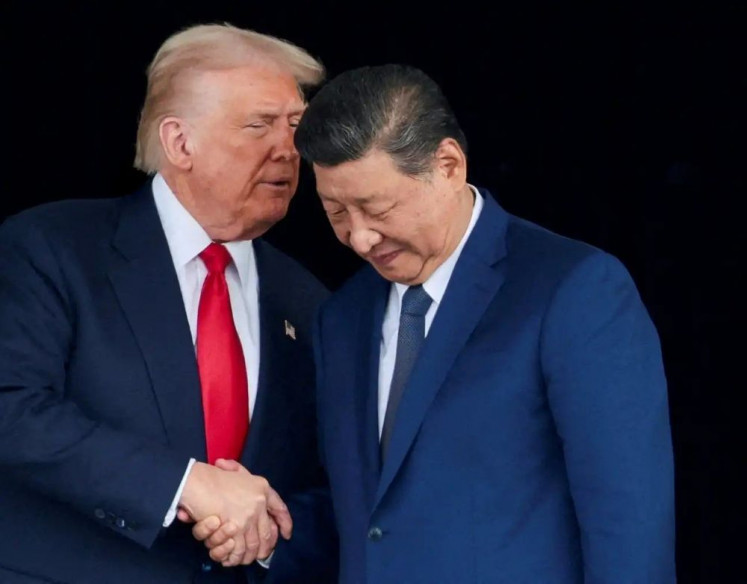
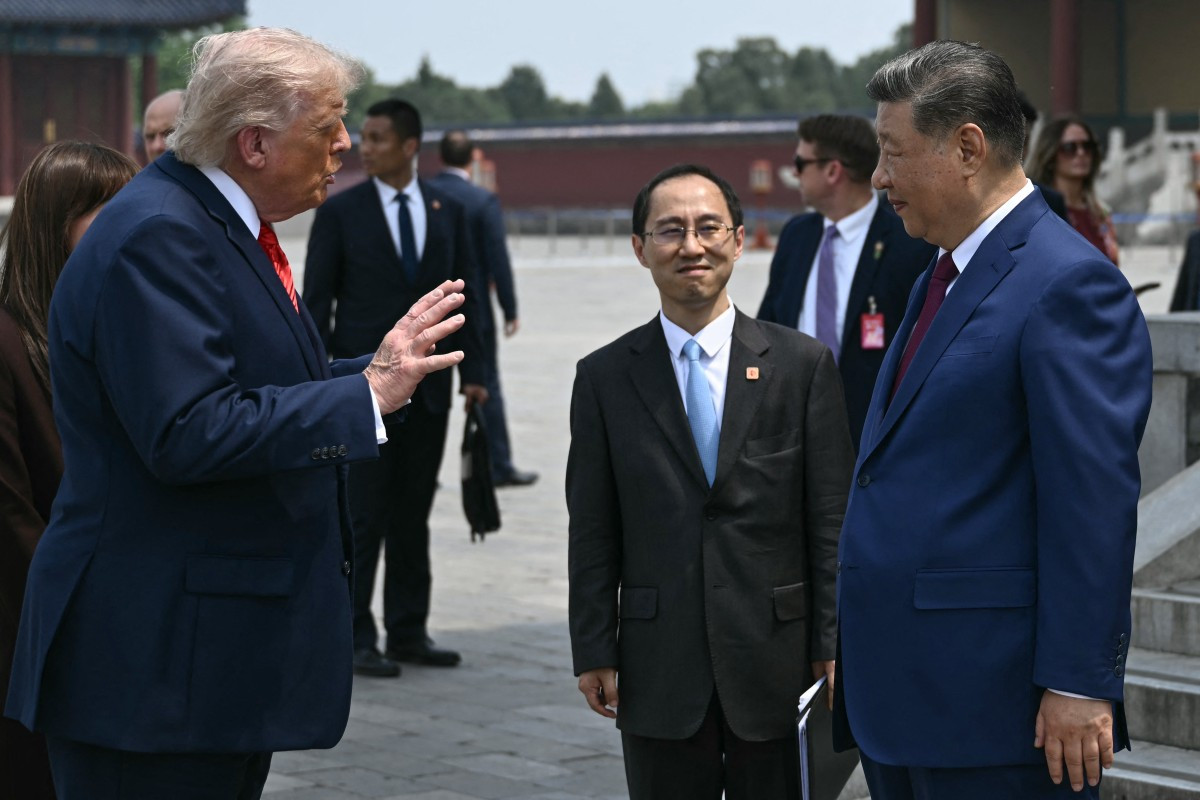 China's President Xi Jinping (right) and United States President Donald Trump talk on Thursday during their visit to the Temple of Heaven in Beijing. (AFP/Brendan Śmiałowski)
L
ast week’s long-awaited meeting between Chinese President Xi Jinping and United States President Donald Trump in Beijing proved something of an anticlimax, though, to be fair, this outcome was not entirely unexpected. There was plenty of pomp and pageantry, but when it came to substance, there was little for the rest of the world to cheer about.
When the leaders of the world’s two most powerful nations, both economically and militarily, meet, expectations naturally run high. Many had hoped they would address some of the most pressing global challenges, including the wars in the Middle East, the looming risks to the global economy caused by disruptions to oil shipments through the Strait of Hormuz and trade disputes pitting the US not only against China but also against many other countries.
They may well have discussed these issues behind closed doors. However, based on the limited details disclosed by the leaders and their spokespersons, the outcomes fell short of expectations. The world is no safer, nor does the global economy appear any healthier after their two-day meeting.
Both leaders remained tight-lipped about the details. From what little can be gleaned from their statements, Xi and Trump appeared primarily focused on their respective national interests, showing little concern for broader global implications.
This is entirely unbecoming of leaders of superpowers. They failed to live up to the well-known Spider-Man principle “with great power comes great responsibility”, and, in doing so, failed the test of true leadership. They squandered an important opportunity, though by now we have come to understand the caliber of both men well enough not to expect too much.
Their statements also lacked consistency and, at times, seemed contradictory.

Trump claimed the two leaders agreed that Iran must never acquire nuclear weapons, while China emphasized the need for dialogue and consultation to resolve the nuclear issue. The White House stated that both leaders agreed the Strait of Hormuz must remain open, yet China’s statement made no reference to Iranian tolls or to the militarization of these strategic waters.