TheJakartaPost
Please Update your browser
Your browser is out of date, and may not be compatible with our website. A list of the most popular web browsers can be found below.
Just click on the icons to get to the download page.


Popular Reads
Top Results
No results found. Please check your search term and try again
Can't find what you're looking for?
View all search results
Popular Reads
Top Results
No results found. Please check your search term and try again
Can't find what you're looking for?
View all search resultsWhat we don’t measure, we waste
When waste is not measured, it does not appear in performance metrics; when it does not appear in metrics, it is rarely prioritized.
Change text size
Gift Premium Articles
to Anyone
Share the best of The Jakarta Post with friends, family, or colleagues. As a subscriber, you can gift 3 to 5 articles each month that anyone can read—no subscription needed!
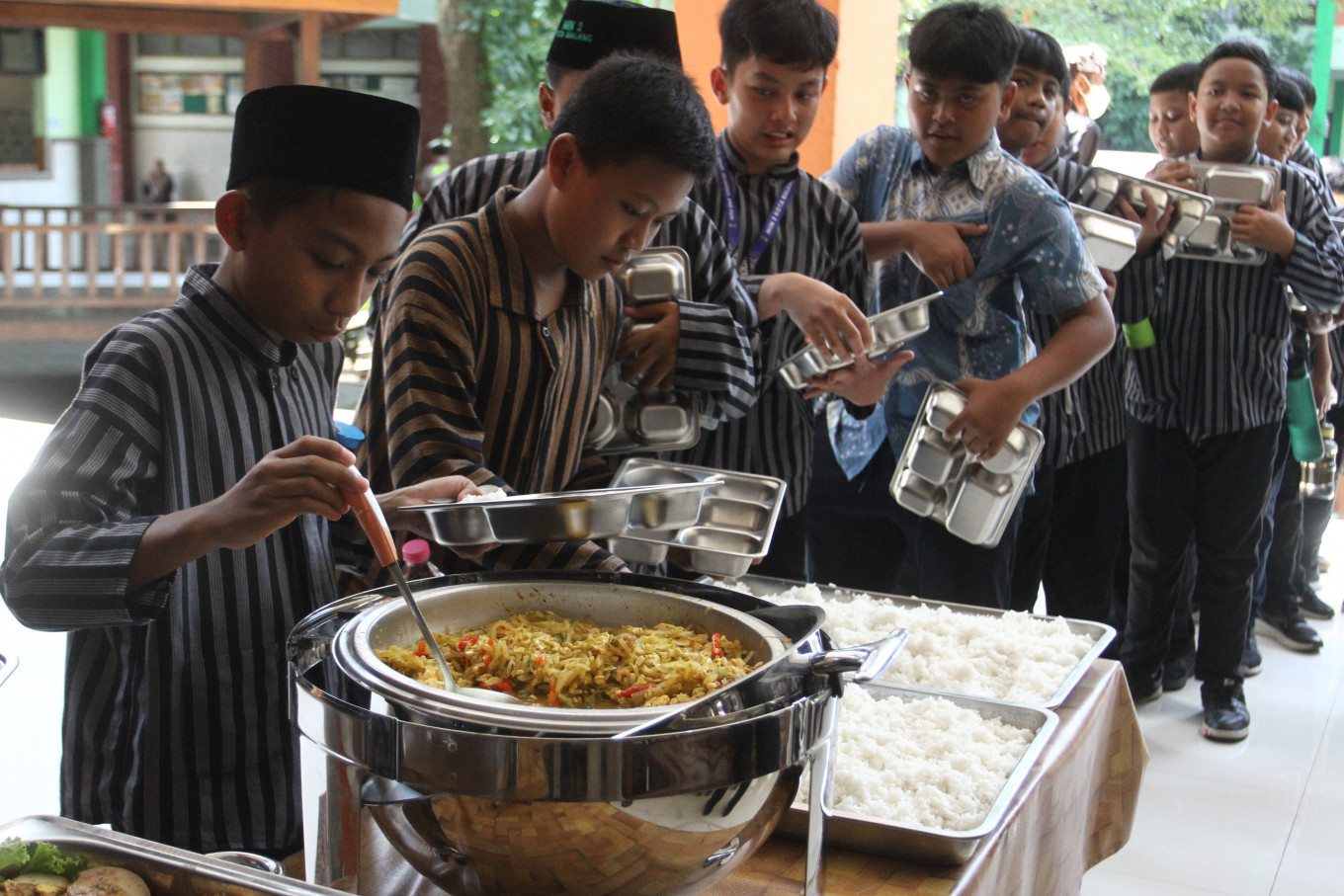 Students line up at a self-serve buffet piloted on April 2, 2026, for the free nutritious meal program at Madrasah Ibtidaiyah Islamiyah 2 elementary school in Malang, East Java. (Antara/Ari Bowo Sucipto)
T
here is a long-standing principle in public policy: What gets measured tends to get managed. Yet in Indonesia’s food system, one of its biggest inefficiencies remains largely unmeasured: food waste.
Every day, millions of meals are prepared across the country to nourish a generation. A portion of them quietly ends up in trash bins, uneaten, unnoticed and unaccounted for. That is not because Indonesia lacks food. It is because we have yet to understand how much of it is lost along the way.
This is the uncomfortable truth at the heart of our food system: We are facing not a crisis of scarcity but a crisis of inefficiency.
Indonesia, in fact, produces more than enough food. National caloric availability reaches around 2,847 calories per capita per day, roughly 26 percent above the recommended nutritional requirement. That surplus amounts to an estimated 55.9 trillion calories annually, theoretically enough to feed more than 76 million additional people. And yet, malnutrition and food insecurity persist.
This coexistence of surplus and deprivation reflects what economists call the paradox of plenty. We produce a surplus but fail to translate it into nutritional outcomes. The problem is no longer about producing enough food but about why sufficiency has not ended hunger.
It is precisely within this gap that the government’s Free Nutritious Meal (MBG) program emerges. At its core, this program is not only a nutrition intervention; it is also an attempt to correct a structural imbalance by redistributing access to food more equitably, channeling meals through a nationwide network of centralized kitchens to those who need them.

But distribution alone is not enough. The real test is not whether food is delivered but whether it is consumed and ultimately, whether it fulfils its nutritional purpose.