TheJakartaPost
Please Update your browser
Your browser is out of date, and may not be compatible with our website. A list of the most popular web browsers can be found below.
Just click on the icons to get to the download page.


Popular Reads
Top Results
No results found. Please check your search term and try again
Can't find what you're looking for?
View all search results
Popular Reads
Top Results
No results found. Please check your search term and try again
Can't find what you're looking for?
View all search resultsWhy Indonesia should treat its museums like infrastructure
Using the repatriation of Java Man as a springboard, it is time for Indonesia to develop a strong museum culture, not only to celebrate its vast historical and archaeological wealth but also to wield it as a soft power to elevate its economic, educational and geopolitical value and narrative influence.
Change text size
Gift Premium Articles
to Anyone
Share the best of The Jakarta Post with friends, family, or colleagues. As a subscriber, you can gift 3 to 5 articles each month that anyone can read—no subscription needed!
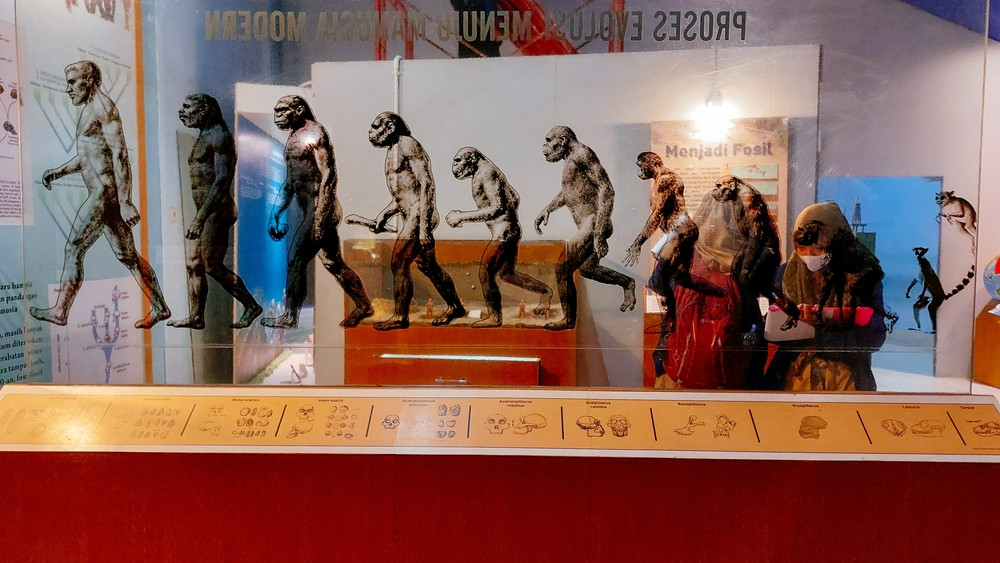 Visitors look at a chronological display about human evolution on Feb. 4, 2025, at the Sangiran Museum of Early Man in Sragen, Central Java. (Shutterstock/Fadhila Hasnah AW)
W
hen the remains of Java Man, the Homo erectus fossil discovered in East Java in 1891 by Dutch anatomist Eugène Dubois, was finally returned to Indonesia after more than a century in the Netherlands, the event was largely framed as a diplomatic and historical victory, the international media speaking about colonial restitution, scientific justice and national pride.
The fossil is among the world’s most important discoveries in human evolution, but for generations the story of Java Man was narrated mostly through European institutions and scientific authority. Its repatriation therefore carried a deeper symbolic message: Indonesia is not merely a site from where history is extracted, but a country that is capable of curating world history itself.
As owner of one of the world’s richest archaeological and paleoanthropological inheritances, the ability to curate history and narrate the story is crucial. Java Man is a significant finding, but there are hundreds of thousands more artifacts worthy of the global limelight that currently reside in the collections of Indonesian museums.
The National Museum of Indonesia alone has been described as possessing one of the richest and most complete collections in Southeast Asia comprising around 190,000 objects, including prehistoric, archaeological, ethnographic and anthropological artifacts.
Historians and archaeologists attribute these riches to the thousands of islands and civilizations across the Indonesian archipelago, including its major Hindu-Buddhist kingdoms, its Islamic maritime history, its cave art, some of which number among the world’s oldest, its extensive underwater archaeology and its megalithic traditions.
But few have tied this rich inheritance to the national context and influence in the way such that natural history museums are tied to Britain’s scientific supremacy or the Louvre is to Paris as a cultural axis and fashion mecca.

The key is the museum, or rather, the museum infrastructure. Countries that understand this have long treated museums as strategic investments.