TheJakartaPost
Please Update your browser
Your browser is out of date, and may not be compatible with our website. A list of the most popular web browsers can be found below.
Just click on the icons to get to the download page.


Popular Reads
Top Results
No results found. Please check your search term and try again
Can't find what you're looking for?
View all search results
Popular Reads
Top Results
No results found. Please check your search term and try again
Can't find what you're looking for?
View all search resultsSecuring stable work in an uncertain world
Every country in our region is struggling with the question of how education systems can keep up with the pace of change.
Change text size
Gift Premium Articles
to Anyone
Share the best of The Jakarta Post with friends, family, or colleagues. As a subscriber, you can gift 3 to 5 articles each month that anyone can read—no subscription needed!
 Set as preferred source
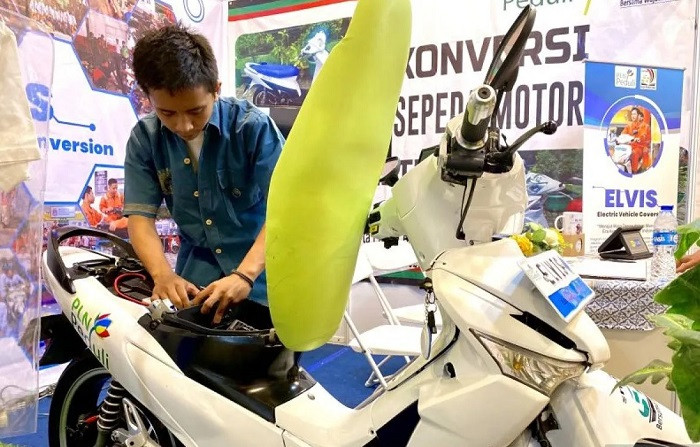 Students of the SMKN 55 state vocational school in Jakarta exhibit on Sept. 27, 2023, motorcycles converted from internal combustion engines to electric power during the Jakarta Innovation Days event (Antara/Cahya Sari)
R
apid technological change, the rise of protectionism and the need for a green transition are huge disruptions not just to countries and industries, but to working lives. Young people face unprecedented challenges in planning their careers, and adults too need to make sure their skills remain relevant.
Every country in our region is struggling with the question of how education systems can keep up with the pace of change.
Indonesia has all the ingredients needed to ensure its workforce is well-placed for the future. It has an ambitious policy of national development that recognizes the need for human capital development and a workforce aligned with industry needs. It has a vibrant, growing start-up sector that harnesses the country’s digitally savvy youth. For at least the next decade it also has a favorable demographic outlook compared to regional competitors, meaning that this decade is a crucial one for addressing workforce challenges.
There is no single fix to any country’s workforce challenge. But the countries that are dealing with this challenge most effectively all have some things in common.
First, they aim to match the skills that graduates have with the skills that employers need. Indonesia’s ministers of manpower and higher education, science and technology have been clear about the importance of aligning training with industry needs. This would help reduce unemployment and fill skills gaps in priority sectors like cyber security, renewable energy, healthcare and manufacturing.
Industry needs to be involved at all stages of education, from designing course offerings based on labor market intelligence, to offering apprenticeships, to helping provide teachers who have up-to-date industry-based knowledge that can be passed on to the next generation of students.

A second ingredient for success is making vocational education central, not secondary to university study. Too often in our region, vocational education is seen as a “second chance” for those who lack the privilege, aptitude or confidence for tertiary education. This attitude does not reflect the contemporary reality of vocational education, which offers flexible and accelerated study and the practical skills needed to succeed in fields of huge economic potential.