TheJakartaPost
Please Update your browser
Your browser is out of date, and may not be compatible with our website. A list of the most popular web browsers can be found below.
Just click on the icons to get to the download page.


Popular Reads
Top Results
No results found. Please check your search term and try again
Can't find what you're looking for?
View all search results
Popular Reads
Top Results
No results found. Please check your search term and try again
Can't find what you're looking for?
View all search resultsDollar blind spot could deepen Indonesia's currency crisis
Rather than attempt to downplay the rupiah's slide through well-meaning but ultimately misleading political statements that inevitably dismiss the plight of rural communities, realpolitik based on honesty backed by data is the best policy approach.
Change text size
Gift Premium Articles
to Anyone
Share the best of The Jakarta Post with friends, family, or colleagues. As a subscriber, you can gift 3 to 5 articles each month that anyone can read—no subscription needed!
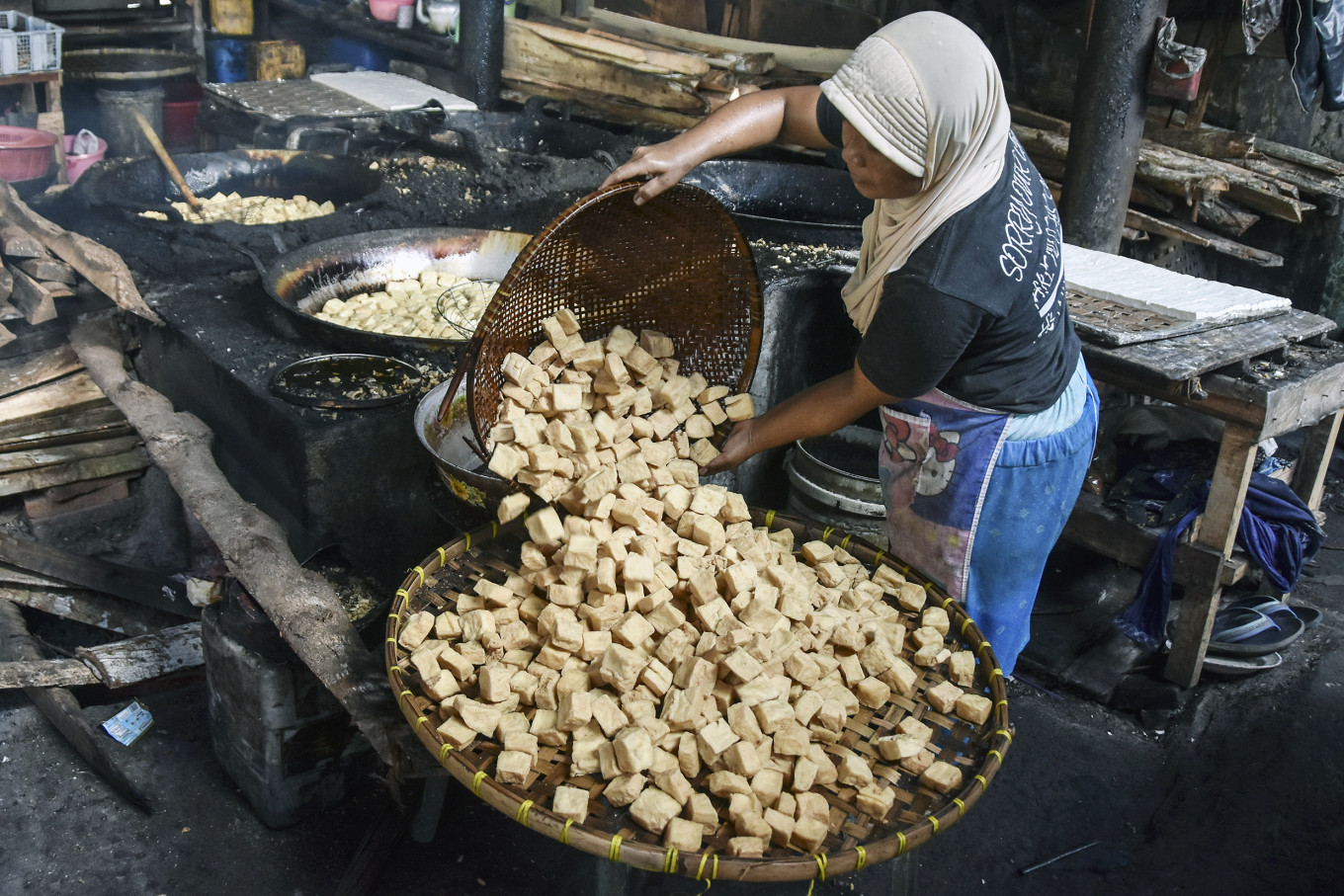 A worker dumps a batch of deep-fried tofu to drain excess oil on March 7, 2023, at a cottage industry in Cisadap, Ciamis, West Java. (Antara/Adeng Bustomi)
T
he rupiah’s recent slide beyond the psychological threshold of 17,700 to the United States dollar is not merely market fluctuation. It is an economic shock, the consequences of which will inevitably ripple from financial centers to the most remote rural communities.
Yet the national leadership’s suggestion, that villagers will be unaffected because they do not transact in US dollars, exposes a striking disconnect from the realities of modern macroeconomics. Rural communities no longer exist in isolated autarkies detached from global supply chains. Every weakening of the rupiah acts like a silent thief, steadily eroding the purchasing power of ordinary households through imported inflation.
Since late 2025, the rupiah has faced persistent pressure and managed to strengthen against the dollar only once: during the first 10 trading days of 2026.
The roots of the rupiah’s weakness lay in a combination of external pressures and domestic liquidity strains. The US Federal Reserve has kept interest rates elevated between 4 and 4.5 percent for longer than markets anticipated, triggering substantial capital outflows from emerging economies, including Indonesia.
Domestically, dollar scarcity has been aggravated by surging foreign exchange demand from state-linked giants such as Pertamina, PLN and the sovereign investment vehicle Danantara. All seek to finance capital expenditures and energy imports amid oil prices soaring above $105 per barrel, far above the government’s budget assumption of $70.
The argument that rural Indonesians do not use dollars may be literally correct, but it is economically misleading. In modern macroeconomic theory, currency depreciation quickly translates into higher domestic prices via what economists call the pass-through effect.

The first transmission channel is energy and logistics. Indonesia remains a net oil importer, and as the rupiah weakens, the cost of fuel imports rises, pushing up nonsubsidized fuel prices and transportation costs. As a result, farmers face higher expenses transporting crops from villages to urban markets, while consumer goods transported from cities to rural areas also become more expensive. For agricultural households already operating on razor-thin margins, the impact is immediate.