The Jakarta Post
Please Update your browser
Your browser is out of date, and may not be compatible with our website. A list of the most popular web browsers can be found below.
Just click on the icons to get to the download page.


Popular Reads
Top Results
No results found. Please check your search term and try again
Can't find what you're looking for?
View all search results
Popular Reads
Top Results
No results found. Please check your search term and try again
Can't find what you're looking for?
View all search resultsIndonesia is officially aging
As its population graying at an unprecedented rate, Indonesia must pivot from viewing its elderly as a cultural burden to designing proactive policies that transform them into a national asset.
Change text size
Gift Premium Articles
to Anyone
Share the best of The Jakarta Post with friends, family, or colleagues. As a subscriber, you can gift 3 to 5 articles each month that anyone can read—no subscription needed!
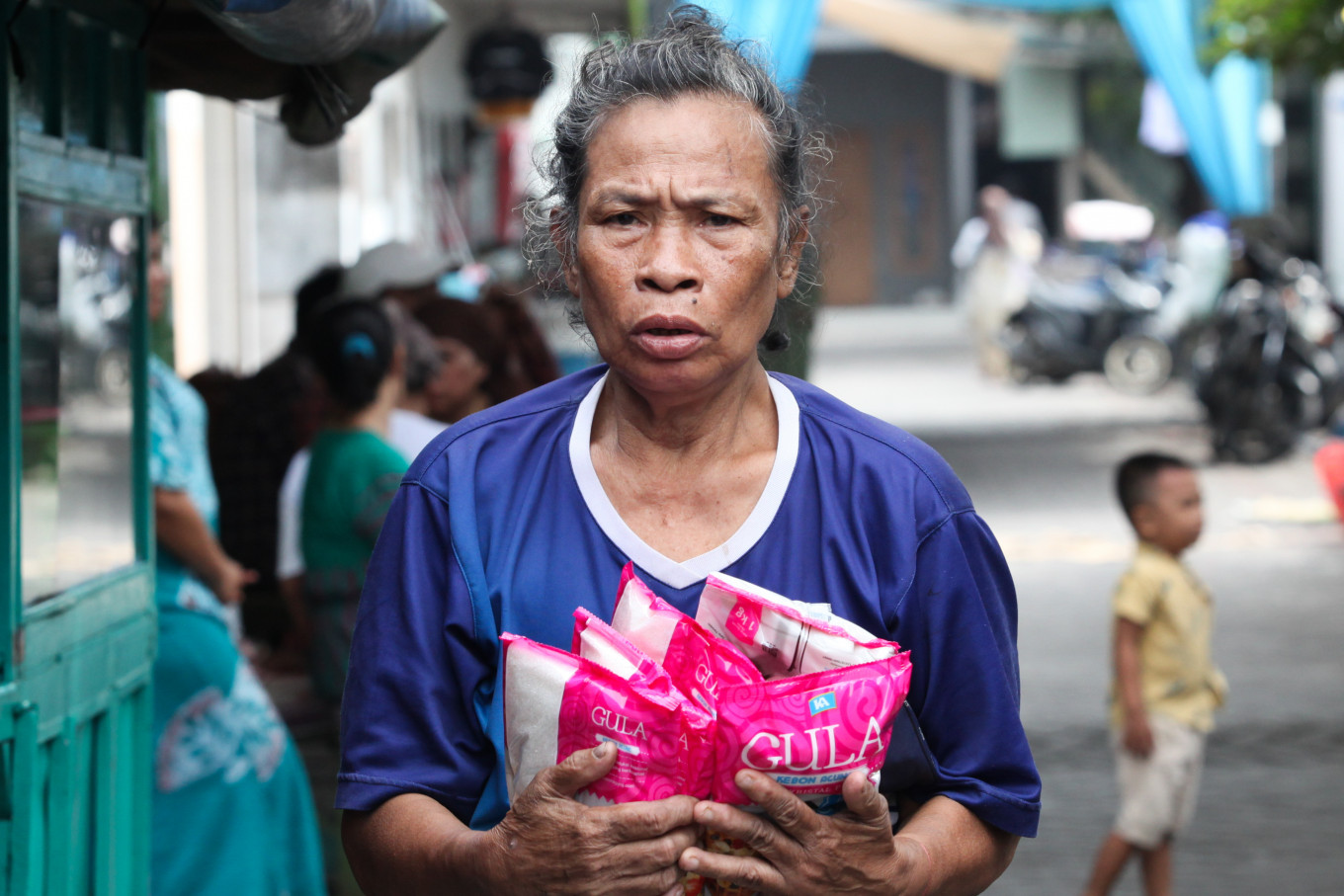 An elderly woman carries subsidized packaged sugar purchased at a low-cost market on Jl. Hang Tuah in Surabaya, East Java, on March 31. The sugar industry has warned of rising costs and land scarcity under a new refinery policy. (Antara/Didik Suhartono)
R
ecent findings by Statistics Indonesia (BPS) showing that the country has officially transitioned into an aging population must help us understand a striking new social phenomenon: the rising reluctance or outright refusal of some young people to care for their aging parents. This trend stands at odds with the long-held cultural belief that respect and filial piety toward the elderly are unshakeable pillars of Indonesian society.
Today, media reports and viral videos of elderly parents intentionally abandoned in nursing homes or public spaces are no longer anomalies. Conversations and bitter complaints between senior citizens and their adult children surface regularly across social media platforms, triggering intense public debate over family obligations.
This shifting demographic landscape presents a critical challenge for President Prabowo Subianto’s administration. Citing data from the Intercensal Survey (SUPAS), BPS concluded that Indonesia's elderly population reached 11.97 percent last year. This marks the first time the country has breached the 10 percent threshold used internationally to distinguish a young society from an aging one.
In fact, skyrocketing costs for elderly degenerative diseases, including kidney failure, heart disease, stroke and cancer, have plunged the Health Care and Social Security Agency's (BPJS Kesehatan) national health insurance (JKN) program into a severe crisis. Because these chronic treatments outpace premium revenue, early expenditures have already hit 111 percent of the annual budget this year, driving a projected Rp 20 trillion (US$1.12 billion) to Rp 30 trillion deficit.
On a more positive note, Indonesia still retains a massive productive-age population, which hovers around 68 to 69 percent. This means the country continues to enjoy a substantial demographic bonus, which is expected to give a major boost to the nation’s bid to emerge as a high-income country by its centenary in 2045.
However, Indonesia must now navigate a delicate dual reality: leveraging its current workforce while simultaneously preparing for an unprecedented influx of seniors, a path previously trodden by other Asian nations like Japan, South Korea and China.

According to United Nations standards and Indonesian law, anyone aged 60 or older is classified as elderly. While this demographic is most heavily concentrated in Java, particularly in Yogyakarta, Central Java, East Java and Jakarta, cities outside of Java are quickly confronting identical structural pressures.