TheJakartaPost
Please Update your browser
Your browser is out of date, and may not be compatible with our website. A list of the most popular web browsers can be found below.
Just click on the icons to get to the download page.


Popular Reads
Top Results
No results found. Please check your search term and try again
Can't find what you're looking for?
View all search results
Popular Reads
Top Results
No results found. Please check your search term and try again
Can't find what you're looking for?
View all search resultsWhen volatility is good politics
The Iran war has revealed how deeply material interests are embedded in strategic calculations, concentrating rewards among powerful insiders while leaving society to absorb the costs. As long as chaos remains politically and economically rewarding, such conflicts will remain difficult to contain.
Change text size
Gift Premium Articles
to Anyone
Share the best of The Jakarta Post with friends, family, or colleagues. As a subscriber, you can gift 3 to 5 articles each month that anyone can read—no subscription needed!
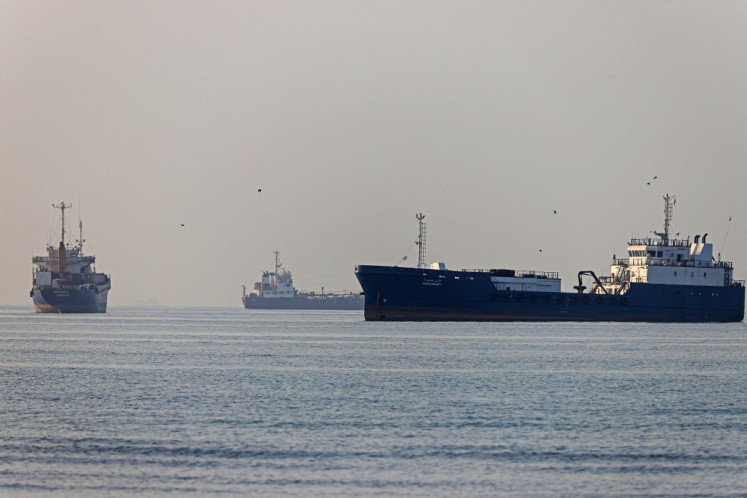
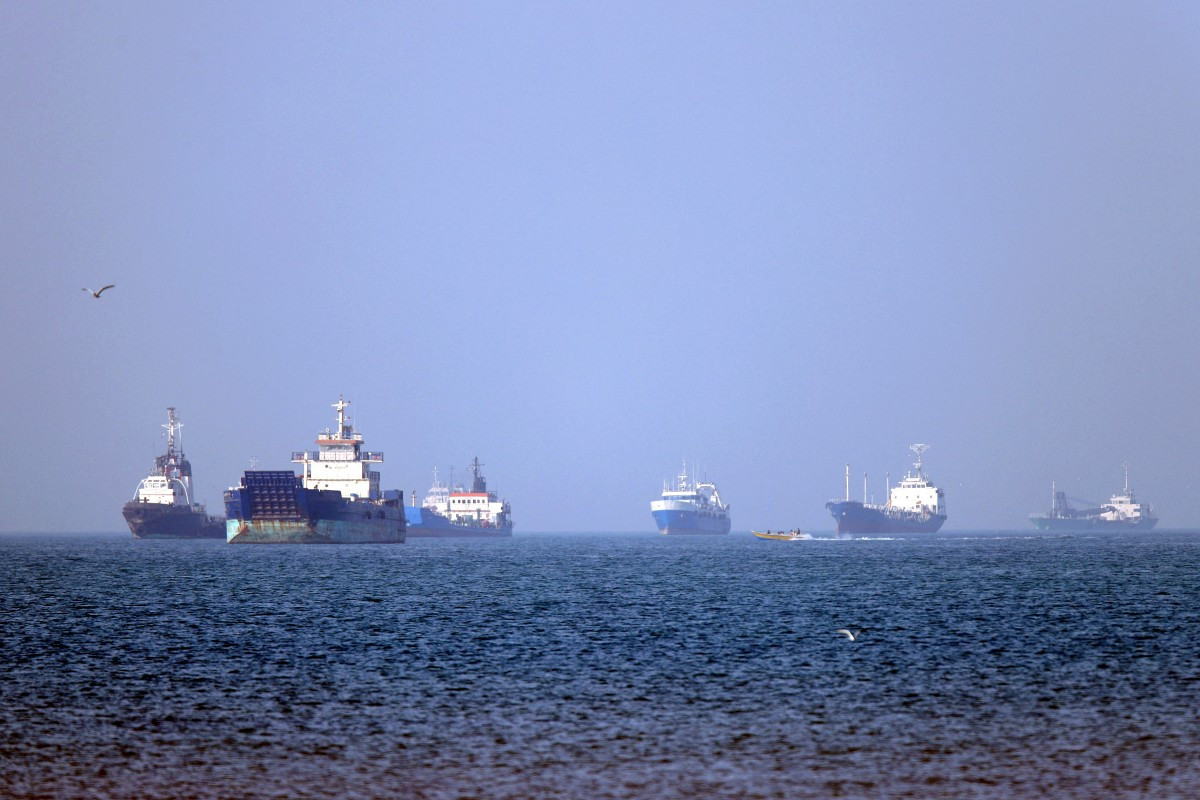 Cargo ships are anchored in the Strait of Hormuz off the port city of Bandar Abbas in southern Iran, in this picture from the Iranian Students' News Agency (ISNA) obtained on May 4, 2026. (AFP/ISNA/Amirhossein Khorgooei)
T
he United States-Israeli war with Iran has revealed how instability can become a powerful political instrument. Leaders can exploit crises to maintain supporters’ loyalty, even while imposing costs on them, and extract concessions from domestic and foreign adversaries through coercion and manufactured unpredictability.
In a forthcoming paper, Canadian economist Ronald Wintrobe calls this dynamic “thugocracy”: a form of rule grounded in coercion, intimidation and unpredictability.
Over the past three months, the conflict has swung repeatedly, sometimes within hours, from escalation to de-escalation, with threats, strikes, sanctions, tolls and ceasefire announcements following one another at breakneck speed. On April 7, for example, only hours after warning that “a whole civilization will die tonight”, US President Donald Trump abruptly shifted course and announced a ceasefire, claiming that America’s military objectives had been achieved.
Conventional frameworks for diplomacy and deterrence are poorly suited to a conflict of this kind. Here, Wintrobe’s thugocracy concept is especially valuable because it highlights how coercion, instability and political loyalty can interact in ways that redistribute the costs and benefits of conflict unevenly across society.
Political and economic insiders have the financial resources and privileged information to benefit from instability, while all others absorb the costs. Convinced that the sacrifices imposed by war, sanctions and economic coercion serve a larger purpose, a leader’s supporters are willing to endure substantial hardship.
The Trump administration illustrates how war and profit are becoming increasingly intertwined. In March, for example, the Financial Times reported that a broker associated with Pete Hegseth, the secretary of “war” (defense), attempted to acquire a defense-focused investment fund just before the start of the Iran war.

While that allegation remains disputed, the broader dynamic is clear: Those closest to power are uniquely positioned to anticipate shocks, hedge against them and profit from the instability that follows. Prediction markets like Polymarket have pushed that logic even further, turning geopolitical escalation itself into a speculative asset.