TheJakartaPost
Please Update your browser
Your browser is out of date, and may not be compatible with our website. A list of the most popular web browsers can be found below.
Just click on the icons to get to the download page.


Popular Reads
Top Results
No results found. Please check your search term and try again
Can't find what you're looking for?
View all search results
Popular Reads
Top Results
No results found. Please check your search term and try again
Can't find what you're looking for?
View all search resultsCan Indonesia still make Big Tech pay for news?
A presidential regulation that depends on voluntary negotiation ultimately asks platforms to act against their own commercial interest out of goodwill.
Change text size
Gift Premium Articles
to Anyone
Share the best of The Jakarta Post with friends, family, or colleagues. As a subscriber, you can gift 3 to 5 articles each month that anyone can read—no subscription needed!
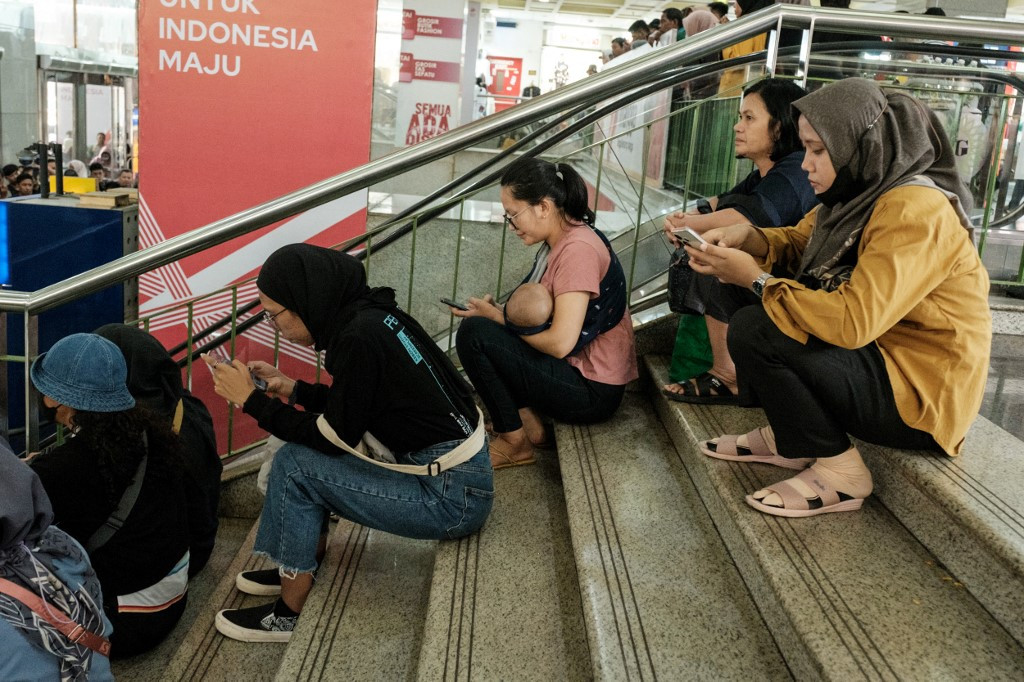 Women use smartphones on Sept. 28, 2023, at the entrance of Tanah Abang Market, Southeast Asia's largest wholesale shopping center for garments and textiles, in Jakarta. (AFP/Yasuyoshi Chiba)
I
ndonesia’s press has seen better days. Newsrooms are being squeezed from all directions: Google’s core updates have made publisher traffic increasingly unpredictable; artificial intelligence answer engines now synthesize journalistic work before readers ever reach its source; advertising and cost per mile (CPM) ad rates remain under pressure; and much of the value generated by public attention continues to be captured by platforms. For smaller and local publishers, these are not separate pressures but one compounding crisis, and the arithmetic is becoming difficult to survive.
This is why Australia’s latest initiative deserves Indonesia’s serious attention.
On April 28, the Australian government released draft legislation for a News Bargaining Incentive, open for consultation until May 18 and expected to reach parliament later this year. Under the proposal, large digital platforms like Meta, Google and TikTok would face pressure to strike commercial deals with Australian news publishers. Platforms that refuse risk a levy of 2.25 percent of their Australian revenue; those that enter qualifying agreements can reduce their liability through offsets, rewarding negotiation over evasion.
This is not mere fiscal policy. It is a test of whether governments still have the political will to defend journalism in a platform-dominated economy.
Australia’s earlier News Media Bargaining Code had already forced platforms to the table, but it left open a critical escape route: platforms could threaten to remove or downgrade news content to avoid being drawn into regime. Meta exposed this loophole in 2024, when it refused to renew commercial deals with Australian publishers and later signaled it could block news if forced to pay. The new proposal forecloses that maneuver by making platform responsibility less dependent on whether platforms actively carry news.
Indonesia should pay close attention, because its own publisher rights framework rests on similarly uncertain ground.

Presidential Regulation No. 32/2024 acknowledged platform responsibility toward quality journalism and created a basis for cooperation with press companies – both genuinely useful.