TheJakartaPost
Please Update your browser
Your browser is out of date, and may not be compatible with our website. A list of the most popular web browsers can be found below.
Just click on the icons to get to the download page.


Popular Reads
Top Results
No results found. Please check your search term and try again
Can't find what you're looking for?
View all search results
Popular Reads
Top Results
No results found. Please check your search term and try again
Can't find what you're looking for?
View all search resultsSustainable economies will own the future
Though the political and cultural backlash against “sustainability” is real, so is the global economic transition toward cleaner energy technologies and electrification.
Change text size
Gift Premium Articles
to Anyone
Share the best of The Jakarta Post with friends, family, or colleagues. As a subscriber, you can gift 3 to 5 articles each month that anyone can read—no subscription needed!
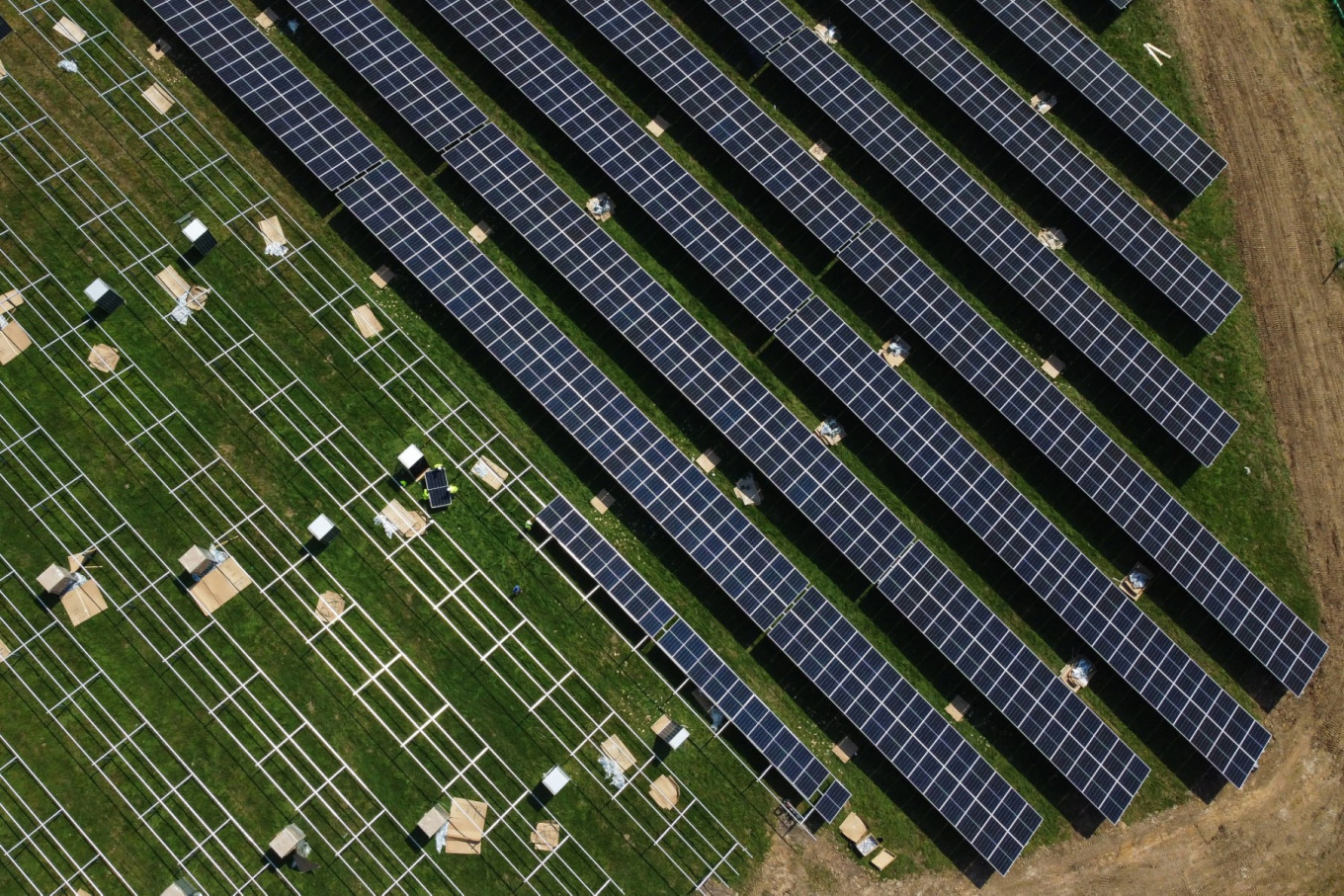 Workers lift solar panels onto their frames on Aug. 1, 2024, at a solar farm on old farmland in Oxfordshire, the United Kingdom. (AFP/Justin Tallis)
E
nvironmental and climate concerns appear to be in retreat worldwide. The word sustainability has become politically charged, United States President Donald Trump administration openly mocks corporate environmental, social, governance (ESG) criteria, and many companies are shelving their net-zero-emissions pledges.
But look beneath the surface, and you will see something else. Though the political and cultural backlash against “sustainability” is real, so is the global economic transition toward cleaner energy technologies and electrification.
After all, the work of establishing corporate sustainability standards has continued. A growing number of jurisdictions are adopting the International Sustainability Standards Board’s disclosure framework, and in Europe, the European Sustainability Reporting Standards remain in force. Despite their differences, such initiatives are converging into a single global architecture.
This convergence is driven not only by complementary regulations, but also by the world’s largest pools of capital. Pension funds, sovereign wealth funds, insurance balance sheets and development-finance institutions are increasingly bound by net-zero commitments, taxonomy-aligned reporting, and transition-risk frameworks.
This is no passing trend. We are witnessing a fundamental repricing, one that is being applied gradually through fiduciary and prudential decisions. Companies that can produce credible carbon-reduction strategies are recognized as investable assets, and often can borrow on more attractive financing terms. Those that cannot run the risk of being priced accordingly.
Such signals are unlikely to change. The COVID-19 pandemic and the wars in Ukraine and now Iran have reframed the issue of sustainability, which is now as much about sovereignty and economic security as it is about the planet. Reducing dependencies on fossil fuels is the most direct route to energy security, just as shorter supply chains build industrial resilience and circular material flows ensure strategic autonomy. Captains of industry and national-security strategists are increasingly reading from the same playbook.

Of course, the West has been slow to come to this realization, whereas China made a deliberate strategic choice years ago to become the world’s leading sustainable power. China now manufactures roughly 80 percent of the world’s solar panels, dominates battery supply chains, and is rapidly scaling up green hydrogen, offshore wind and electric mobility technologies. Clean technology is the global economy’s competitive frontier, and China intends to own it.