The Jakarta Post
Please Update your browser
Your browser is out of date, and may not be compatible with our website. A list of the most popular web browsers can be found below.
Just click on the icons to get to the download page.


Popular Reads
Top Results
No results found. Please check your search term and try again
Can't find what you're looking for?
View all search results
Popular Reads
Top Results
No results found. Please check your search term and try again
Can't find what you're looking for?
View all search resultsBalancing passengers' rights and airlines' survival in ASEAN
To save Southeast Asia's aviation sector from collapse due to geopolitical and economic crises, regulators must scrap outdated price controls and shift from penalizing airlines to sharing the responsibility of passenger care.
Change text size
Gift Premium Articles
to Anyone
Share the best of The Jakarta Post with friends, family, or colleagues. As a subscriber, you can gift 3 to 5 articles each month that anyone can read—no subscription needed!
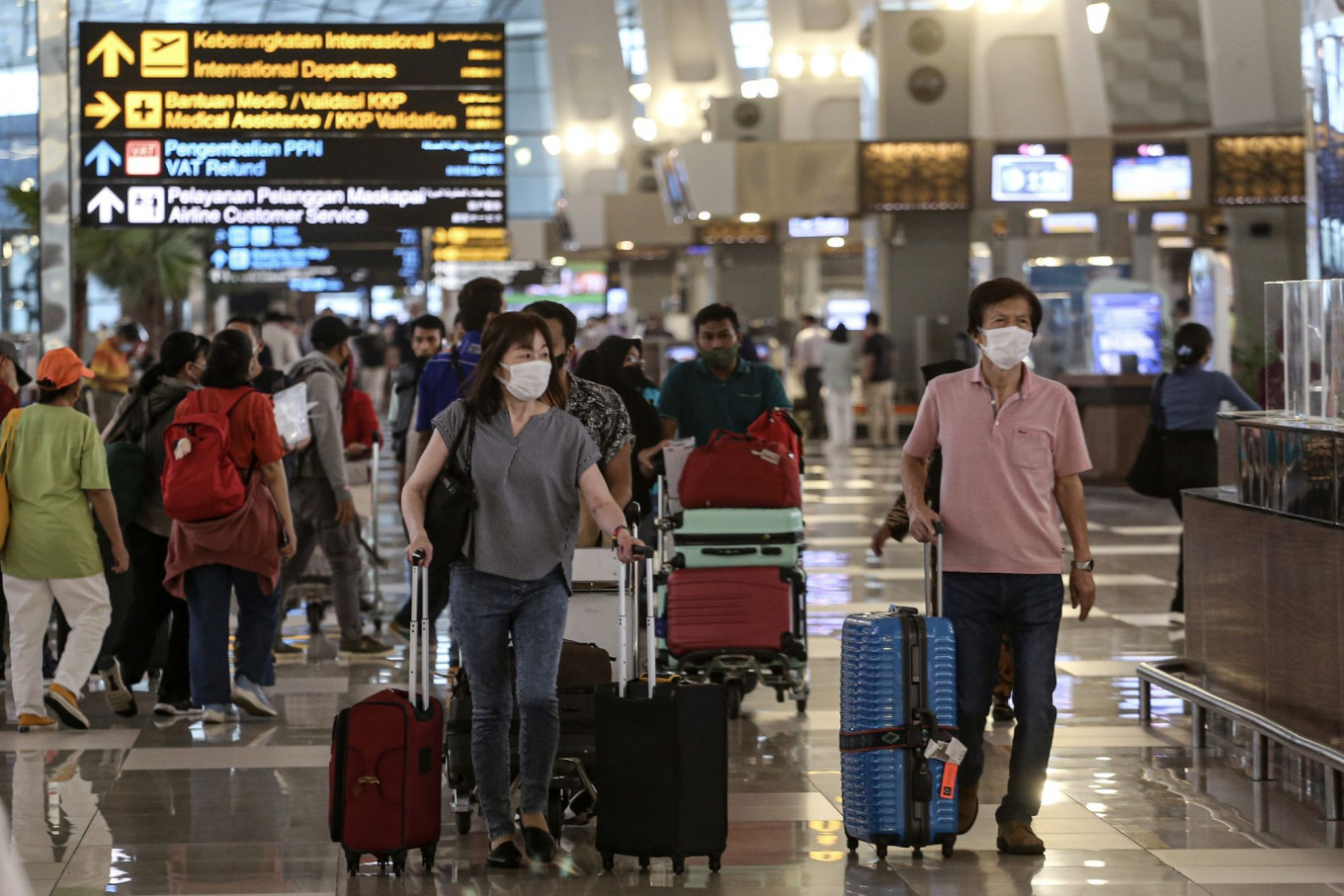 Passengers walk past check-in counters on Oct. 18, 2022, in Terminal 3 at Soekarno-Hatta International Airport in Tangerang, Banten. (Antara/Fauzan)
T
he last two years have been exceptionally challenging for global and regional airline industries. Most airlines in Southeast Asia are still struggling to recover, each relying on their distinct strategies following the COVID-19 pandemic.
Some are even on the brink of insolvency or have perished already. For example, Singapore-based Jetstar Asia operated its last flight in July 2025 and more recently, the United States low-cost carrier Spirit Airlines ceased operations earlier this month after 34 years of existence.
Furthermore, global supply chain issues have made it incredibly difficult for carriers to acquire new aircraft or spare parts. In Indonesia, flag carrier Garuda Indonesia is among those severely affected. Consequently, supply and demand have become highly unbalanced on certain domestic routes.
This also applies to airlines across ASEAN member states, casting doubt on the realization of seamless regional connectivity, as the bloc promised.
The ongoing Middle East conflict since late February has added another layer of complication, forcing the closure of several airspaces for security purposes.
Article 1 of the Chicago Convention allows states to close their airspace to both scheduled and nonscheduled flights in the name of absolute air sovereignty, without any time limits. While some airspaces have reopened since, there is no telling for how long, leaving the industry mired in prolonged uncertainty.

The shooting down of Malaysia Airlines flight MH17 in Ukraine over a decade ago provided hard lessons regarding not only flight security but also legal and insurance liabilities. Today, aircraft financing companies are terrified of losing their assets, especially if insurers refuse to compensate for losses by citing airline negligence in flight planning. As a result, flights between the Asia-Pacific and Europe have been heavily disrupted to ensure safe passage, forcing lengthy reroutes that incur massive operational costs.