The Jakarta Post
Please Update your browser
Your browser is out of date, and may not be compatible with our website. A list of the most popular web browsers can be found below.
Just click on the icons to get to the download page.


Popular Reads
Top Results
No results found. Please check your search term and try again
Can't find what you're looking for?
View all search results
Popular Reads
Top Results
No results found. Please check your search term and try again
Can't find what you're looking for?
View all search resultsFrom coronavirus to hantavirus: Ecosystems in crisis
As human activity shatters ecological boundaries, viruses once confined to the wild are finding dangerous new pathways into our world.
Change text size
Gift Premium Articles
to Anyone
Share the best of The Jakarta Post with friends, family, or colleagues. As a subscriber, you can gift 3 to 5 articles each month that anyone can read—no subscription needed!
 Set as preferred source
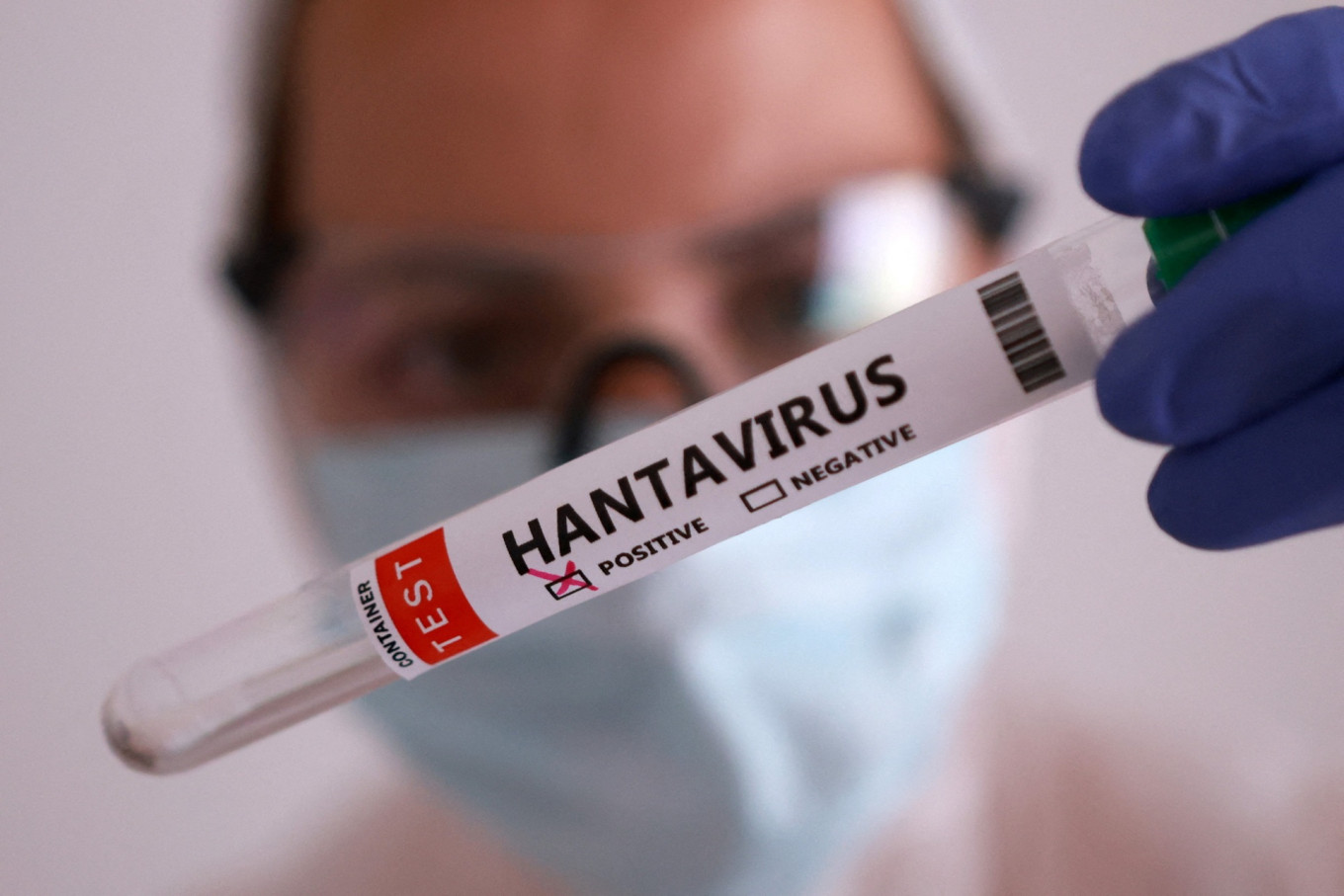 A test tube labelled “Hantavirus positive“ is held in this illustration taken on May 7, 2026. (Reuters/Dado Ruvic)
T
he COVID-19 pandemic highlighted zoonotic diseases as a critical global health concern. The term zoonosis, which denotes diseases transmitted from animals to humans, has gained prominence in scientific discourse.
Outbreaks such as Ebola and COVID-19 illustrate that the boundary between human populations and wildlife is more permeable than previously recognized. The identification of hantavirus cases in early May further emphasizes this ongoing threat. Crucially, the Centers for Disease Control and Prevention (CDC) report that three out of four emerging infectious diseases (EIDs) in humans originate in animals.
Hantavirus is primarily hosted by rodents, especially wild rats. In these animal reservoirs, the virus circulates among rodent populations while natural predators and ecological processes help regulate their numbers.
Under these natural conditions, humans remained largely unaffected by the virus. However, when transmitted to humans, hantavirus can cause life-threatening conditions such as Hantavirus Pulmonary Syndrome (HPS), marked by severe respiratory distress and pulmonary edema, and Hemorrhagic Fever with Renal Syndrome (HFRS), characterized by renal hemorrhage.
Climate change, characterized by global warming and geoclimatic variations, exerts a significant impact on the survival and distribution of hosts, vectors and pathogens. Coronavirus and hantavirus infections illustrate how EIDs are often linked to anthropogenic (human-driven) changes in the environment. For instance, the unprecedented, rapid increase in average surface temperatures over the past century, driven by greenhouse gas emissions, leads to rising sea levels and subsequent coastal flooding.
These shifts are heavily driven by atmospheric cycles. The El Niño-Southern Oscillation (ENSO), the irregular periodic fluctuations consisting of warming (El Niño) and cooling phases (La Niña) in the equatorial Pacific Ocean, alters global weather patterns. These fluctuations raise ambient temperatures and alter moisture levels, which in turn accelerate the reproduction cycles, growth, survival and transmission of pathogens.

On a local scale, these elevated temperatures and shifting precipitation patterns disrupt ecosystems, including agricultural systems like rice cultivation. Periods of heavy precipitation lead to dense vegetation and bumper crops.