The Jakarta Post
Please Update your browser
Your browser is out of date, and may not be compatible with our website. A list of the most popular web browsers can be found below.
Just click on the icons to get to the download page.


Popular Reads
Top Results
No results found. Please check your search term and try again
Can't find what you're looking for?
View all search results
Popular Reads
Top Results
No results found. Please check your search term and try again
Can't find what you're looking for?
View all search resultsA cold shower for the AI mania
Although generative AI tools have improved rapidly and now outperform humans across many tasks, the market's current euphoria may not be justified. With AI firms increasingly resorting to debt financing, it is worth pausing to consider all the things that could go wrong.
Change text size
Gift Premium Articles
to Anyone
Share the best of The Jakarta Post with friends, family, or colleagues. As a subscriber, you can gift 3 to 5 articles each month that anyone can read—no subscription needed!
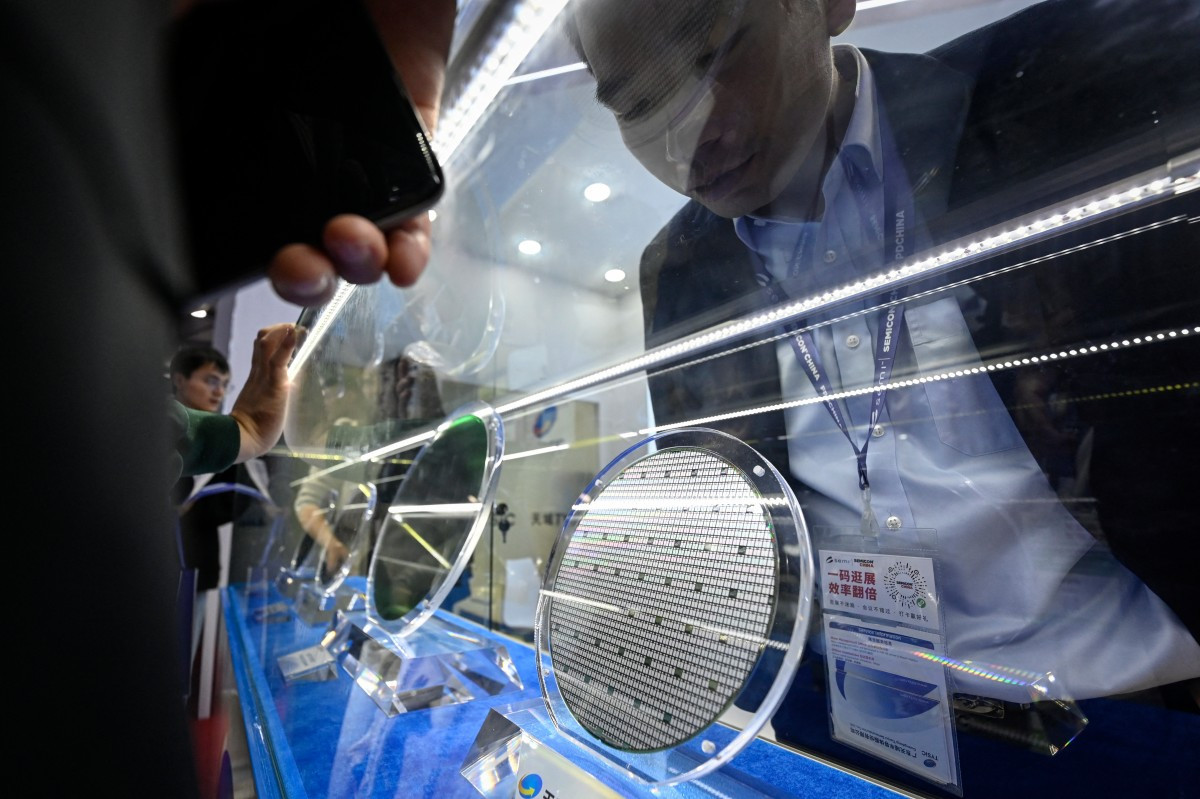 An attendant looks at a semiconductor wafer on March 25 at the SEMICON China 2026 trade fair in Shanghai. (AFP/Jade Gao)
A
rtificial intelligence tools will undoubtedly transform the nature of work. Large language models (LLM) can already generate referee reports on my own research papers that rival those by human referees.
Unlike humans who are always pressed for time, an LLM “knows” or can access much more of the literature in an instant and often exhibits fewer biases. AI points out my analytical weaknesses, checks proofs and makes suggestions for improvement. Only rarely are human reports better, typically because they connect the dots and offer new insights.
Nonetheless, the market euphoria around AI has become worrisome, especially given the extent of large-scale debt issuance by the sector. It is therefore worth considering where in the AI supply chain things could go wrong.
The supply chain starts with producers and designers of AI infrastructure: firms like TSMC and Samsung that fabricate chips, Nvidia, which designs them, and Cisco, which provides connectivity. Then come the hyper-scalers like Amazon, Google and Microsoft, which are building data centers both for the use of their own AI models and in order to sell compute (processing power) to others.
In addition to the hyper-scalers are more specialized companies like Equinix (data centers) and of course, Anthropic and OpenAI, the developers of foundational LLMs.
Finally, there are the individual and corporate end users of AI services. Individual use is growing fast and corporate use in some areas (software development and customer support) is exploding.

But most large businesses, while experimenting intensely, have yet to implement end-to-end uses. Many still need to organize their historical data to train AI for their own purposes as well as to restructure their traditional operations so that AI can be deployed to improve with experience.