TheJakartaPost
Please Update your browser
Your browser is out of date, and may not be compatible with our website. A list of the most popular web browsers can be found below.
Just click on the icons to get to the download page.


Popular Reads
Top Results
No results found. Please check your search term and try again
Can't find what you're looking for?
View all search results
Popular Reads
Top Results
No results found. Please check your search term and try again
Can't find what you're looking for?
View all search resultsFrom batik to botox: A brief history of status signaling in Indonesia
From an earlier age of Balinese tooth filing and Javanese courtly refinement to today’s SCBD culture of lip fillers and jawline contouring, the history of Indonesian status signaling reveals how power is continually rewritten onto the human body.
Change text size
Gift Premium Articles
to Anyone
Share the best of The Jakarta Post with friends, family, or colleagues. As a subscriber, you can gift 3 to 5 articles each month that anyone can read—no subscription needed!
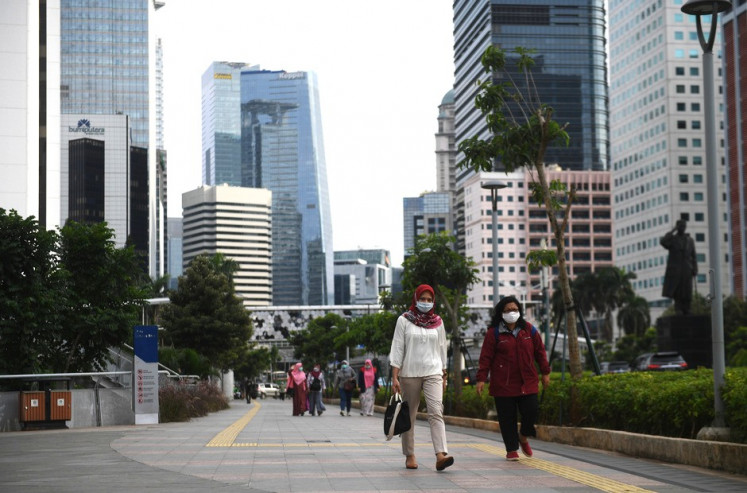
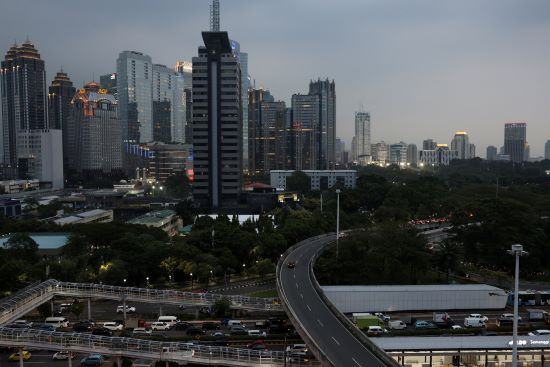 High-rise buildings in the Sudirman Central Business District (SCBD) in South Jakarta are illuminated by the sunset on Aug. 2, 2024. (Reuters/Ajeng Dinar Ulfiana)
In contemporary Jakarta, wealth is no longer merely worn. It is injected, sculpted, whitened, tightened and optimized.
For much of the twentieth century, status in Indonesia announced itself through visible possessions: batik, jewelry, imported cars, sprawling homes, private schools, pilgrimage or children studying abroad.
Today, however, the logic of prestige is increasingly migrating inward, onto the body itself. Veneers, rhinoplasty, blepharoplasty, luxury skincare regimens, jawline contouring, anti-aging treatments, Pilates bodies and “expensive natural beauty” have become some of the most powerful status symbols in urban Indonesia.
This transformation is not simply vanity, nor merely the spread of Korean beauty culture or Western consumerism. It reflects a deeper shift in how status itself is communicated in a hyper-visual, algorithmically mediated society.
Luxury goods have become too democratized to function reliably as elite markers. A handbag can be rented. A luxury car can be leased. An aspiring influencer can crash an expensive rooftop venue in SCBD and perform wealth for a night. Social media allows almost anyone to simulate elite consumption temporarily. Someone can contour their face with Douyin makeup techniques to create the optical illusion of sharper jawlines or rounder eyes. But veneers, rhinoplasty and double-eyelid surgery require something much harder to counterfeit: capital itself.
That is what makes modern cosmetic surgery such an unusually powerful status signal. A Rolex signals money. A nose job signals money, pain tolerance, recovery time, bodily discipline and commitment to elite beauty norms all at once.

Anthropologists refer to this as “costly signaling”: the idea that social status is often communicated through acts that are difficult, expensive, painful or wasteful enough that not everyone can perform them convincingly.