TheJakartaPost
Please Update your browser
Your browser is out of date, and may not be compatible with our website. A list of the most popular web browsers can be found below.
Just click on the icons to get to the download page.


Popular Reads
Top Results
No results found. Please check your search term and try again
Can't find what you're looking for?
View all search results
Popular Reads
Top Results
No results found. Please check your search term and try again
Can't find what you're looking for?
View all search resultsSecurity operations: A willful repeat of gross crimes against civilians
Driven by land and resource grabs masked as counterterrorism operations, the escalation of military operations in Poso and Papua are willfully exposing Indonesian citizens to a brutal campaign of violence and forced displacement.
Change text size
Gift Premium Articles
to Anyone
Share the best of The Jakarta Post with friends, family, or colleagues. As a subscriber, you can gift 3 to 5 articles each month that anyone can read—no subscription needed!
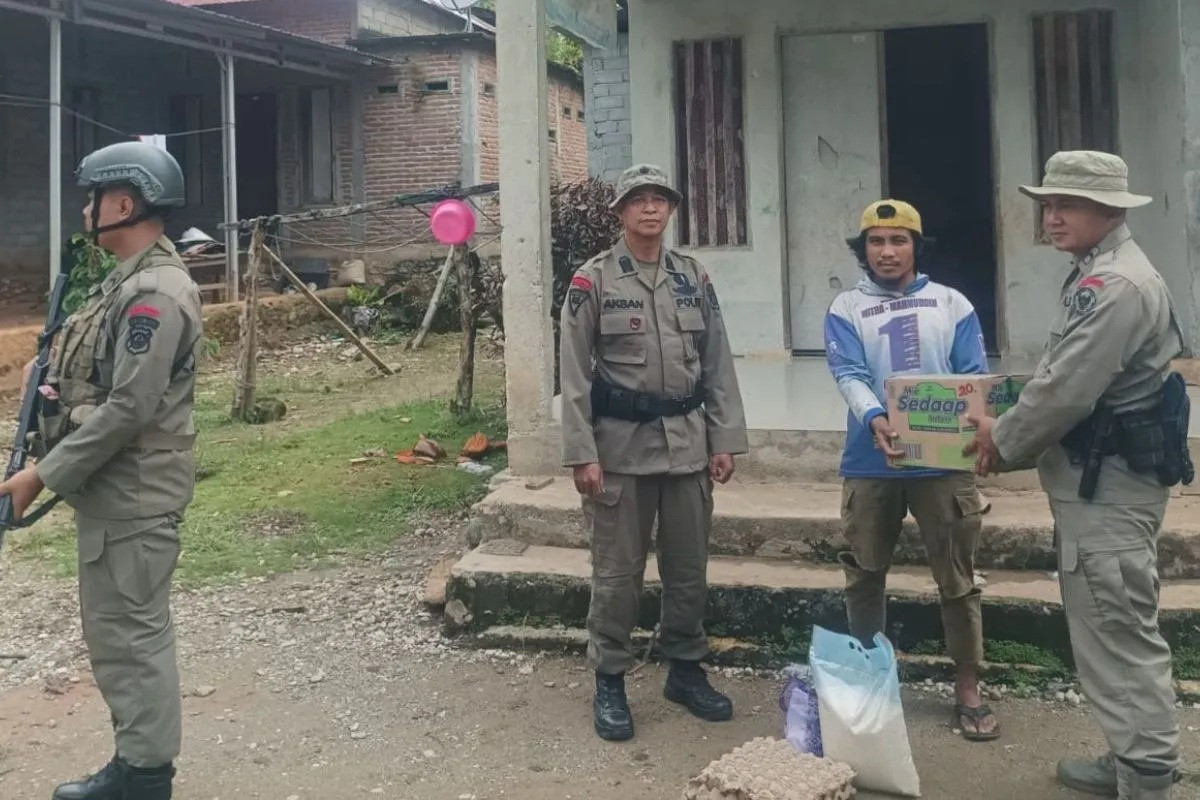 Human connection: Local members of Operation Madago Raya, a deradicalization and counterterrorism public security initiative run jointly by the National Police and the Indonesian Military, provides basic staples to a former terrorist (second right) on Nov. 3, 2025, during a social assistance handover event in Poso, Central Sulawesi. (Antara/Central Sulawesi Police)
T
he arrest of eight suspected terrorists early this month in Poso, Central Sulawesi, brings to mind predictions of a resurgence in violent extremism. While renewing counterterrorism operations is a tempting fix for authorities, recent events suggest a darker pattern.
Since January, the rising toll of civilian casualties from military raids in Papua proves that continuing these security operations willfully exposes civilians to a high risk of death in cross fires and other shootings, as well as due to sexual violence, abductions, beheadings, arbitrary arrests, torture and famine following forced displacement.
A 3-year-old boy and four women were among the 13 civilians killed in a military strike on April 14, according to mountainous Puncak regency’s independent Human Rights Investigation Team in Central Papua, online news media Jubi.id reported on May 16. Eleven other civilians were wounded, including four men aged between 55 and 77 and a pregnant woman.
The Indonesian Military (TNI) claimed that residents had reported the presence of an armed militia in the area, while witnesses reported seeing drones flying over the area since early April. The subsequent air strikes hit seven villages in Kemburu district, followed by ground skirmishes after dawn.
According to the investigation team, which comprises students and representatives from NGOs, churches and the Papua Regional Representatives Council (DPD), none of the 22,000 residents and refugees who fled were combatants of the Free Papua Movement (OPM) separatist group.
Prior to this, the number of displaced Papuans, mostly women and children, had exceeded 100,000, according to Human Rights Monitor.

Since 1963, military operations targeting insurgents or "armed criminals" had forced Papuans to flee their homes, only to be displaced again whenever violence has erupted in their places of shelter. Because these communities are constantly on the run, children miss school and families are forced to abandon their fields, pigs and fowl, leaving them without access to food and basic health services.