The Jakarta Post
Please Update your browser
Your browser is out of date, and may not be compatible with our website. A list of the most popular web browsers can be found below.
Just click on the icons to get to the download page.


Popular Reads
Top Results
No results found. Please check your search term and try again
Can't find what you're looking for?
View all search results
Popular Reads
Top Results
No results found. Please check your search term and try again
Can't find what you're looking for?
View all search resultsPrepare strong buffers as a perfect global storm is brewing
Armed with solid GDP growth and well-capitalized banks, Indonesia has the foundation to protect its economy and navigate looming global pressures through swift policy action.
Change text size
Gift Premium Articles
to Anyone
Share the best of The Jakarta Post with friends, family, or colleagues. As a subscriber, you can gift 3 to 5 articles each month that anyone can read—no subscription needed!
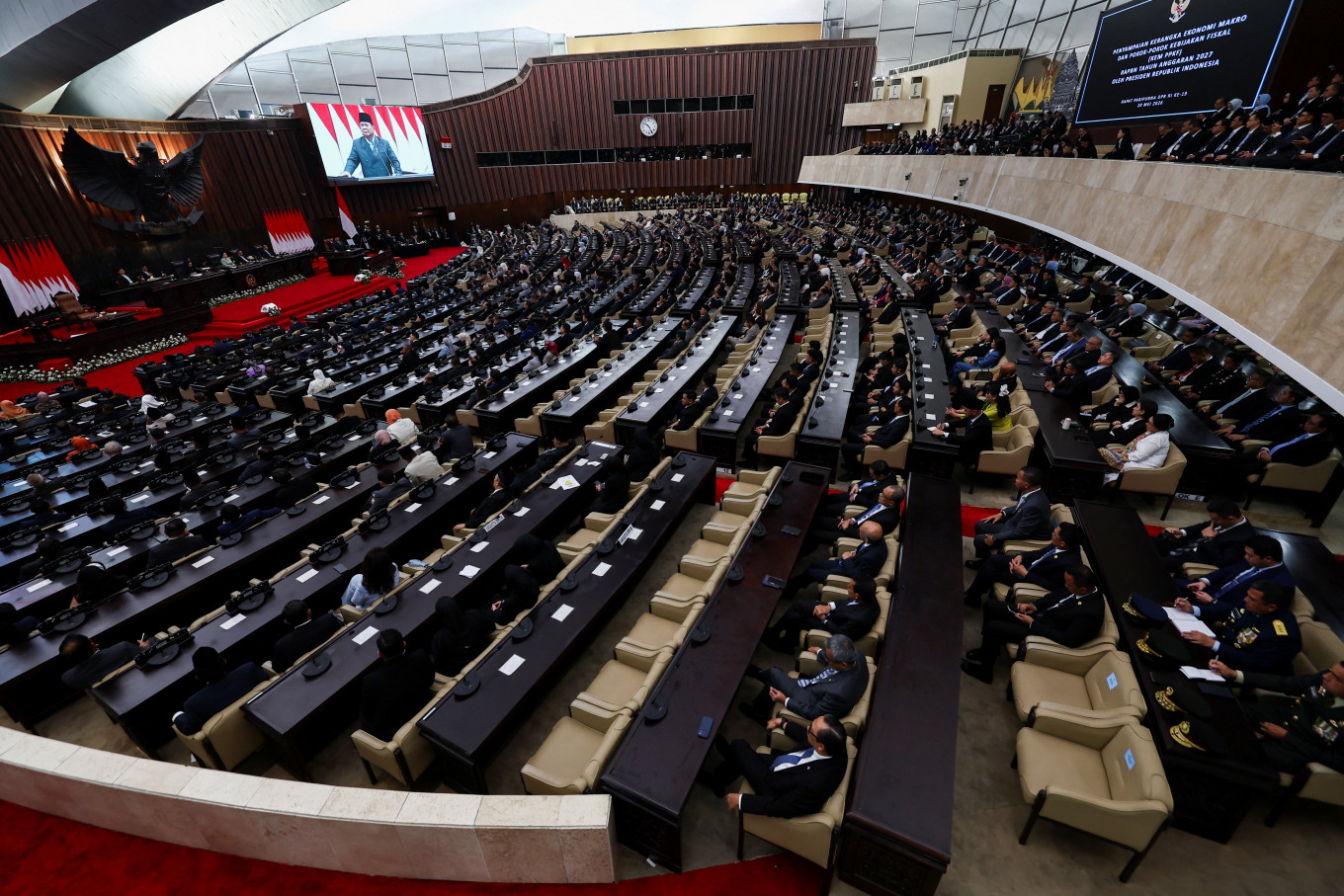 A large screen displays President Prabowo Subianto as he delivers his speech on economic policies and the 2027 fiscal plan House of Representatives members at the Senayan Legislative Complex in Central Jakarta on May 20, 2026. (Reuters/Willy Kurniawan)
T
he Indonesian economy should brace for a perfect storm. There are five pressure points, some already in place and others on the way. Once they converge, it will be difficult to maintain consumer and investor confidence, ensure macroeconomic stability or secure a speedy recovery.
First is ongoing pressure on the fiscal balance. Amid rising fuel subsidy costs, tax revenue is expected to weaken this year. Every dollar above the US$70 oil price assumption translates into an additional Rp 6 trillion ($340 million) to Rp 7 trillion in the fiscal deficit per year.
Through April, the average oil price was around $88 per barrel. Assuming May-December prices hold at April's level, the full-year average would be roughly $107 per barrel, meaning the subsidy bill could rise by around Rp 355 trillion. It remains unclear how this will be funded.
Second is the pass-through of unsubsidized fuel prices into broader inflation. This is already being felt across energy-intensive industries and those that rely heavily on oil-based imported chemicals, transportation and plastics are clear examples. On top of this, the weakening rupiah is adding inflationary pressure by driving up the cost of imported goods.
Third is the ongoing review of Indonesia's sovereign credit rating by several rating agencies. Should they conclude that policymaking remains haphazard and fiscal pressures go unaddressed, another negative outlook or even downgrade cannot be ruled out. That would push Indonesian bond yields higher and deter investors from taking positions in Indonesian markets.
Fourth is the recently announced policy to centralize export activities for Indonesia's three major export commodities: crude palm oil (CPO), coal and ferro-nickel. The very short rollout timeline risks creating confusion over supply, cash flow and long-term trade commitments, at least initially. Standard & Poor's has already warned that, if executed poorly, this policy could result in lower government revenues and reduced export proceeds.

Fifth, and relatively recent, is the sharp rise in United States Treasury yields to levels not seen in 20 years. The 30-year US Treasury yield, for instance, rose to 5.18 percent, the highest since 2007, largely in reaction to rising inflation driven by energy costs following the US-Israeli attack on Iran. Other major economies, including Canada, Germany and France, are also seeing bond yields reach 12-month highs. In Japan, long-term bond yields climbed above 4 percent for the first time on record.