The Jakarta Post
Please Update your browser
Your browser is out of date, and may not be compatible with our website. A list of the most popular web browsers can be found below.
Just click on the icons to get to the download page.


Popular Reads
Top Results
No results found. Please check your search term and try again
Can't find what you're looking for?
View all search results
Popular Reads
Top Results
No results found. Please check your search term and try again
Can't find what you're looking for?
View all search resultsThe Streisand effect in military-sponsored censorship of a movie
When Jakarta tried to censor an indigenous Papuan documentary using military force and religious panic, it triggered the ultimate backfire: a digital wildfire exposing the raw reality of state-driven land grab.
Change text size
Gift Premium Articles
to Anyone
Share the best of The Jakarta Post with friends, family, or colleagues. As a subscriber, you can gift 3 to 5 articles each month that anyone can read—no subscription needed!
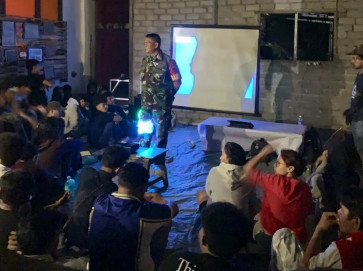
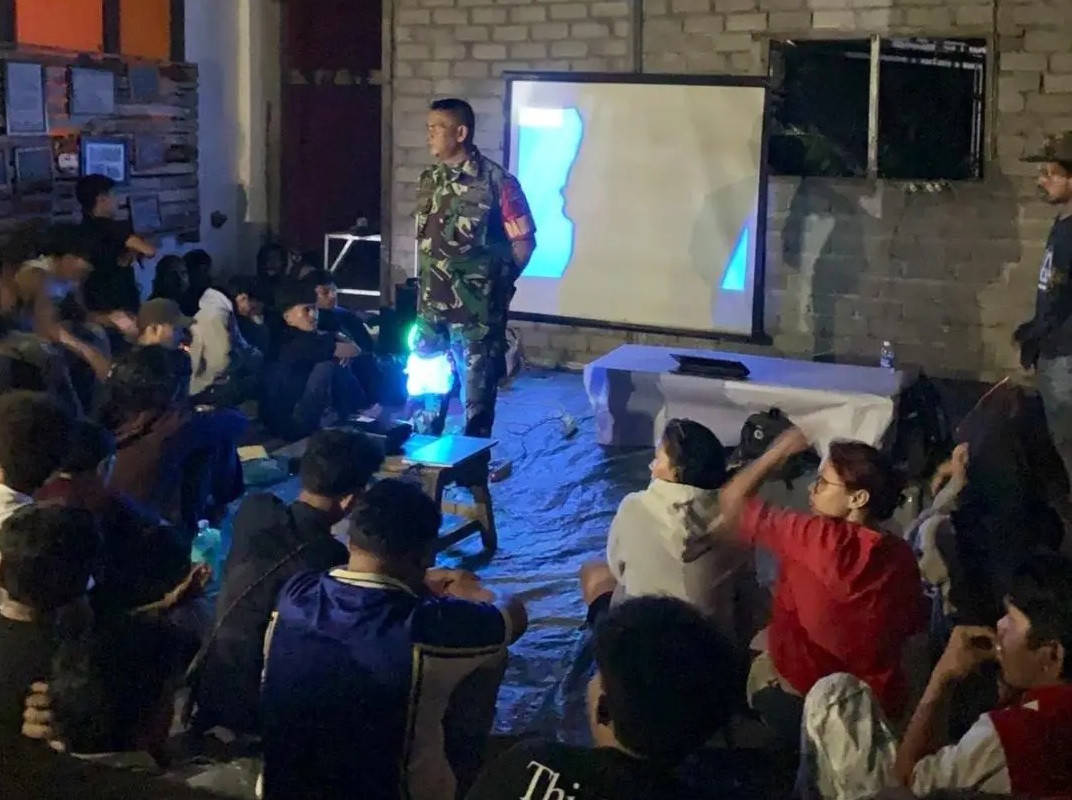 A military officer blocks a projector to shut down a public screening of the documentary Pesta Babi at Khairun University in Ternate, North Maluku, on May 12, 2026. Authorities halted the event under the pretext that it lacked an official permit. (x.com/@Dandhy_Laksono)
T
he documentary film Pesta Babi: Kolonialisme di Zaman Kita (Pig Feast: Colonialism in Our Time) captures the cultural and existential struggle of indigenous Papuan communities, particularly the Marind and Kwipalo peoples, against the government’s National Strategic Project (PSN) food estate initiative. It shows how the state’s food security agenda is perceived not as development, but as a direct threat to indigenous survival and their spiritual relationship with ancestral land.
Across Papua, local communities have mobilized a diverse repertoire of resistance that seamlessly combines Sasi (a customary prohibition on resource extraction) with constitutional legal claims, including Constitutional Court Decision No. 32/2024, and the planting of red crosses as religious symbols asserting customary ownership over ancestral domains.
This broader landscape of defiance gives deeper meaning to the cultural practices depicted in the documentary. The pig feast, known as Atatbon among the Muyu-Mandobo people in Boven Digoel, South Papua, represents far more than a ceremonial gathering; it symbolizes social fulfillment, economic exchange, cultural cohesion and collective resistance in defense of ancestral territory.
Because the ritual is performed only once every decade, it is inseparable from ecological preservation, depending entirely on the continued health of customary forests. In this sense, the pig feast becomes a powerful metaphor for the broader struggle to protect Papua’s ecosystem from state-driven environmental destruction.
In Indonesia, rather than entering commercial cinemas like in New Zealand, the film was distributed through independent community screenings (nonton bareng) accompanied by public discussions beginning on April 1. By mid-May, organizers had received 1,446 screening requests across more than 800 locations, mostly on university campuses. Yet, approximately 30 of these screenings were abruptly canceled or forcibly disrupted by university administrators and security authorities.
At the University of Mataram and State Islamic University (UIN) Mataram, West Nusa Tenggara (NTB), screenings were halted on vague security grounds. In Ternate, North Maluku, a screening organized by the Alliance of Independent Journalists (AJI) and student groups was broken up by local military personnel.

In West Sumbawa, the military, police and local residents dispersed a planned screening at the Islamic Student Association (HMI) secretariat. In Yogyakarta, a screening at the Catholic Student Pastoral Center was canceled following intimidating phone calls from nationalist vigilante groups and intelligence officers. In Dompu, NTB, pressure from security officials led to a cancellation after claims that the title was religiously offensive in a predominantly Muslim community.