The Jakarta Post
Please Update your browser
Your browser is out of date, and may not be compatible with our website. A list of the most popular web browsers can be found below.
Just click on the icons to get to the download page.


Popular Reads
Top Results
No results found. Please check your search term and try again
Can't find what you're looking for?
View all search results
Popular Reads
Top Results
No results found. Please check your search term and try again
Can't find what you're looking for?
View all search resultsThe economic path to climate justice
Ethiopia, Pakistan and South Africa show that rapid renewable-energy uptake in emerging and developing countries often comes down to affordability.
Change text size
Gift Premium Articles
to Anyone
Share the best of The Jakarta Post with friends, family, or colleagues. As a subscriber, you can gift 3 to 5 articles each month that anyone can read—no subscription needed!
 Set as preferred source
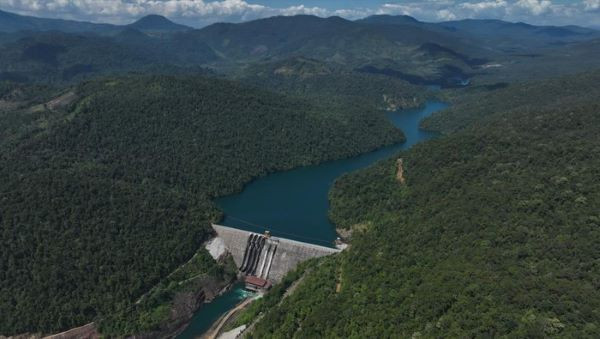 The forested highlands of South Sulawesi’s East Luwu regency tower over the Balambano hydropower plant in Wasuponda village on July 29, 2023. (Antara/Jojon)
A
s the world pursues decarbonization, the concept of a “just transition” has become ubiquitous, particularly when describing the shift away from fossil fuels in emerging and developing economies. Emission targets at the global and national levels are viewed as the main drivers of the energy transition, and the climate policies developed to meet those targets must balance environmental and social objectives.
But decarbonization is not always the product of a planned emissions-reduction pathway. In fact, with the cost of renewables continuing to fall, many emerging and developing countries now see phasing out fossil fuels as a matter of economic survival and energy security.
For example, in January 2024, Ethiopia banned the import of petrol and diesel vehicles with immediate effect. The move was striking precisely because it was framed not as a climate commitment, but as a way to reduce its annual fossil-fuel import bill of more than US$5 billion, which consumed a huge share of the country’s scarce foreign-currency reserves.
With the country constructing Africa’s largest hydroelectric dam, it made little economic sense to remain dependent on expensive fuel imports to power transport. Chinese electric vehicles (EVs) quickly filled the market gap created by the ban; the streets of Addis Ababa are now teeming with BYD cars. Tax exemptions and import duty waivers for EVs, coupled with the rising costs of second-hand internal-combustion-engine vehicles, have accelerated this shift in consumer behavior. The Grand Ethiopian Renaissance Dam, which was officially opened in September 2025, produces enough surplus hydropower to run these EVs cheaply.
Crucially, economic and energy-security concerns, not a formal emissions-reduction framework, were responsible for such rapid decarbonization. A similar pattern seems to hold in Pakistan. The country’s swift uptake of solar power reflected factors that created an opportunity for disruptive change, not green advocacy or a national climate plan.
In 2022, a massive flood left roughly one-third of the country underwater and caused more than $30 billion in economic damage, straining government budgets, reducing household incomes and undermining the state’s ability to operate public utilities. With energy costs rising, there was a clear need for an alternative to diesel generation.

Meanwhile, China had surplus solar-panel production, and the United States had imposed import restrictions. Pakistan took advantage of China’s discounted solar panels to adopt renewable generation at a rapid clip. Between December 2021 and December 2025, the share of Pakistan’s electricity generated by solar increased fivefold. A late mover confronting unique energy-security challenges, Pakistan benefited from cost advantages created by global trade dynamics.