The Jakarta Post
Please Update your browser
Your browser is out of date, and may not be compatible with our website. A list of the most popular web browsers can be found below.
Just click on the icons to get to the download page.


Popular Reads
Top Results
No results found. Please check your search term and try again
Can't find what you're looking for?
View all search results
Popular Reads
Top Results
No results found. Please check your search term and try again
Can't find what you're looking for?
View all search resultsWhat national transfer accounts reveal about aging future
New transfer accounts data reveals that Indonesia has officially transitioned into an aging society without the formal safety nets required to prevent widespread elderly vulnerability.
Change text size
Gift Premium Articles
to Anyone
Share the best of The Jakarta Post with friends, family, or colleagues. As a subscriber, you can gift 3 to 5 articles each month that anyone can read—no subscription needed!
 Set as preferred source
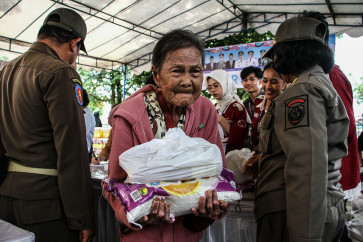
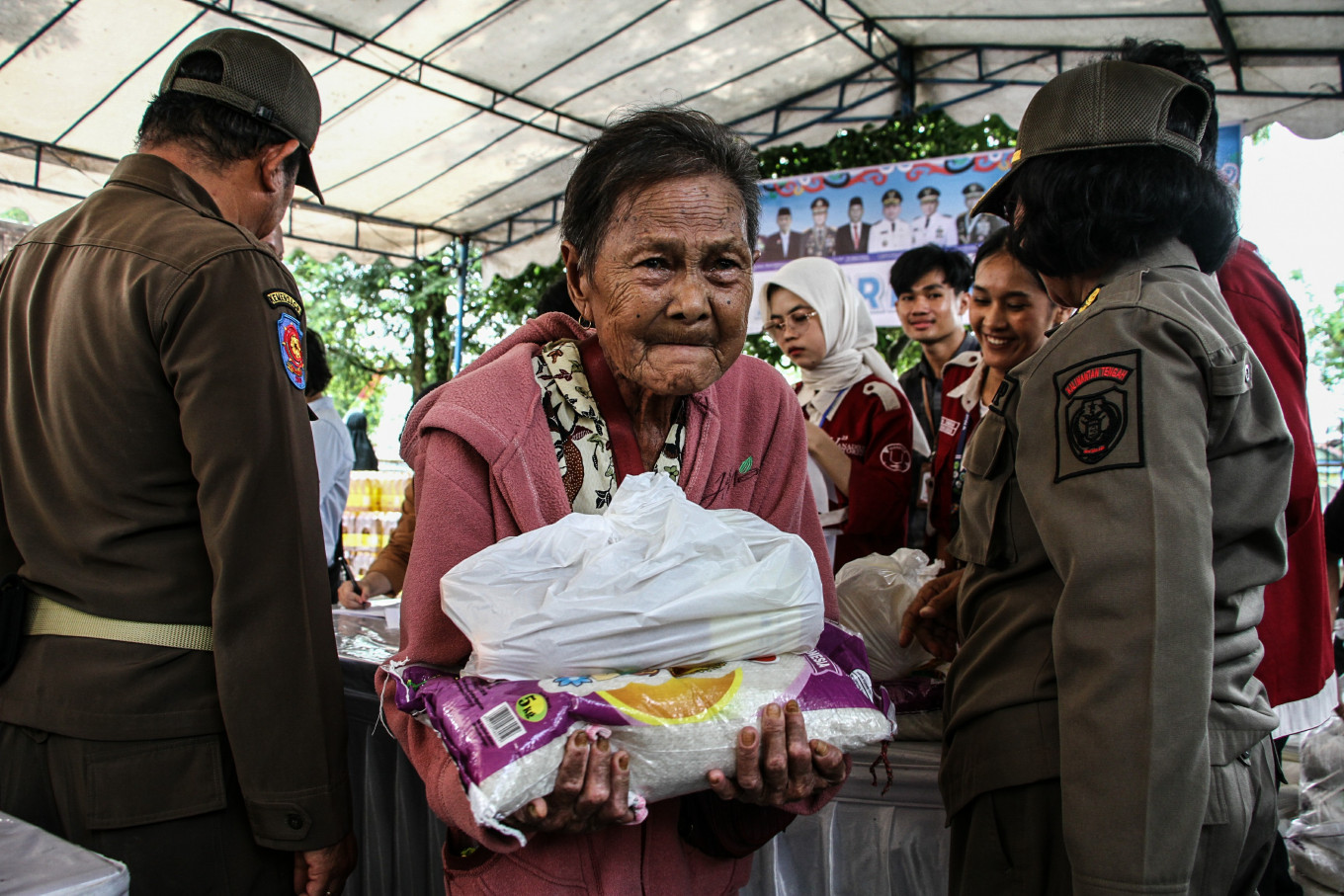 An elderly person carries a staple food package on March 10, 2026, that was distributed at the courtyard of the Darussalam Palangka Raya Great Mosque in Palangka Raya, Central Kalimantan. (Antara/Auliya Rahman)
A
s we commemorate National Elderly Day today, the country faces a question that is becoming increasingly difficult to ignore: Is Indonesia truly ready to become an aging society? The event should not merely be an annual ceremonial tribute to older generations. It should also serve as a reminder that population aging is no longer a distant demographic scenario, but an economic and social reality unfolding before our eyes.
This year’s commemoration carries particular urgency. Indonesia is entering the aging population era while still grappling with structural problems in employment, inequality and social protection. The Health Ministry itself has acknowledged that Indonesia officially entered the aging society phase after the proportion of elderly citizens surpassed 10 percent of the population.
Against this backdrop, the Experimental Statistics of National Transfer Accounts (NTA) 2024, released by Statistics Indonesia (BPS) in April, offers an important lens through which to understand our demographic future. Going beyond conventional statistics on income and consumption, the NTA framework measures how people at different ages produce, consume, share resources and save. More importantly, it reveals how economic resources flow across generations: who generates an economic surplus, who experiences a deficit, and how families, governments and accumulated assets sustain individuals throughout their lifecycle.
Through this perspective, aging is no longer viewed solely as a demographic issue; it becomes a question of economic sustainability. Indonesia’s NTA data show that elderly people aged 61 and above experience an average lifecycle deficit of around Rp 21.67 million (US$1,300) per capita annually. Their average consumption reaches Rp 48.35 million, while labor income amounts to only Rp 26.68 million. The gap must ultimately be covered through family support, public transfers, or accumulated assets.
This phenomenon is not unique to Indonesia. In NTA literature, children and the elderly are categorized as economically dependent groups because they consume more resources than they generate through labor. Meanwhile, productive-age groups create the economic surplus that sustains the rest of society.
Economists Ronald Lee and Andrew Mason, through their work on the “generational economy”, argue that a country’s ability to manage population aging depends heavily on whether it can establish healthy systems of intergenerational transfers and asset accumulation.

For Indonesia, these findings should serve as an early warning. The country is approaching what many scholars describe as “getting old before getting rich”, a condition in which population aging advances faster than economic prosperity. Unlike Japan or South Korea, which entered aging societies after building relatively mature welfare systems, Indonesia is growing older while still struggling to escape the middle-income trap.