The Jakarta Post
Please Update your browser
Your browser is out of date, and may not be compatible with our website. A list of the most popular web browsers can be found below.
Just click on the icons to get to the download page.


Popular Reads
Top Results
No results found. Please check your search term and try again
Can't find what you're looking for?
View all search results
Popular Reads
Top Results
No results found. Please check your search term and try again
Can't find what you're looking for?
View all search resultsLessons from pandemic: Call to integrate gender inclusion into support measures
Women continue to be among the most affected by the crisis, with massive layoffs happening in female dominated sectors.
Change text size
Gift Premium Articles
to Anyone
Share the best of The Jakarta Post with friends, family, or colleagues. As a subscriber, you can gift 3 to 5 articles each month that anyone can read—no subscription needed!
 Set as preferred source
I
t was only in March that the government imposed health restrictions to tackle the spread of COVID-19. The economy started to crumble and directly impacted business performance and resilience. As a result, many people were left jobless.
The government responded by introducing the preemployment card program. In the midst of the severe criticism and controversy surrounding the program, people have questioned whether the measures provided adequately protect the most vulnerable groups from the long-term effects of COVID-19.
This pandemic should be looked at from a broader context. It’s not merely a public health and economic crisis, the question of the protection of human rights must now be central to the discourse, particularly the right to work and the right to be protected against unemployment.
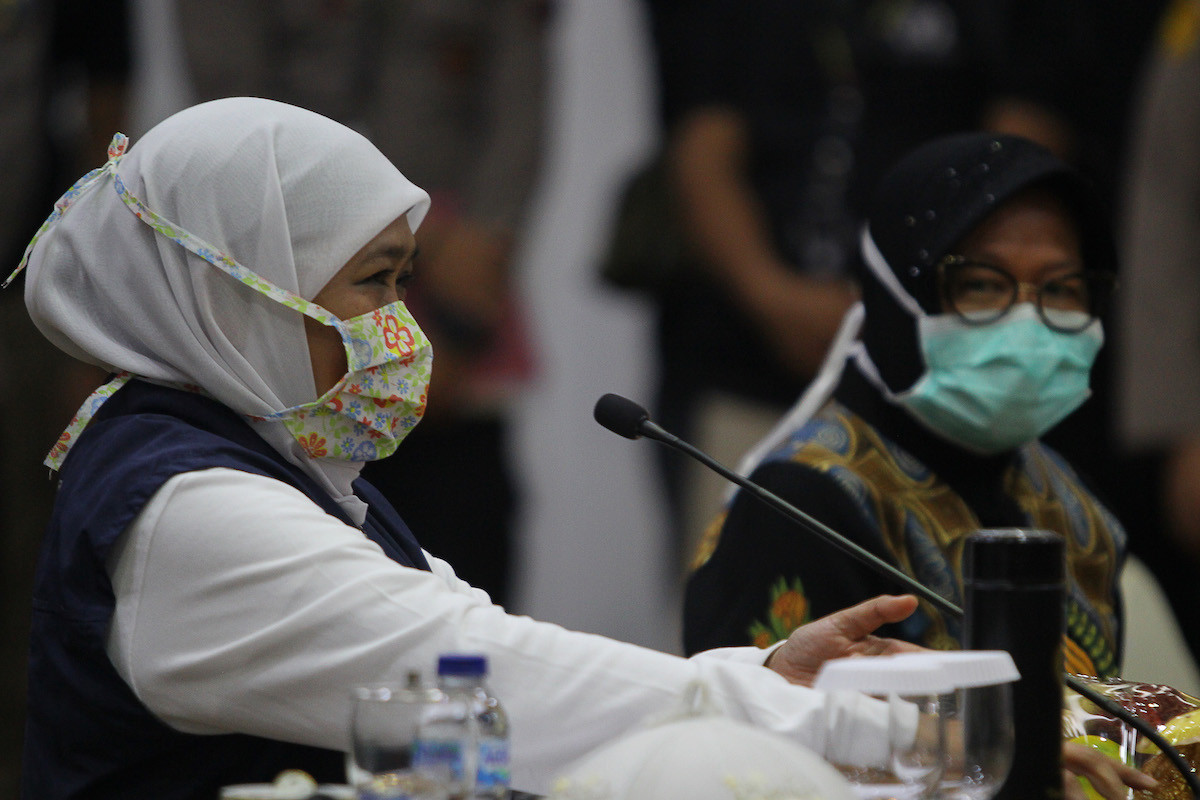
Women continue to be among the most affected by the crisis, with massive layoffs happening in female dominated sectors. Based on data from the United Nations Global Compact, the hardest hit sectors, such as textiles, tourism, health and the care industries, comprise 90 percent female workers. In these, female migrant workers account for a significant number and many have been forced to leave their jobs and return home without access to support. In many circumstances, too, women carry a double burden, being care providers as well as financial providers.
In the Asia-Pacific area alone, women are responsible for 80 percent of unpaid care and domestic work. The double burden, aggravated during the pandemic, could force female employees to cut back on their working hours or even leave their jobs, which in the end impacts company productivity.
Apart from this, in a pre-COVID-19 world in which women earned less, had less in savings and accessed fewer formal job opportunities than their male counterparts, women are now significantly more prone to salary cuts than men as a result of the pandemic. In developing countries, the situation is even more dire, with 70 percent of women’s income derived from the informal sector, a subset that is significantly less active during lockdown periods.
In the Asia Pacific region, the pandemic has already led to a decline in the participation of women in the labor force, as well as a decrease of women in leadership positions in the business world. At the same time, the digitalization of services as well as work-from-home measures mean that opportunities for women are further limited in a world where a gender digital divide is already prevalent.