Can't find what you're looking for?
View all search resultsCan't find what you're looking for?

View all search resultsThe environmental consequence of burning waste is not only air pollution, but also the loss of biodiversity.
thick pall of air pollution is shrouding South Asian cities, raising concerns over the toxicity in the air that has reached dangerous levels. Local authorities have closed schools and urged people to work from home. Vehicle traffic, construction activities and thermal plant emissions are also limited.
Jakarta faces the same problem. The city’s air quality is considered poor as shown by its average 2.5 particulate matter concentration that reaches 26.9 ug/m3, five times the limit set by the World Health Organization (The Jakarta Post, Oct. 8). Jakarta’s poor air quality has prompted a group of residents to sue the government in court – and win.
Understanding the different sources of air pollution will help us define actions toward improving the air quality. The five major sources of air pollution are agriculture, household, industry, transportation and waste. The pollution comes from human activities, although natural processes also contribute, such as dust storms and volcanic eruptions.
We can prevent the catastrophe in South Asia from happening here by reducing air pollution from the food system. Agriculture is a key sector in Indonesia’s economy and we should improve the food production system to become less harmful to the environment.
Several steps need to be taken, but require a strong commitment from agriculture stakeholders.
First, biomass and agriculture-waste burning must stop. We have to admit that burning is the easiest way to get rid of waste. Farmers usually burn their rice straws after harvesting. Open burning in landfills also releases harmful dioxins and black carbon.
In certain circumstances, burning is a common practice to establish natural land for other purposes. Burning involves little or no cost, but it leads to uncontrolled and destructive fires. The environmental consequences of this practice are not only a huge amount of air pollution but also the loss of biodiversity.
Limiting air pollution from biomass burning needs a comprehensive approach for the stakeholders. Therefore, improvement in management practice is not enough. It also requires a strong commitment to compliance with the laws. At the same time, we need more campaigns to raise public awareness of the risks of air pollution from biomass burning
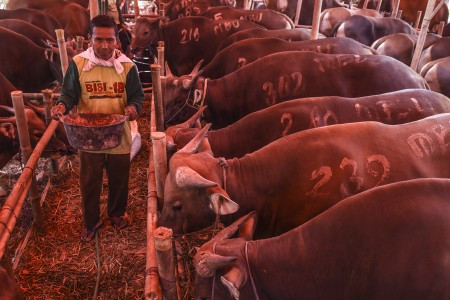
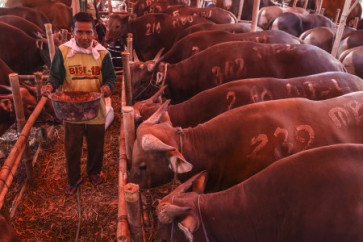
Second, livestock production should be more efficient. Livestock activities contribute to the emission of considerable amounts of greenhouse gases (GHG), such as carbon dioxide, methane and nitrous oxide. These gases trap infrared heat from the Earth’s surface and increase the temperature of the planet.
The rise of a middle-income society in Indonesia has given rise to meat consumption. This phenomenon is also happening globally. Now, 90 percent of the world’s population eats meat. Demand for meat is projected to double in the next few decades, therefore air pollution from livestock production will also increase twofold.
Reducing meat consumption does not seem a convenient way to curb air pollution. It is not easy to tell people what to eat or what not to eat. Therefore, improvement in livestock production through, for example, improving efficiency in animal feed, is more feasible and reliable to reduce the air pollution than controlling people’s diet.
Efficiency in animal feed is important to make a larger portion of the energy from animal feeds convert into livestock products (meat or milk). This is important because air pollution from animal production comes from wasted energy content in animal feeds. It releases from animals’ digestive systems as GHG.
Precision in matching feed nutrients and an animal’s feed requirement is challenging in Indonesia. This is clear because the main players in livestock production are smallholder farmers, who raise their livestock traditionally.
In a smallholder system, livestock often consumes low quality feed, such as rice straw. A low-quality feed contributes to GHG production from the digestive system. Farmers need more information on this issue. Their traditional farming practices need to change and they need to be ready to accept new ways of farming.
Bigger players, like livestock fattening companies, can also play a role in lowering air pollution in their production chains. They should improve the manure management practice to reduce GHG and ammonia. More investment must be put into manure processing facilities. Producing biogas and compost from livestock manure could also be considered.
Lastly, precision farming should also be applied in fertilizer application. Air pollution in the form of ammonia results from the excessive use of nitrogen fertilization that is not absorbed by plants. Ammonia is released when fertilizers are spread but not immediately incorporated into the soil.
Precision farming means the amount of applied fertilizer matches the plant’s need. Equally important, the method used in applying fertilizer must follow the prescription.
All in all, limiting air pollution should be taken into consideration in farming practice. Farmers, however, cannot walk alone. The government and academics have their own responsibility to disseminate information to farmers and assist them to limit air pollution.
***
The writer works for the Agriculture Ministry and recently conducted research on greenhouse gas emissions for his master’s in Animal Sciences from Wageningen University and Research, The Netherlands. These views expressed are his own.
Share your experiences, suggestions, and any issues you've encountered on The Jakarta Post. We're here to listen.
Thank you for sharing your thoughts. We appreciate your feedback.
Quickly share this news with your network—keep everyone informed with just a single click!
Share the best of The Jakarta Post with friends, family, or colleagues. As a subscriber, you can gift 3 to 5 articles each month that anyone can read—no subscription needed!
Get the best experience—faster access, exclusive features, and a seamless way to stay updated.