The Jakarta Post
Please Update your browser
Your browser is out of date, and may not be compatible with our website. A list of the most popular web browsers can be found below.
Just click on the icons to get to the download page.


Popular Reads
Top Results
No results found. Please check your search term and try again
Can't find what you're looking for?
View all search results
Popular Reads
Top Results
No results found. Please check your search term and try again
Can't find what you're looking for?
View all search resultsThe Global South’s moment to shape rules
Some of the greatest challenges the world faces today can be addressed only through common rules, shared institutions and cross-border collaboration.
Change text size
Gift Premium Articles
to Anyone
Share the best of The Jakarta Post with friends, family, or colleagues. As a subscriber, you can gift 3 to 5 articles each month that anyone can read—no subscription needed!
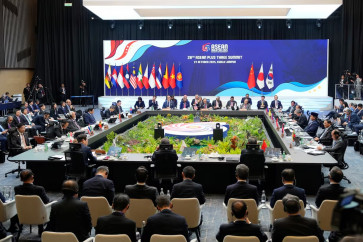
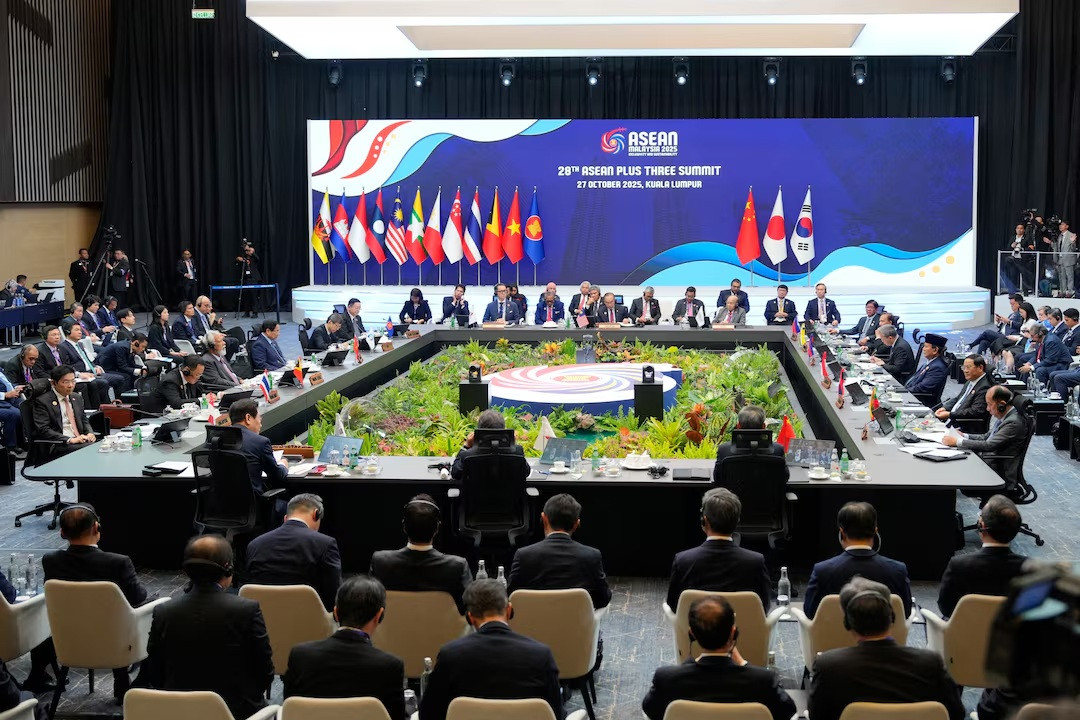 Leaders attend the 28th ASEAN Plus Three Summit in Kuala Lumpur on Oct. 27, 2025. (Reuters/Pool/Vincent Thian)
F
or decades, global power emanated from Europe and the United States. That was certainly my view when I first set foot in the Northern Hemisphere as a graduate student at the University of Cambridge. But managing Chile’s international economic relations under former President Gabriel Boric revealed just how much power the Global South can wield, if it chooses to do so.
This is apparent not only in the data but also at the negotiating table. In 2025, I traveled with Boric, other cabinet members, and Chilean business leaders, academics, cultural figures and entrepreneurs to India to negotiate a Comprehensive Economic Partnership Agreement. Both sides were following development economists’ long-standing policy prescriptions: diversify trade partners, open new markets and deepen South-South integration.
But during the trip, US President Donald Trump announced his “reciprocal” tariffs against most of America’s trading partners, ripping up global trade rules. For the Global South, this was a slap in the face. We never expected development to be free of struggle and contradictions. But the direction was clear: greater global economic integration would enhance growth. And the rules and institutions were shared, until the country that designed them decided to exempt itself.
Perhaps most strikingly, the rules-based multilateral system worked for the developing world. In 1952, the US, with just 6 percent of the world’s population, produced around 40 percent of global GDP. By contrast, the US now produces 15 percent of global GDP (in purchasing power terms), while China has risen from near zero to 20 percent.
The redistribution extends beyond the US-China axis. In the 1970s, Germany’s economy was twice the size of India’s; today, India’s is nearly three times larger than Germany’s. The City University of New York economist Branko Milanović has called this “the greatest reshuffle of individual incomes since the Industrial Revolution.”
As Milanović and Christoph Lakner of the World Bank showed in a landmark study, the largest relative income gains between 1988 and 2008 went to hundreds of millions of people around the global median, mostly in Asian countries, lifting them into the middle class. The same process led to stagnant incomes for working- and middle-class people in rich countries. The system reduced global poverty and shifted the international power balance.

Integration into the global economy was a necessary but insufficient condition for development. The countries that gained the most from globalization had a plan. China is the most obvious example, but South Korea, Vietnam, Indonesia and others followed a similar path: they devised long-term development strategies; invested in education, industrial policy and technology; and integrated selectively into global markets.