The Jakarta Post
Please Update your browser
Your browser is out of date, and may not be compatible with our website. A list of the most popular web browsers can be found below.
Just click on the icons to get to the download page.


Popular Reads
Top Results
No results found. Please check your search term and try again
Can't find what you're looking for?
View all search results
Popular Reads
Top Results
No results found. Please check your search term and try again
Can't find what you're looking for?
View all search resultsFailed system, fake research
The case of fraudulent presenters at an international research conference exposes glaring vulnerabilities in the country's education system that stem from misplaced and misguided priorities.
Change text size
Gift Premium Articles
to Anyone
Share the best of The Jakarta Post with friends, family, or colleagues. As a subscriber, you can gift 3 to 5 articles each month that anyone can read—no subscription needed!
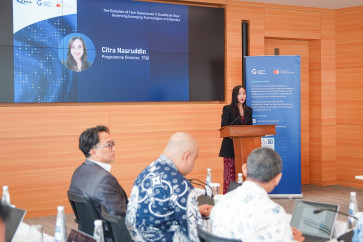
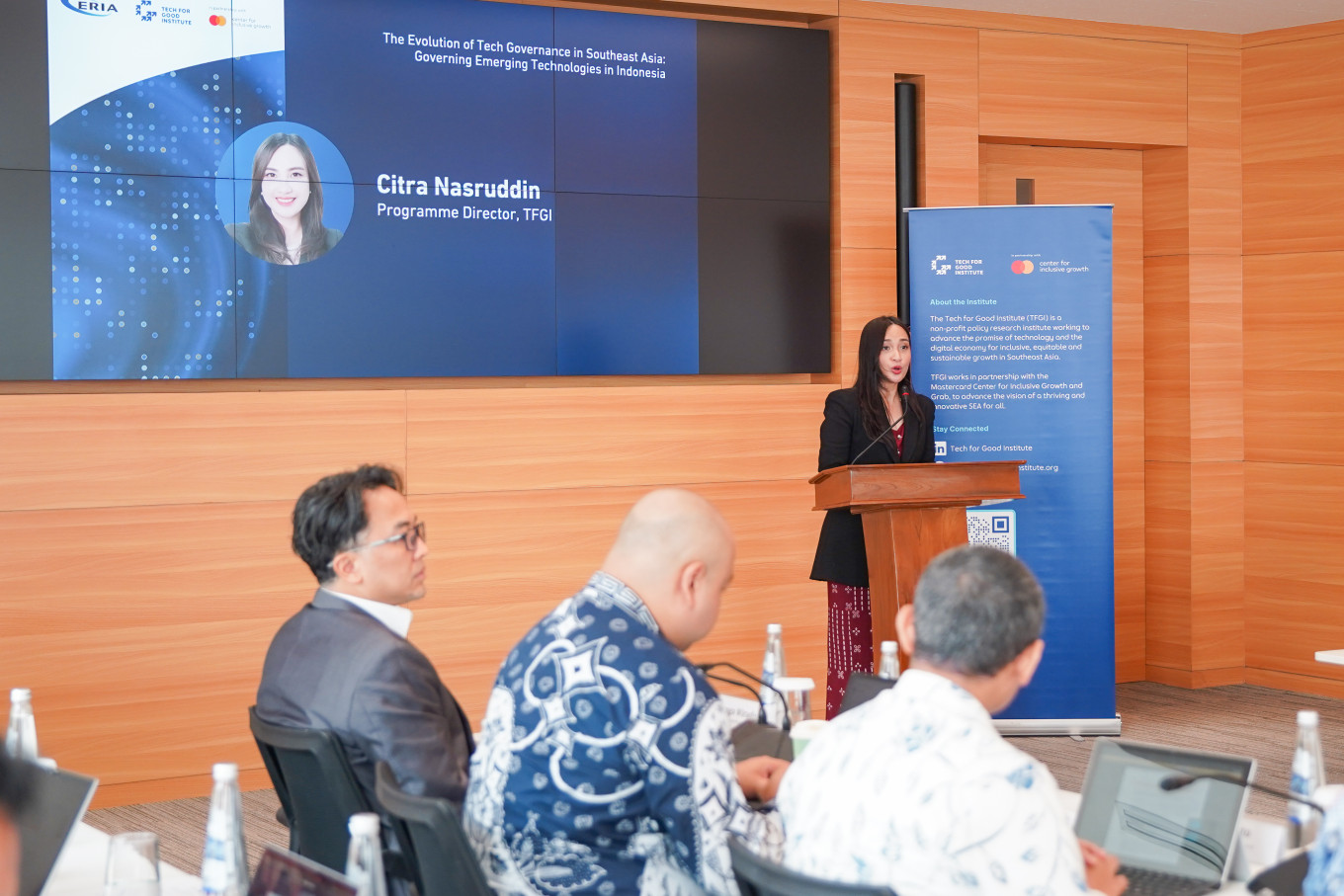 Citra Nasrudin, program director at the Tech for Good Institute (TFGI), delivers a presentation at The Evolution of Tech Governance in Southeast Asia: Governing Emerging Technologies in Indonesia on May 12, 2026, a closed-door roundtable in Jakarta organized in collaboration with the Economic Research Institute for ASEAN and East Asia (ERIA). (Courtesy of ERIA/-)
A
t a medical conference in Copenhagen last month, an Indonesian researcher was caught switching hijabs and name tags between presentation sessions, using several false identities to fraudulently claim travel grants on fabricated studies allegedly generated by artificial intelligence with her partner’s help. The International Society of Pneumonia and Pneumococcal Diseases canceled the grants, and the Higher Education, Science and Technology Ministry is investigating the incident.
More important than how the fraud was carried out is how it was detected by an Indonesian doctoral student at Oxford, Wa Ode Dwi Daningrat: Indonesia's pneumonia research community is small enough that she had never heard of the fake presenters’ names.
The fraud was exposed not by any institutional safeguard but by a researcher who happened to be in the room. And that is the unfortunate indictment: not of Indonesia's researchers, most of who are scrupulously honest, but of a system that allowed impostors to get away with traveling to an overseas conference on falsified credentials.
The ministry revealed that neither suspect was a lecturer nor an academic, and that their motive was not career advancement but free international travel. This should protect the genuine research community from reputational damage, a protection that the thousands of Indonesian scientists working abroad deserve.
This distinction should not be a reason to look away, however. The suspects exploited known loopholes: Conference abstracts are rarely more than 300 words, researchers from developing countries are more likely to receive travel grants on good faith, and AI has made fabricating plausible-looking data trivially easy. These are gaps in a system that has not been given the resources, oversight or institutional priority to close them.
That failure of priority is where the government must be held to account. It allocated Rp 758 trillion (US$42 billion) for education in 2026, a figure trumpeted as a historic high. But 44 percent of that amount, or Rp 335 trillion, goes to the free nutritious meal program, a welfare initiative that belongs in the health budget, not the education budget. Deduct that, and Indonesia is spending less on education than before.

The remaining funds are divided among other ministries’ competing programs: the Social Affairs Ministry’s Sekolah Rakyat (community schools), the Higher Education Ministry’s Sekolah Garuda and the Defense Ministry’s Taruna Nusantara schools. Each answers to presidential priorities rather than any coherent national education strategy.