The Jakarta Post
Please Update your browser
Your browser is out of date, and may not be compatible with our website. A list of the most popular web browsers can be found below.
Just click on the icons to get to the download page.


Popular Reads
Top Results
No results found. Please check your search term and try again
Can't find what you're looking for?
View all search results
Popular Reads
Top Results
No results found. Please check your search term and try again
Can't find what you're looking for?
View all search resultsWhy EV makers choose Vietnam, not nickel-rich Indonesia
Indonesia’s vast nickel wealth won’t save its green industrial ambitions if volatile regulations and a severe high-tech skills deficit keep driving global EV giants straight into the arms of Vietnam.
Change text size
Gift Premium Articles
to Anyone
Share the best of The Jakarta Post with friends, family, or colleagues. As a subscriber, you can gift 3 to 5 articles each month that anyone can read—no subscription needed!
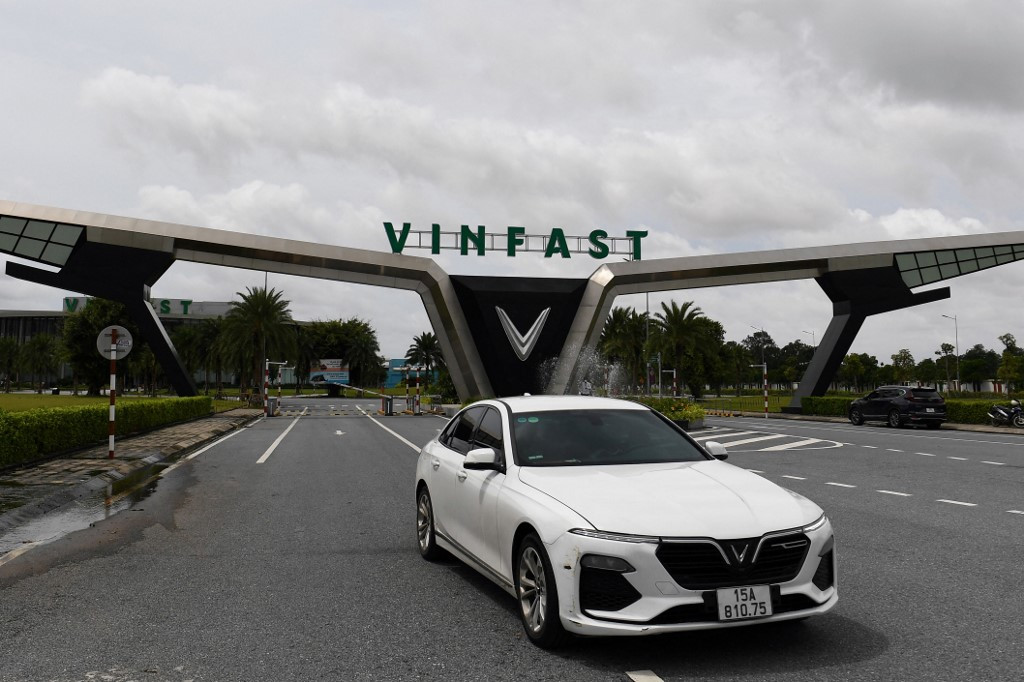 A Vinfast car drives past the entrance of the VinFast electric automobile plant in Haiphong on Aug. 26, 2022. Having conquered most industries at home, optimistic chiefs at conglomerate Vingroup are setting their sights much higher as they ramp up plans to sell the first ever Vietnamese car in the mighty United States market.
(AFP/Nhac Nguyen)
A Vinfast car drives past the entrance of the VinFast electric automobile plant in Haiphong on Aug. 26, 2022. Having conquered most industries at home, optimistic chiefs at conglomerate Vingroup are setting their sights much higher as they ramp up plans to sell the first ever Vietnamese car in the mighty United States market.
(AFP/Nhac Nguyen)
W
hen news broke that electric vehicle manufacturers originally planning to operate in Indonesia had instead chosen Vietnam, it forced a critical question: What is going wrong in Southeast Asia's largest economy? The situation is ironic. Indonesia holds the world’s largest nickel reserves, yet its domestic EV manufacturing industry is struggling to take root.
The fundamental causes of this failure extend far beyond simple investment metrics; they lie in the structural quality of state policy, human capital development, institutional education and state support for foundational research and technology. Together, these elements form the indispensable building blocks of a healthy, green industrial ecosystem.
This corporate relocation is not merely a loss of short-term capital. It is an early warning that without sweeping, consistent reforms in education, training and industrial strategy, Indonesia risks becoming a mere supplier of raw materials rather than a hub for EV innovation, an urgent transition that cannot be compromised in a rapidly decarbonizing global economy.
Indonesia has long broadcast its grand ambition to achieve Golden Indonesia 2045, a vision to transform the nation into a developed, highly competitive regional manufacturing hub. Yet, it is impossible to realistically discuss the 2045 milestone if critical, forward-looking industries are already fleeing the country.
Two deeply intertwined structural issues explain this divergence: industrial policy and the broader manufacturing ecosystem, which encompasses human resources, research and technology.
Regarding industrial policy, investors face frequently changing regulations, weak cross-sector coordination and fiscal incentives that are either uncompetitive or poorly executed. Jakarta’s focus remains stubbornly anchored to the raw downstreaming of mineral resource extraction rather than high-value EV assembly. This regulatory volatility makes international investors hesitant to commit long-term capital.

By comparison, the fiscal support for industrial policy in China amounts to roughly 4 percent of its GDP, deployed through highly synchronized taxes, subsidies, credit lines and land allocations. Vietnam similarly offers corporate tax holidays of up to 15 years, import duty exemptions on components, land rent reductions and deep integration into global supply chains.