The Jakarta Post
Please Update your browser
Your browser is out of date, and may not be compatible with our website. A list of the most popular web browsers can be found below.
Just click on the icons to get to the download page.


Popular Reads
Top Results
No results found. Please check your search term and try again
Can't find what you're looking for?
View all search results
Popular Reads
Top Results
No results found. Please check your search term and try again
Can't find what you're looking for?
View all search resultsMilitarizing civilian space
From the introduction of barracks slang in corporate offices to lethal boot camps for civilian managers, Indonesia is quietly sliding back into a dangerous era of creeping militarization.
Change text size
Gift Premium Articles
to Anyone
Share the best of The Jakarta Post with friends, family, or colleagues. As a subscriber, you can gift 3 to 5 articles each month that anyone can read—no subscription needed!
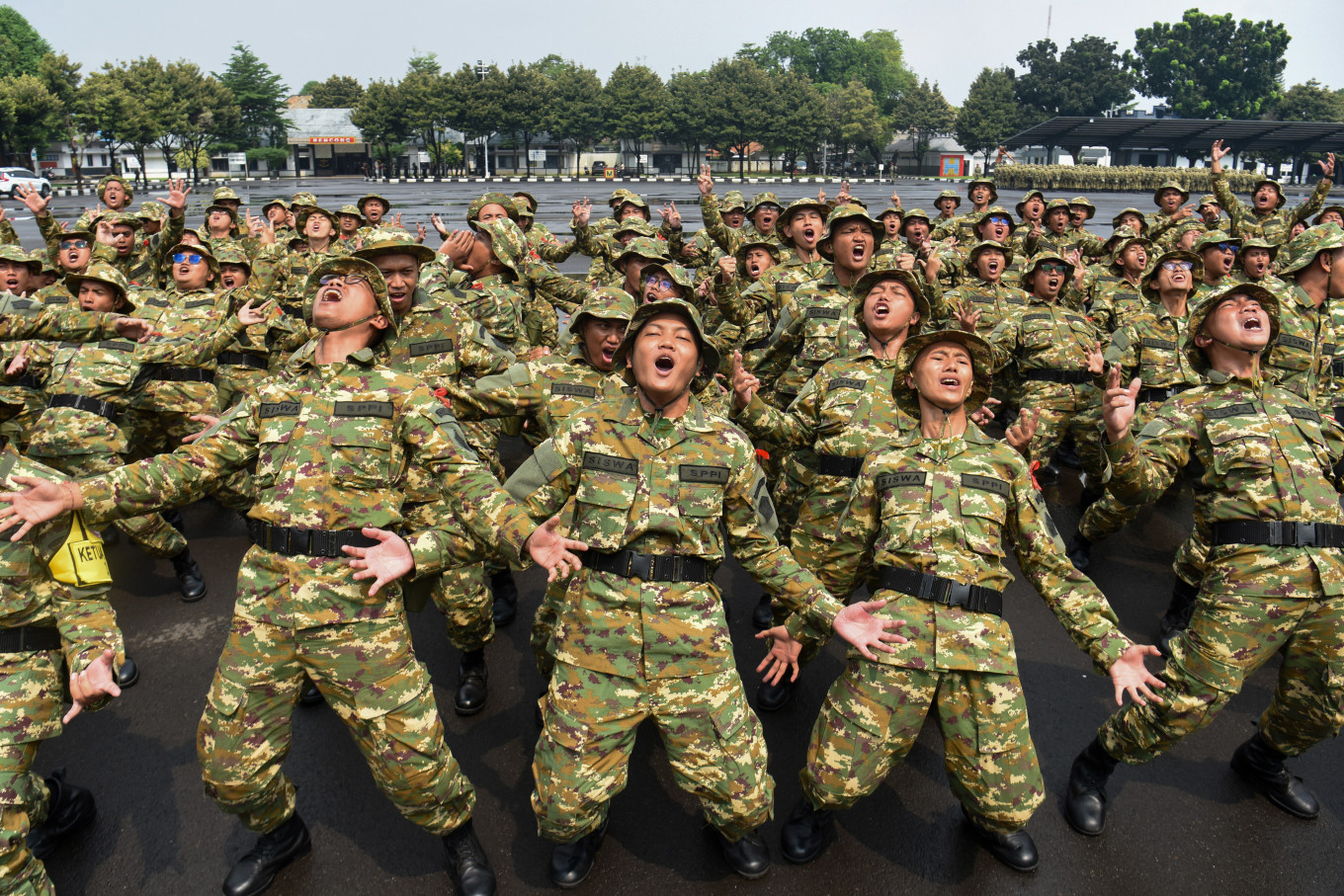 Prospective managers of the Red and White Cooperatives chant slogans during basic military training at the 1st Marine Infantry Brigade in Cilandak, South Jakarta, on June 25, 2026. (Antara/Indrianto Eko Suwarso)
F
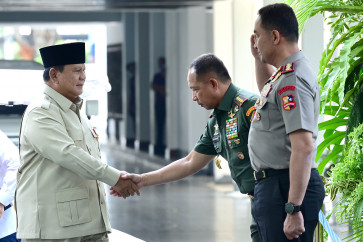
rom former and active military officers taking over government and state-owned enterprise posts, to prospective Red and White Cooperative managers being sent to barracks, the ghost of the New Order regime is starting to feel real again. Civil society groups call it "creeping militarization", but what is unfolding might be even worse than a simple political trajectory, we are watching a militaristic culture normalize itself right inside everyday civilian life.
The most subtle, yet telling, sign of this shift is the language. Walk into a university, a corporate office or a civil service department, and you will notice phrases like “mohon izin” (begging permission) and “siap!” (ready/yes, sir!), becoming part of the daily vocabulary. People may adopt these words out of simple habit or to show respect. But sociologists warn that it actually bakes a rigid, unequal hierarchy right into public spaces, echoing the authoritarian years under Soeharto. It quietly reinforces the outdated idea that military discipline is inherently superior to civilian systems, the exact opposite of the civilian supremacy the 1998 Reform movement fought so hard to establish.
This is not just about daily jargon. It is driving structural changes that blur the lines between national defense and civilian governance. Last year’s controversial revision to the Indonesian Military (TNI) Law, which opened the door for active personnel to hold a much wider range of civilian jobs, was a massive institutional step backward. And it is a trend President Prabowo Subianto’s administration continues to push, despite the former Army general’s democratic election in 2024.
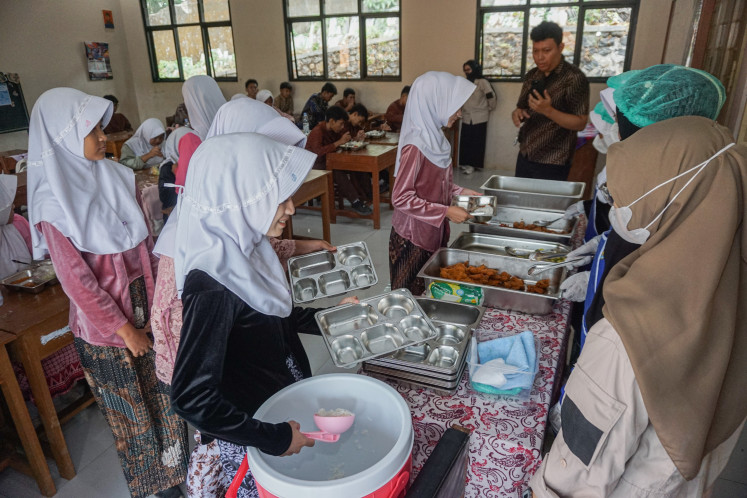
We are seeing soldiers deployed to manage strictly civilian portfolios. They are overseeing the President’s flagship free nutritious meal program, using Army battalions for local development and sending Military Academy cadets to mentor students at state-funded Sekolah Rakyat (Community Schools). Relying on the armed forces as a quick fix for socio-economic issues is a red flag; it betrays a lack of faith in civilian institutions.
But the most tragic consequence of this mindset is the push to put civilians through military boot camps in the name of "national discipline." The fatal flaws of this approach became undeniable when five civilian participants died within weeks of each other after suffering severe medical emergencies during mandatory training for the Red and White Cooperatives.
The government responded by pausing the physical drills and rebranding the program as a "national defense briefing". But as the National Commission on Human Rights (Komnas HAM) and activists have rightly pointed out, military indoctrination does not equal civilian professionalism. If you want to build the capacity of cooperative managers, you train them in financial literacy, corporate governance and collaborative leadership. You do not put them through the physical subjugation and rigid hierarchies meant for combat.

The glorification of military structures poses a genuine threat to a healthy, fair and merit-based society. Indonesia’s democracy has not been in survival mode like this since the Reform movement brought down the dictatorship nearly 30 years ago.