The Jakarta Post
Please Update your browser
Your browser is out of date, and may not be compatible with our website. A list of the most popular web browsers can be found below.
Just click on the icons to get to the download page.


Popular Reads
Top Results
No results found. Please check your search term and try again
Can't find what you're looking for?
View all search results
Popular Reads
Top Results
No results found. Please check your search term and try again
Can't find what you're looking for?
View all search resultsMitigating the impacts of a shift from a market economy to state capitalism
As President Prabowo pushes for a massive structural pivot toward state economic sovereignty, Indonesia faces a high-stakes gamble: Can it resurrect the ideals of a Pancasila economy without stumbling into the traps of heavy-handed economic nationalism?
Change text size
Gift Premium Articles
to Anyone
Share the best of The Jakarta Post with friends, family, or colleagues. As a subscriber, you can gift 3 to 5 articles each month that anyone can read—no subscription needed!
 Set as preferred source
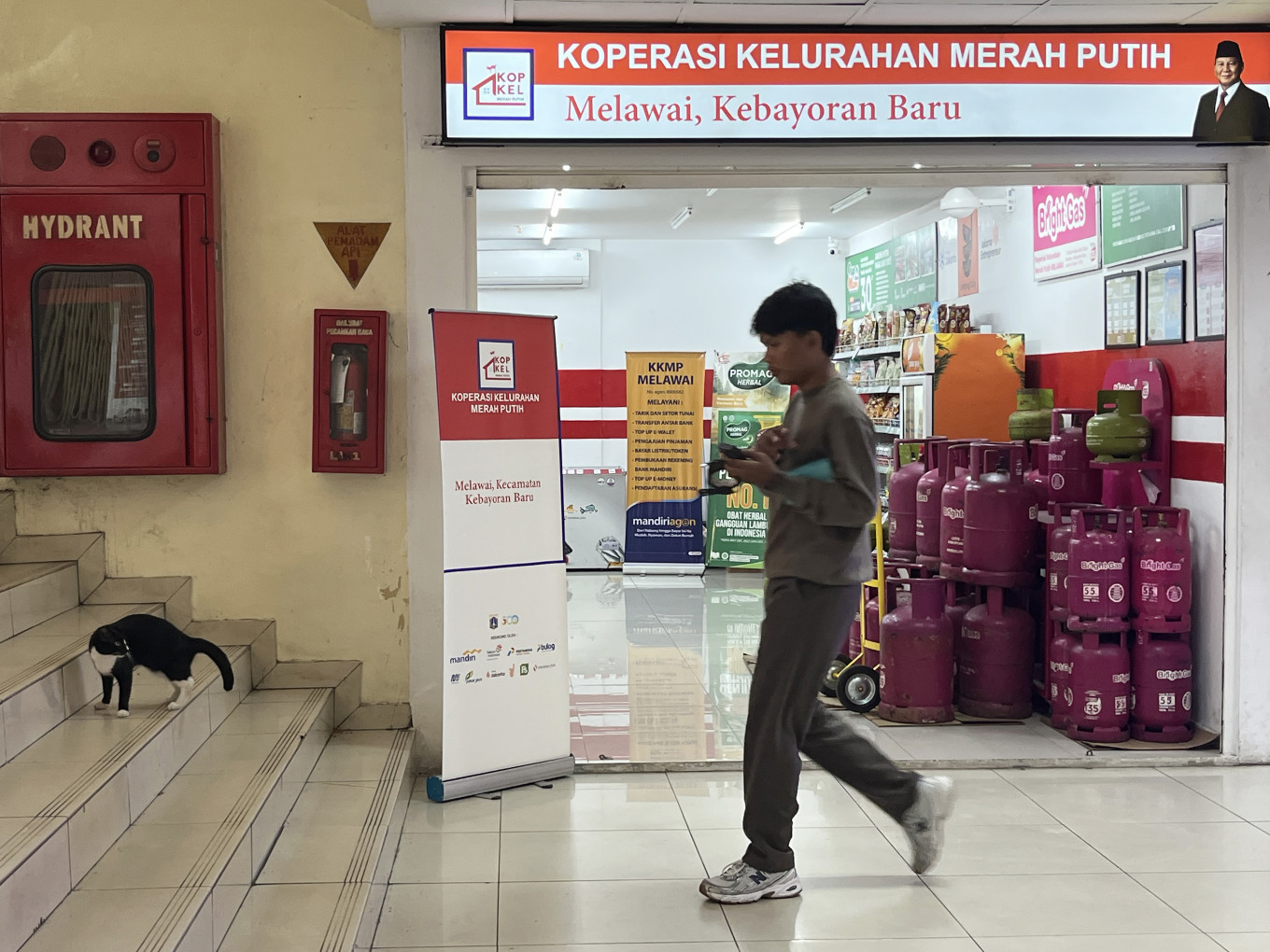 A man walks past a Melawai outlet of the Red and White Cooperatives (KMP) program on Feb. 23, 2026, located in the Blok M shopping and nightlife hub in Kebayoran Baru, South Jakarta. (JP/Iqro Rinaldi)
J
ust 19 months into the presidency of Prabowo Subianto, a massive shift in Indonesia’s structural trajectory is underway. While previous governments focused their efforts on policy refinement and the continuous improvement of existing frameworks, the current administration aims directly at altering the country's core economic ideology and direction.
The ultimate objective is to assert state sovereignty under Article 33 of the 1945 Constitution, steering the nation toward “Ekonomi Pancasila” (Pancasila economy). This strategy involves reining in prominent oligarchs, pressuring them to repatriate wealth and breaking free from an overdependence on traditional foreign market forces.
This represents a major course correction: a deliberate effort by the state to steer the national economy down a completely new path. However, altering an economic ideology typically takes decades, as evidenced by China's gradual liberalization since 1978.
What the Prabowo administration is attempting is to force this massive pivot within a single five-year election cycle. Consequently, its execution over the past 19 months has frequently been characterized by rushed, pragmatic maneuvers.
Article 33 serves as the cornerstone of Indonesia’s economic framework. In his groundbreaking 1994 dissertation, constitutional scholar professor Jimly Asshiddiqie argues that Article 33 establishes a crucial link between political and economic democracy, both of which must remain in balance to protect popular sovereignty. This concept of economic democracy affirms the principles of social solidarity, state control over key production sectors and natural resources and a baseline emphasis on the common good.
That framework was further refined during the 2002 constitutional amendment, which added a fourth paragraph stipulating that economic democracy must be implemented based on "equitable efficiency". This is defined through the principles of solidarity, efficiency with justice, sustainability, environmental awareness, self-reliance and a careful balance between national economic unity and progress.

Recently, however, Article 33 has often been treated as a stand-alone, almost sacred text, its vital fourth paragraph largely overlooked. It is frequently invoked as a broad moral justification to legitimize radical policy shifts.