The Jakarta Post
Please Update your browser
Your browser is out of date, and may not be compatible with our website. A list of the most popular web browsers can be found below.
Just click on the icons to get to the download page.


Popular Reads
Top Results
No results found. Please check your search term and try again
Can't find what you're looking for?
View all search results
Popular Reads
Top Results
No results found. Please check your search term and try again
Can't find what you're looking for?
View all search resultsAnti-LGBTQ regulation fuels fears of criminalization
A presidential regulation classifying "LGBTQ culture” as a nonmilitary threat has drawn sharp criticism from civil society groups, who warn it could provide legal and political justification for further criminalizing the vulnerable minority, while lawmakers and religious groups defend the policy as necessary to “safeguard” national resilience.
Change text size
Gift Premium Articles
to Anyone
Share the best of The Jakarta Post with friends, family, or colleagues. As a subscriber, you can gift 3 to 5 articles each month that anyone can read—no subscription needed!
 Set as preferred source
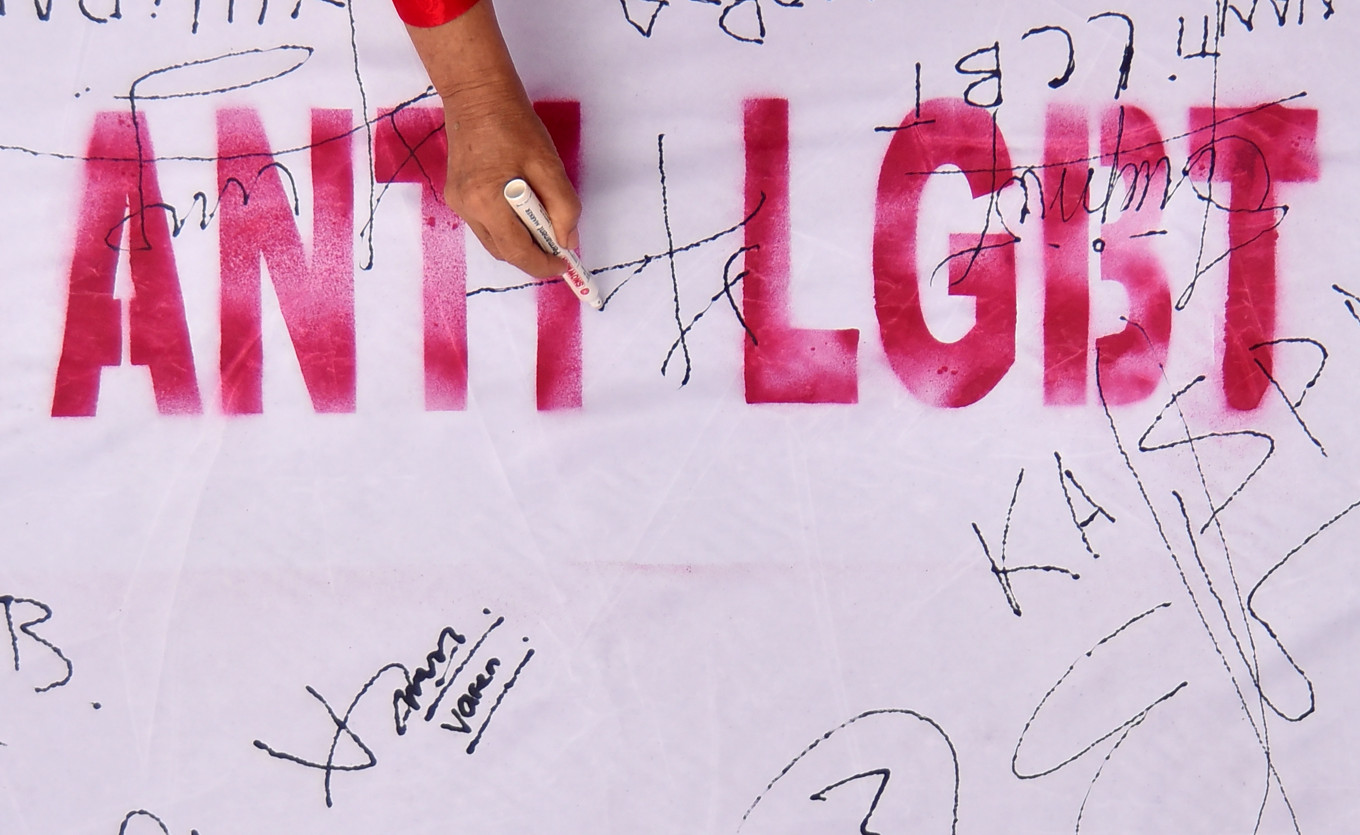 Residents sign a white banner during an anti-LGBT rally on June 21 in Padang, West Sumatra. The event, organized by the West Sumatra administration, the West Sumatra Police and the Minangkabau Traditional Council (LKAAM), invited participants to sign a one-kilometer-long white banner as part of a declaration opposing the LGBT community. Organizers also pledged to take action against LGBT individuals through customary law and called for them to be “eradicated“ or expelled from the Minangkabau land. (Antara/Fitra Yogi)
A
presidential regulation classifying LGBTQ “culture” as a nonmilitary threat has drawn sharp criticism from civil society groups, who warn it could provide legal and political justification for further criminalizing the vulnerable minority, while lawmakers and religious groups defend the policy as necessary to “safeguard” national resilience.
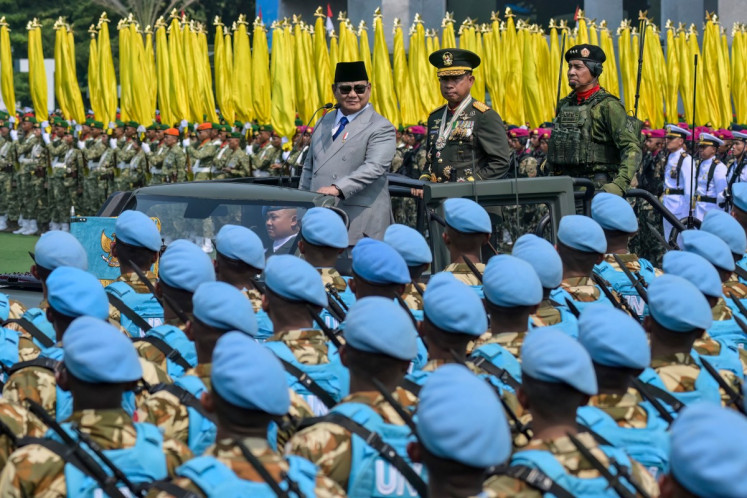
As anti-LGBTQ sentiment intensified across Indonesia during June’s Pride Month, public attention turned to the presidential regulation (Perpres) on national defense policy issued by President Prabowo Subianto last October.
The 70-page regulation identifies "the promotion of LGBTQ culture” as a nonmilitary threat, alongside illegal trafficking, natural resource theft, terrorism, atheism and radicalism.
It defines nonmilitary threats as unarmed activities that endanger state sovereignty, territorial integrity and public safety, and instructs relevant ministries, state institutions and regional administrations outside the defense sector to respond to such threats.
But rights groups argue that by framing LGBTQ identity and advocacy as threats to national security, the regulation risks legitimizing further discrimination against an already marginalized community.
“The presidential regulation provides new legitimation both for the central government and regional administrations to enact legislation that penalizes and discriminates against LGBTQ individuals merely because of their identities,” Legal Aid Institute for the People (LBHM) executive director Albert Wirya told The Jakarta Post on Tuesday.

Read also: Rights groups oppose calls to criminalize LGBTQ people