TheJakartaPost
Please Update your browser
Your browser is out of date, and may not be compatible with our website. A list of the most popular web browsers can be found below.
Just click on the icons to get to the download page.


Popular Reads
Top Results
No results found. Please check your search term and try again
Can't find what you're looking for?
View all search results
Popular Reads
Top Results
No results found. Please check your search term and try again
Can't find what you're looking for?
View all search resultsSenikanji: How a Chinese-Indonesian factory worker in his 60s became Indonesia's hippest illustrator
Change text size
Gift Premium Articles
to Anyone
Share the best of The Jakarta Post with friends, family, or colleagues. As a subscriber, you can gift 3 to 5 articles each month that anyone can read—no subscription needed!
S
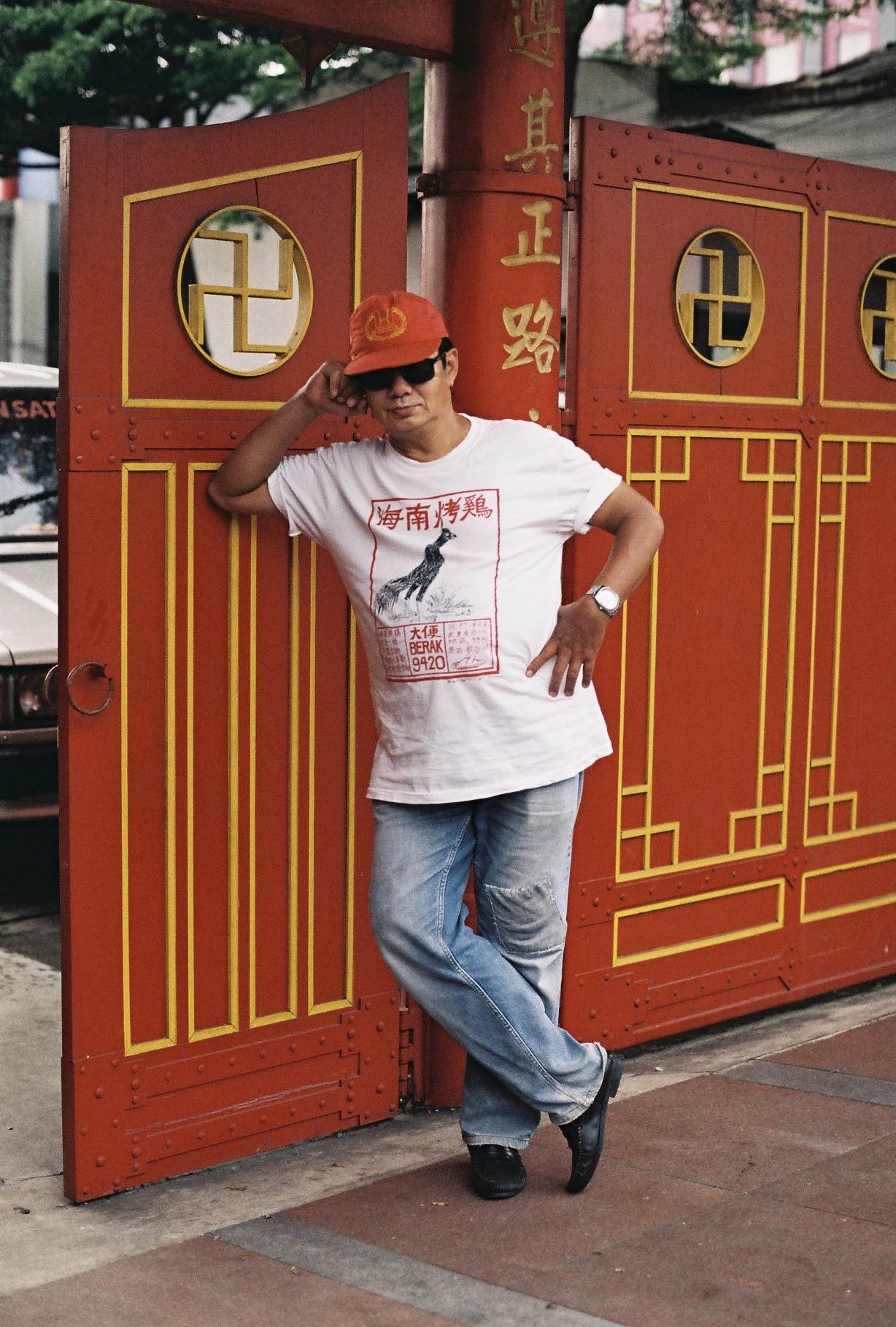
upomo’s modest style of illustration, its Chinese character hand-lettering, and his son Yulius’ witty captions, made him a household name. Along the way, a once-distant father and son relationship blossomed.
Supomo (Chinese name: Pouw Ho Po) was born in Indramayu in 1955 into a life full of difficulty. Moving to Bandung at the tender age of 16 for work, Supomo’s first job was to carry sacks of rice. He then moved to working at a car dealer listing vehicle spare parts. At the age of 30, Supomo married and became a father of two. To provide, he kept working unskilled labor jobs for very little money – ultimately doing so until old age.
Little would Supomo guess that very late in his life, his modest hobby of drawing would become something bigger, leading his illustrations to be featured by hip fashion brands, published on T-shirts, tote bags and even on the walls of urban coffee shops across the country – making him a household name among young people and artists less than half his age.
“Many thought my father was a fine art major,” Yulius Iskandar, Supomo’s 37-year-old son said, "he didn’t even finish middle school.”
Supomo had always been into drawing, as far as Yulius could remember, but never turned it into anything beyond a personal release of creativity.
“He would draw on the back of ripped calendars or his children’s old school notebooks after coming home from a day of work in the factory,” he said.
In 2005, through the connection of his superior at work, Supomo – who, like many Chinese-Indonesians, never mastered the Chinese language – ended up taking Mandarin lessons for a few months. After that, he would start incorporating kanji, the logographic characters from Chinese script, into his drawings.
“The first reason he wanted to learn Mandarin was because he thought Mandarin would become the second-most-used language in the world after English,” Yulius recalled laughing. “Man, was he a visionary.”
“The second reason is because no one in our extended family, despite being of Chinese descent, could speak the language,” he continued.
The birth of Senikanji
Wanting to encourage his father to keep honing his art, Yulius, who has done a lot of writing for work — copywriting, ghost-writing for stand up comedians — started asking his father to draw the Chinese characters for lines that Yulius had written. Yulius would then post the result on Instagram under the username Senikanji (The art of kanji), with the first post uploaded in July 2016.
Yulius’ efforts yielded immediate results. Bandung’s eclectic folk musician Dandy Achmad Ramdhani, better known as Sir Dandy, became Senikanji’s first customer. Having just released his album Lesson #1, he had a few of his song titles translated into artwork by Supomo.
“Senikanji has a very strong character, whether it’s the distorted human faces, the flat space composition or the basic colors, it’s as if it has no regard for the principles of fine arts, which resonates with me a lot,” Dandy said, “The kanji characters also adds another layer of authenticity because obviously that’s part of his heritage.”
At the time, Supomo did not know how much to charge for his art, so Dandy ended up paying Rp 100,000 (US$6,93) per artwork.
“I mean, my father usually doesn’t get paid for his drawing anyway, so we were just grateful,” Yulius said.
But the high proved to be fleeting and the next three years proved to be slow for Senikanji. An order or two would come every few months, but that was it.
At some point, Yulius really wanted his father to resign from his factory job, but Supomo kept refusing, because he didn’t want to lose his main source of income.
“My father was 64, and he would drive his motorcycle far away to the factory and back in the rain. His boss was angry at him all the time and he wasn’t even making the minimum wage,” Yulius said, “I was desperate for him to resign.”
Things turning around
On Sept. 1, 2019, Senikanji got its major break when Yulius tweeted pictures of Supomo’s art, encouraging anyone to order from Senikanji and pay as they wish. The tweet turned viral and orders were pouring in.
“We would get more than 20 orders per day,” Yulius recalled.
Ican Harem of Bali’s experimental electronic duo Gabber Modus Operandi commissioned Supomo for a piece, which was then emblazoned on the group’s official T-shirt for its European and Asian tour. It sold out and became the band's best selling merchandise.
“Even today, it still has more demand for reprints than any of our other merchandise,” Ican said.
Soon, Supomo’s illustrations were in high demand, not just for the art prints but also product collaborations with all sorts of brands: from enamel stainless steel mugs with Bandung’s streetwear brand Kamengksi, to hand sanitizer with Tangerang’s lifestyle retail store Monstore, and zippo lighters with Vindes, a creative company owned by popular TV personalities Vincent and Desta.
While Yulius was more than happy to stay in the background and let Supomo take all the credit, part of the appeal of Senikanji is his clever captions that are relatable to many younger Indonesians including “Don’t manage other people’s behavior, manage your expectations” or “Don’t complain that your coffee is cold, it was warm, but you chose to ignore it”.
An example of one of Senikanji’s most popular pieces shows a boy listening to music on vinyl through his headphones next to stacks of amplifiers with a caption that says “The best system is a sound system,” a clever line carrying the spirit of defiance against a corrupt and incompetent governmental system that speaks to both music lovers and those with a political consciousness.
Proud son
Almost every morning, Yulius, who lived only a few minutes away from Supomo, would go over to his father’s place to discuss the creative direction of Senikanji’s next few orders. When the artworks were done, Supomo would go to Yulius’ to drop them off. He then would bask in the sun in a public park near his son’s house while Yulius would stamp the artworks, pack them and send them to the customers.
“Our relationship became more intense as I would see him almost every day,” Yulius said.
In the past, Yulius had never been close to his father, and was even embarrassed to be Supomo’s heir, he admitted.
“I used to avoid meeting my father. I was embarrassed to be his son because growing up, we didn’t have anything. I was the poorest kid in school. He was also a very pessimistic person and we couldn’t get a conversation going,” Yulius recalled.
Things began to change when Yulius became a father of his own.
“I then realized how much love a father has for his son. I apologized for often hurting his feelings,” Yulius said, clearly emotional, “I wanted to make it up to him by introducing his art to as many people as I could.”
Senikanji’s unexpected success turned Yulius into a proud son.
“He became really well-known and I got recognized because of my father, even my illustrator friends were raving about him,” he continued, “I’m very proud of him.”
“My father once said he wouldn’t be able to leave material inheritance like property or cars, but what he has created with Senikanji will last for generations of his family,” Yulius said, “He has left us with a bigger inheritance that we all could have dreamed of.”
Remains in blood
On July 25 this year, Supomo passed away at the age of 66 due to heart problems and diabetes, but Yulius intends to keep Senikanji alive.
“There are dozens of unpublished works of my father still, and I’m preparing for Senikanji’s exhibitions in Jakarta, Bali and Balikpapan,” he said.
Yulius also admitted that he had found an illustrator to keep Senikanji going, but it hasn’t been announced officially.
“I’m going to recreate Supomo’s work into other mediums, possibly collaborating with other artists, and there are so many artists from other disciplines that are responding to this work, whether it’s in the form of action figures, photography and more,” Yulius added.
A funny coincidence (or not?) is the fact that Yulius’ 5 year-old son, Gabriel, has been drawing every day now and wishes to be an artist one day, while his older brother’s 4 year-old son, Ezra is currently learning how to write kanji, a fact that excites Yulius to no end.
“It looks like the legacy of Senikanji will be carried on by Supomo’s blood,” he said.