TheJakartaPost
Please Update your browser
Your browser is out of date, and may not be compatible with our website. A list of the most popular web browsers can be found below.
Just click on the icons to get to the download page.


Popular Reads
Top Results
No results found. Please check your search term and try again
Can't find what you're looking for?
View all search results
Popular Reads
Top Results
No results found. Please check your search term and try again
Can't find what you're looking for?
View all search resultsOJK to tighten regulations on investment-linked insurance
Firms no longer allowed to promise guaranteed returns on products.
Change text size
Gift Premium Articles
to Anyone
Share the best of The Jakarta Post with friends, family, or colleagues. As a subscriber, you can gift 3 to 5 articles each month that anyone can read—no subscription needed!
T
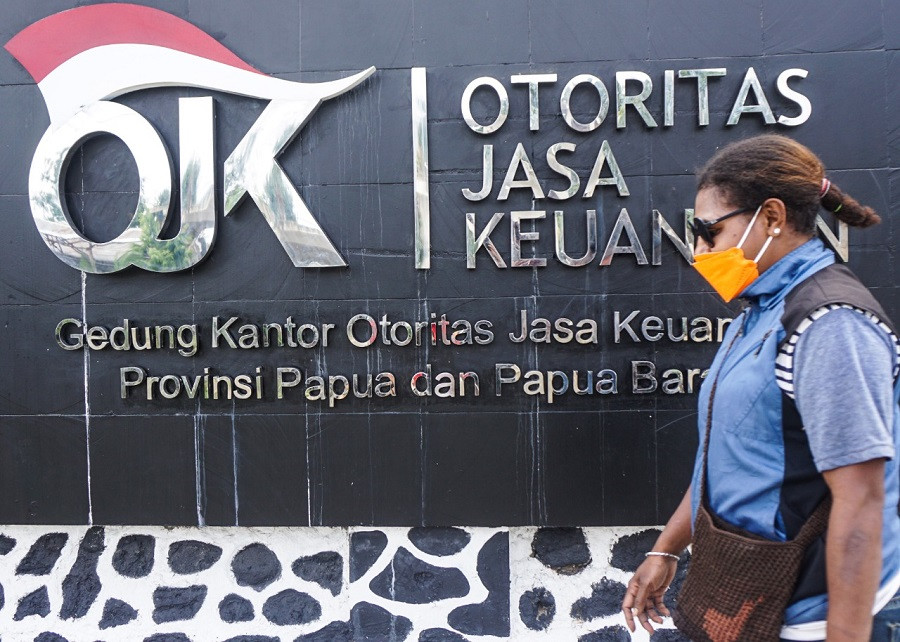
he Financial Services Authority (OJK) will tighten rules on investment-linked insurance as the agency seeks to prevent future problems with regard to the products.
The new rules will pertain to products involving unit-linked investment, including marketing, fund management and the requirements insurance companies must meet to sell such products.
“By strengthening the regulations, we aim to minimize marketing problems, particularly those [causing] misunderstanding among consumers about unit-linked products; and to [get] insurance companies to improve their governance and risk management,” OJK commissioner Riswinandi said in a statement on Sunday.
Unit-linked insurance products have come in for criticism among many policyholders due to promises of high returns, misselling and alleged fraud in the marketing process amid low consumer literacy about the products and the insurance industry as a whole.
Many policyholders – apparently unaware of the fluctuating nature of investments managed by insurance companies – have demanded reimbursement of money they lost in unit-linked funds.
Some said they had not been informed about the risks by the insurance agents selling them the products.
Read also: Indonesians disgruntled over unit link insurance
The new rules will forbid insurance companies from promising guaranteed returns on their insurance products. The prevailing 2015 OJK regulation on insurance products and marketing includes no such specific prohibition.
The planned provisions stipulate that agents wishing to sell unit-linked insurance products must undergo certification and training in the product. Previously, agents could sell such products as long as they followed general regulations on insurance agents.
The proposed regulation will also prevent insurance companies from booking premium payments before ensuring that the customer has agreed to the coverage.
The onus is on companies to ensure policyholders understand the products and have them sign a letter confirming this. Companies are also required to ensure unit-linked products meet a policyholder’s needs, budget and risk profile.
The new provisions will also see insurance companies place their unit-linked investment assets under a custodian, evaluate their investment strategies and provide periodic reports for every policyholder.
Lastly, the OJK will require that companies have a minimum capital of Rp 250 billion (US$17.4 million) to offer conventional insurance and Rp 150 billion for sharia-compliant counterparts.
The agency said selling unit-linked insurance required adequate human resources and infrastructure like actuaries, investment experts and proper information systems.
“Companies, that do not meet those requirements are not allowed to sell unit-linked insurance,” said Riswinandi, who is also an executive director for the OJK’s nonbank financial services supervision body.
Insurance expert Irvan Rahardjo said on Jan. 17 that issuing new regulations should be accompanied by an adequate level of supervision, arguing that the OJK had many regulations but that implementation was lacking. Adding more rules alone, without proper enforcement, might not solve the problem, he cautioned.
“The current regulation is already tight, very rigid. But the problem is with the supervision and enforcement of the regulation,” Irvan told The Jakarta Post.
“This is a push and pull. Will the OJK now shift the focus to consumer protection, or will they just add more rules? Can these many rules be [enforced]?” he asked.