TheJakartaPost
Please Update your browser
Your browser is out of date, and may not be compatible with our website. A list of the most popular web browsers can be found below.
Just click on the icons to get to the download page.


Popular Reads
Top Results
No results found. Please check your search term and try again
Can't find what you're looking for?
View all search results
Popular Reads
Top Results
No results found. Please check your search term and try again
Can't find what you're looking for?
View all search resultsSurabaya's best musical storytellers are back in business
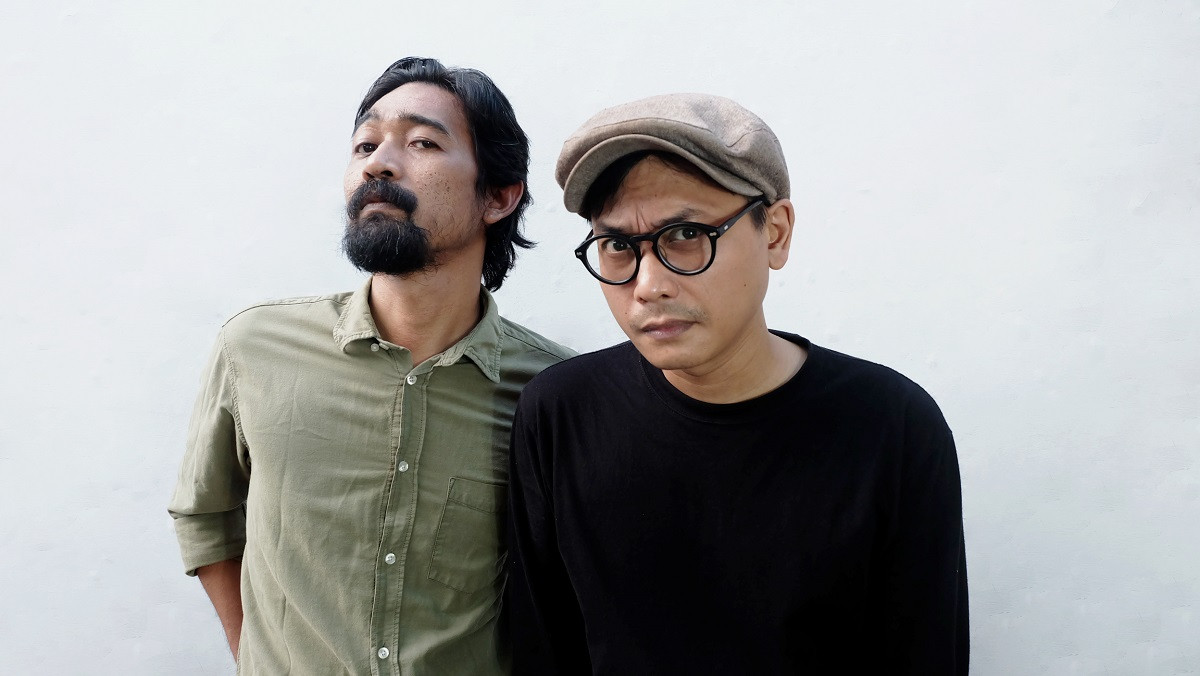
Since releasing its debut album in 2015, Silampukau has earned critical acclaim and commercial success. Now, after almost a decade in the wilderness, the duo return.
Change text size
Gift Premium Articles
to Anyone
Share the best of The Jakarta Post with friends, family, or colleagues. As a subscriber, you can gift 3 to 5 articles each month that anyone can read—no subscription needed!
S
ince releasing its debut album in 2015, Silampukau has earned critical acclaim and commercial success. Now, after almost a decade in the wilderness, the duo return.
The good news is that Silampukau’s sardonic sense of humor has survived some of the most turbulent years of its career. The Surabaya-based duo reflects on a less-than-productive pandemic, full of half-baked creative ideas conceived on a whim and abandoned just as quickly.
The two are sheepish with their excuses and, as ever, confused about the future.
“But,” songwriter Kharis Junandharu quipped. “I cut my hair short again. We survived the closest thing to doomsday, so there’s every reason to celebrate!”
Since its inception in 2009, Silampukau has established itself as one of the country’s most celebrated indie-folk bands – much to the duo’s personal consternation. Fame and fortune do not necessarily sit well with the endlessly self-critical duo, but there are bigger crosses to bear.
After some false starts (the band released a well-received EP and was a regular on the touring circuit before abruptly quitting in 2010), their debut album Dosa Kota Kenangan (2015) elevated them to unprecedented heights.
Perhaps it is songwriting partner Eki Trisnowering’s sultry baritone, the pair's familiar and naughty country-tinged arrangement, or their relentless touring that caught the heart of audiences. But what really sets them apart from their peers at the time was their debut album’s bleak, honest, yet humorously poetic retelling of Surabaya, Indonesia’s messy second city.
Each song on the album is a slice of life from a cast of street urchins and hustlers – from the clothes-shop salesman who quotes Metallica lyrics to justify their failed musical career in “Doa 1”, the illicit alcohol peddler in “Sang Juragan”, the forlorn narrator who sees their lover off to France in hit single “Puan Kelana” to the singalong ditty “Si Pelanggan”, a homage to Surabaya’s infamous red light district, Dolly.
It was a commercial and critical hit, earning them legions of devoted fans and even the odd television appearance. In 2019, VICE Indonesia dubbed Dosa Kota Kenangan one of the ten best Indonesian albums of that past decade, hailing it as “a glorious musical poetry tribute to the city of Surabaya”.
What followed, though, was radio silence.
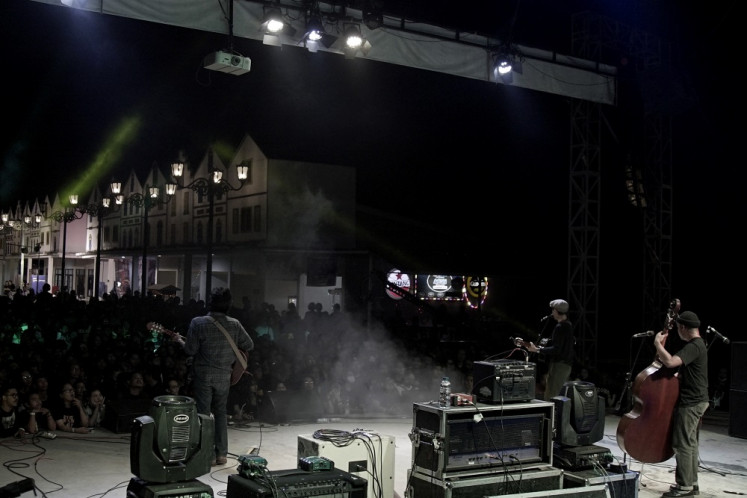
Though they were regular faces in Indonesia’s hippest music festivals and retained a fiercely loyal following, six years passed without the release of new music, let alone their much-awaited sophomore album. Then, just as the pandemic crept to its peak and the world seemed to have passed them by, Silampukau suddenly returned.

From reflex to reflection
“We tinkered with many different ideas that we ended up scrapping, but when I watched the news of the coup d’etat in Myanmar last year, it just clicked,” Kharis said, referring to the military coup that deposed the democratic government of Myanmar in February 2021.
“Around those months there was similar news of protests against the government in Thailand, Colombia, everywhere.”
A year of pandemic stagnation, Kharis observed, has finally pushed the world over the edge. “Everybody was forced to be idle, and we saw that those in power were doing nothing as the emergency roared on,” Kharis continued.
“It was the same in Indonesia. At some point, the entire planet seemed to stop trusting its governments. We wanted to capture that feeling of discontent.”
His songwriting partner was nurturing his own discontent. As live concerts – the lifeblood of most Indonesian musicians – continued to be curtailed and no respite appeared on the horizon, Eki retreated to familiar comforts.
“I revisited old [Indonesian] music like Lilis Suryani, Ellya Khadam and Syech Albar – tunes from the ‘50s and ‘60s I listened to as a child,” he revealed. “Maybe it was a reaction to all the chaos. I wanted to find refuge in old songs I used to know. I started to tinker with these old-school Arab and Malay-style melodies.”
When the duo met in the studio after Surabaya’s lockdown restrictions were loosened, their mutual concerns merged.
“Eki came in with this heavily dangdut [popular beat-heavy genre] inspired tune,” Kharis recalled. “Indonesian politicians also love to use dangdut in communicating to the masses – back in 2021, they were even campaigning against the annual Lebaran exodus with a dangdut song featuring all the big political leaders.”
Using dangdut back against them was an opportunity too good to pass up. “It’s like exchanging pantun,” Kharis said, referring to the traditional Malay tradition of oral rhyming poetry, often used to extol or criticize those in power.
“And as the late great Javanese singer Didi Kempot said, the best thing to do with discontent is turn it into dance.”
Released in June last year, “Dendang Sangsi” was a surprise single that caught even the band’s most ardent fans off-guard. Kharis’ lyrics are more direct than usual – a sharp appeal to retain mistrust of those in power and to not forgive failures and broken promises.
“Kegagalan sering terpaksa dimaafkan demi fasad kestabilan [Failure is forcibly forgiven, to retain a facade of stability],” Eki sings, mournfully. “Pembenaran terus-menerus disemburkan dari dubur kekuasaan [Excuses are constantly spewed, from the rectum of power].”
With its lilting flutes, keroncong (Javanese folk music) style ukulele, and an undercurrent of anger in Eki’s calm vocal delivery, it was also a musical sea change from their usual fare of comfortable vocal harmonies and acoustic guitar interplay.
“The whole process was quick,” Eki said. “Two days after we finished mastering it, we released it without thinking too much.”
“There was no good day to release something. Every day was fresh hell,” Kharis quipped. “So we decided to just release something. No fanfare, no preparation, no nothing.”
Finally putting out new material after six years sent Kharis into his usual tailspin of self-loathing. “I kept thinking, was I too reactionary?” he asked, “But in times like these, there’s no place for satire!”
But his introspection finally paid off. “A friend said that during this pandemic, we’re all weathering the same storm, it’s just that we’re sailing on different boats,” Kharis said. “That got the dominoes falling.”
Like Eki before him, he also turned to the past for inspiration. “When I was young, I lived with my mother in Kenjeran – near the Surabayan coast and among kampung full of fishermen,” Kharis said.
“Surabaya’s coasts are safe from storms, but I remember sitting on the sidelines in the kampung’s coffeehouses and eavesdropping on their stories of the sea.”
The fishermen’s stories were a complex web of adventure, danger and misfortune. “Our image of the sea is a bit mystical, glorious and beautiful, but I realized then that there are people whose entire livelihood relied on the sea,” Kharis reflected.
“What they face out there is the same misfortune and battered hopes that others have on land.
“Besides,” Kharis said, never holding back from a quip. “Our republic consists mostly of water and trouble. So why do we have more love songs than sea shanties?”
Released last month, “Lantun Mustahil” is a fresh expansion of their tried-and-tested sound. With its swinging beat, baroque pop-esque instrumentation, and uncharacteristically lush string arrangement, it sees Silampukau edging further into the realm of the cinematic.
The single was also released as a binaural mix, lifting Eki’s baritone as he mournfully paints a picture of a fisherman caught in a storm at sea.
“Maut, berhentilah kau merayu [Death, stop flirting with me],” he sings. “Semangatku masih cukup untuk bertahan hidup [I still have enough spirit to stay alive].”
Stasis and future
Kharis admits that “Dendang Sangsi” and “Lantun Mustahil” were one-off specials – there was no way he would release an entire album of songs as “dramatically arranged” as “Lantun Mustahil”, he said. But thematically, “Lantun Mustahil” and its vivid portrayal of the flip side of urban life is a good indication of the next album’s feel.
“We only released ten songs on our first album and told ten stories,” Kharis said. “There are more stories like that to tell on the next album.”
Surabaya, where both continue to live and work, has not changed much since Dosa Kota Kenangan’s release in 2015. The duo’s reflection of the city’s sense of stagnation sees them doing a roll call of their debut album’s beloved characters.
“The red light district life depicted in ‘Si Pelanggan’ is still around, though it is not as centralized as it used to be,” Kharis said. “The traffic we talked about in ‘Malam Jatuh di Surabaya’ is still the same. We still have issues with forced evictions and land clearings, like we sang about in ‘Bola Raya’. From where we stand, what we sang about back in 2015 is still relevant.”
They are painfully aware of the conflicting emotions that arise from this stasis. On one hand, this means that Surabaya’s cast of antiheroes is still readily available for them to uncover, unpick and undress. It provides ample material for their long-awaited second album – which the two aim to release by the end of the year. But on the other hand, does this mean Surabayans are stuck with the devils they know?
“I’m not angry with this supposed sense of stagnation,” Kharis insists. “Maybe we’re familiar with this condition, and it becomes part of our culture – despite its not-so-pretty excesses.”
“Or,” Eki said, grinning. “Our entire city is caught up in Stockholm Syndrome.”
Kharis turned quickly to his songwriting partner, laughing at Eki’s well-timed quip before the two started debating this newfound revelation among themselves. Their creative process is full of deviation and messy bursts of inspiration like this, he says. But, as they have discovered in their long-winded career, the journey is always worth it.