TheJakartaPost

Please Update your browser

Your browser is out of date, and may not be compatible with our website. A list of the most popular web browsers can be found below.
Just click on the icons to get to the download page.


Jakarta Post

New rules aim to keep future rail projects from going off track

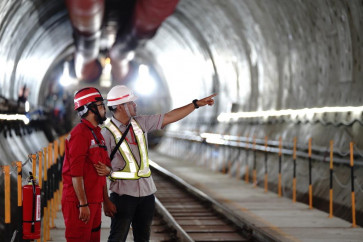
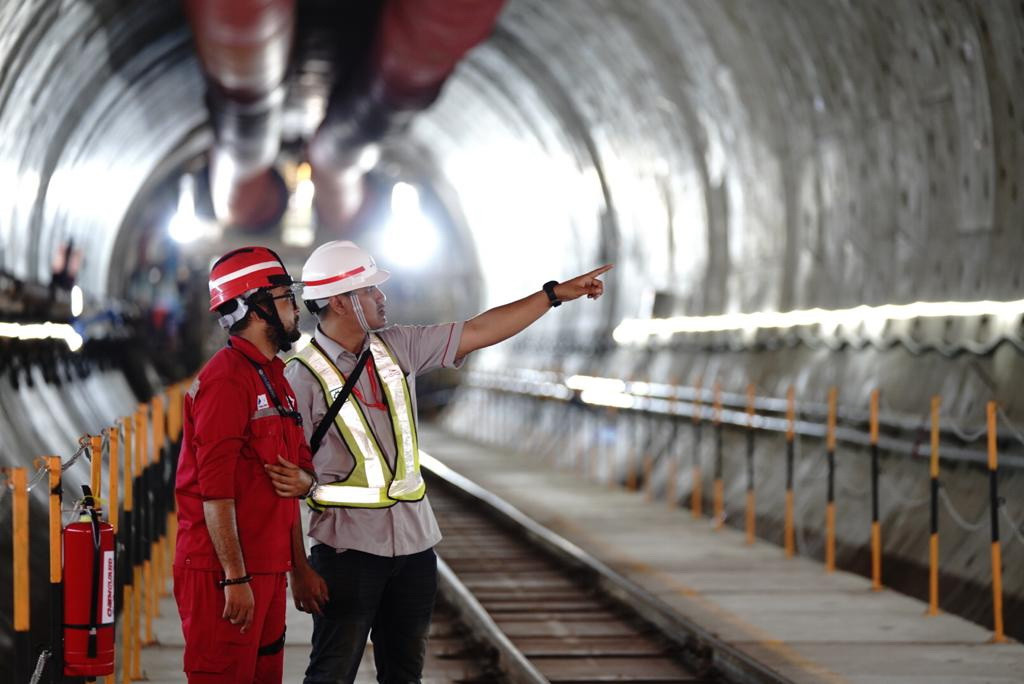
Informed by the hefty cost overruns of the Jakarta-Bandung railway project, the proposed regulation appears aimed at avoiding a repeat of mistakes in future high-speed rail development.

Vincent Fabian Thomas (The Jakarta Post)
Jakarta
Mon, November 28, 2022 Published on Nov. 27, 2022 Published on 2022-11-27T17:17:42+07:00

Change text size

Gift Premium Articles
to Anyone

Share the best of The Jakarta Post with friends, family, or colleagues. As a subscriber, you can gift 3 to 5 articles each month that anyone can read—no subscription needed!
T

he government is working on a new regulation to serve as the legal foundation for future high-speed railway development in the country, as it contends with major complications in ongoing projects.

The new regulation is aimed at clarifying how the costs of high-speed railway development in the country will be split among the state budget, state-owned enterprises (SOEs) and the private sector.

It will cover aspects ranging from land clearing and electricity transmission to signaling systems and transportation to and from railway stations, among others.

Some of these aspects have pushed the overall costs of the Jakarta-Bandung high-speed railway project, currently being developed by an Indonesian-Chinese consortium, far above initial projections.

Deliberations on the regulation began on Oct. 3 at a meeting led by Coordinating Maritime Affairs and Investment Minister Luhut Pandjaitan, who is also heading a committee to address the cost overrun issues in the ongoing project.

“The hope is that if there is another high-speed railway project in the future, or an extension of the current project to Surabaya, there will be a solid legal and operational basis, including for land acquisition,” Deputy State-Owned Enterprises (SOEs) Minister Kartika Wirjoatmodjo told lawmakers on Wednesday.

Read also: As Xi visit draws near, delays haunt Jakarta-Bandung rail project

Dwiyana Slamet Riyadi, CEO of KCIC, the consortium responsible for the Jakarta-Bandung project, told reporters on Wednesday that the company had no choice but to cover all costs incurred in the course of the development solely from its own coffers, depleting it of capital to keep the project up and running.

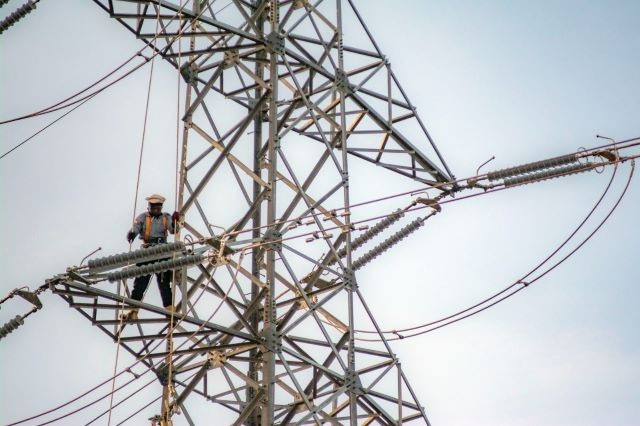
Those costs include payments to telecommunications firm Telkomsel for frequency clearance to accommodate the project’s signaling system and payments to state-owned electricity company PLN to set up electricity transmission lines for the railway.

Kartika said that only if tasks and responsibilities were clearly divided would KCIC be able to distribute the financial burden to other entities, which is what the regulation would address.

The new regulation is also aimed at addressing delays in land procurement, which have set some infrastructure projects in Indonesia back by years as speculators seize the opportunity to buy plots needed for development, thereby inflating prices and causing serious cost overruns.

“There should be a budget for land procurement beforehand. If we announce [a project] first, and then buy [the land] later, the price is guaranteed to soar. We will fix this,” Kartika said.

Furthermore, the regulation will provide a means to tackle the inaccessibility issue plaguing the KCIC project, where many of the stations are located far from regional population centers.

The government is seeking to bring in private firms and SOEs to develop train and bus feeder services for inbound and outbound passengers.

Informed by the challenges of the Jakarta-Bandung railway project, the regulation appears aimed at avoiding repeat mistakes in future high-speed railway development.

It follows a 2021 presidential regulation that enabled the government use funds from the state budget to save the KCIC project amid extensive cost overruns, even though the government had initially vowed there would be no direct state funding.

Read also: Govt to inject funds into Jakarta-Bandung railway next month

Haris Eko Faruddin, air, sea and land transportation analyst at state-owned lender Bank Mandiri, told The Jakarta Post on Friday that extending the Jakarta-Bandung high-speed line to Surabaya was possible, as was the addition of other lines, but that high-speed railway development would remain a costly undertaking and the planned regulation would not change that fact.

“We will still need to assess whether a particular region is promising or not for building a high-speed railway line. It is certainly not necessary that just any region has one,” Haris said.

He added that many regions outside Java needed to improve their basic transportation before considering more sophisticated alternatives.

Your Opinion Matters

Share your experiences, suggestions, and any issues you've encountered on The Jakarta Post. We're here to listen.

Enter at least 30 characters
0 / 30

Thank You

Thank you for sharing your thoughts. We appreciate your feedback.

Share options

Quickly share this news with your network—keep everyone informed with just a single click!

Change text size options

Customize your reading experience by adjusting the text size to small, medium, or large—find what’s most comfortable for you.

Gift Premium Articles
to Anyone

Share the best of The Jakarta Post with friends, family, or colleagues. As a subscriber, you can gift 3 to 5 articles each month that anyone can read—no subscription needed!

Continue in the app

Get the best experience—faster access, exclusive features, and a seamless way to stay updated.