TheJakartaPost
Please Update your browser
Your browser is out of date, and may not be compatible with our website. A list of the most popular web browsers can be found below.
Just click on the icons to get to the download page.


Popular Reads
Top Results
No results found. Please check your search term and try again
Can't find what you're looking for?
View all search results
Popular Reads
Top Results
No results found. Please check your search term and try again
Can't find what you're looking for?
View all search resultsS. Korean firms 'to payʼ to end dispute with Japan
The proposal was welcomed in Tokyo but faced immediate backlash from some victims and South Korea’s main opposition party.
Change text size
Gift Premium Articles
to Anyone
Share the best of The Jakarta Post with friends, family, or colleagues. As a subscriber, you can gift 3 to 5 articles each month that anyone can read—no subscription needed!
S
outh Korea said on Monday that its companies would compensate people forced to work under Japan’s 1910-1945 occupation, seeking to end a dispute that has undercut efforts led by the United States to present a unified front against China and North Korea.
The proposal was welcomed in Tokyo but faced immediate backlash from some victims and South Korea’s main opposition party, which accused the government of capitulating to Japan.
US President Joe Biden, whose administration has pressed its two allies to reconcile, hailed the announcement as “groundbreaking”.
A Japanese government source close to Prime Minister Fumio Kishida told reporters that the US had been pressing both countries to reconcile, but the geopolitical threat from North Korea was a main factor that triggered Yoon’s push for reconciliation.
The disagreements over labor and women forced into Japanese military brothels have bedeviled ties between the two pivotal US allies for years, but South Korean President Yoon Suk-yeol has made a push to repair the relationship.
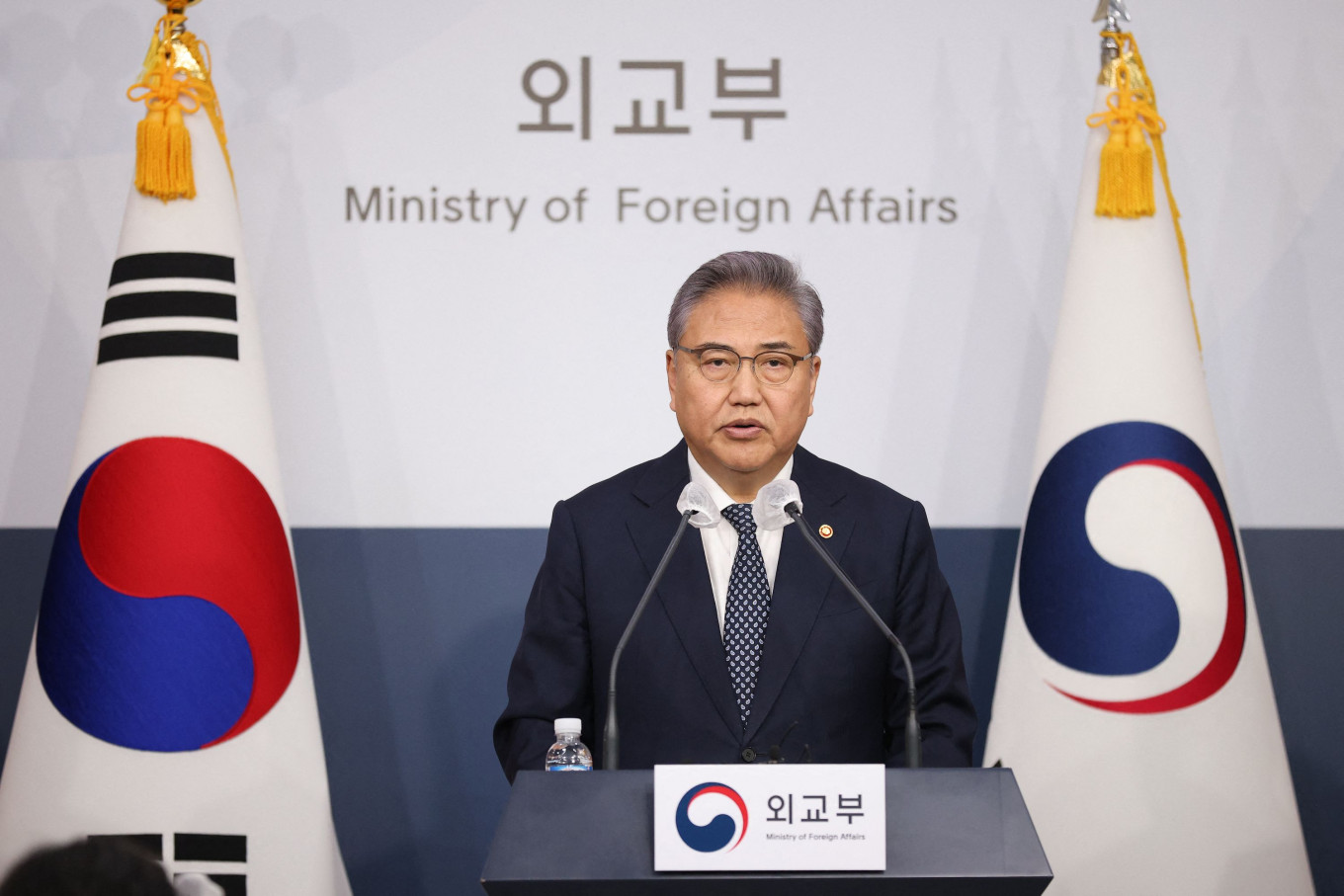
Under the plan, South Korea would compensate former forced laborers through an existing public foundation funded by private-sector companies, Foreign Minister Park Jin told a briefing.
“The soured South Korea-Japan relations should no longer be neglected, and we need to end the vicious cycle for the national interest, for the people,” Park said. He said he hoped Japan would respond sincerely, including by “implementing its previous public statements expressing remorse and apology”.
Kishida said he welcomed the proposal and said he would work closely with Yoon.
Japanese companies would not be expected to make any payments under the plan, but would not be blocked from donating if they wanted, said Japan’s Foreign Minister Yoshimasa Hayashi.
“We welcome this as a step that returns Japan-South Korea relations to a healthy one,” he said.
Poor relations between the two have been a point of concern for the US, which is seeking to present a more unified front with its allies against the rising power of China and the threats from North Korea’s expanding missile and nuclear arsenal.
In a statement, Biden said the announcements were “a groundbreaking new chapter of cooperation and partnership between two of the United States’ closest allies” and a “critical step to forge a future for the Korean and Japanese people that is safer, more secure, and more prosperous”.
South Korean funds
Relations plunged to their lowest point in decades after South Korea’s Supreme Court in 2018 ordered Japanese firms to pay reparations to former forced laborers.
Fifteen South Koreans have won such cases, but none has been compensated.
Japan has said the compensation issue was settled under a 1965 treaty, and Hayashi said his government’s stance had not changed.
When Seoul first raised its proposal in January, it sparked backlash from victims and their families because it did not include contributions from Japanese companies, including those ordered by South Korean courts to pay reparations.
Around a dozen protesters demonstrated outside as Park made the announcement.
“Today’s humiliating resolution is a result of [the South Korean government’s] consistently low posture towards the Japanese government,” representatives of some of the victims said at a separate event.
Some of the 15 plaintiffs say they will reject the government’s plan, setting the stage for more legal battles.
“It’s not a proper apology,” Yang Geum-deok, one of the victims, told reporters. “It should never be like this when there are people who actually did the wrong.”
The main opposition Democratic Party denounced the plan as “submissive diplomacy”.
“It’s a day of shame,” An Ho-young, a spokesperson for the party, said in a statement. “Japanese companies embroiled in war crimes received indulgence without even budging, and the Japanese government managed to remove a trouble by having the grace to repeat past statements.”
The South Korean companies include KT&G, Korea Electric Power Corp (KEPCO) and other companies that benefited from the 1965 treaty between South Korea and Japan.
KT&G said it was carefully monitoring the discussions on compensation for victims of forced labor and planned to faithfully cooperate in implementing the agreements. KEPCO said it would review the issue.
POSCO holdings said it would consider how to support the intent of the government’s announcement.
Asked whether Japanese companies would pitch in to compensate, Park said both Japanese and South Korean businesses were considering a plan to make voluntary payments.
South Korea’s Yonhap news agency, citing unnamed government sources, had said that as part of the deal, Seoul and Tokyo had tentatively agreed to create a separate “future youth fund” to sponsor scholarships with funds from companies in both countries.
Two of the companies ordered by South Korean courts to make restitution, Mitsubishi Heavy Industries Ltd. and Nippon Steel Corp., declined to comment on the agreement, referring to their long-held stance that the issue of compensating wartime laborers had been resolved under the 1965 treaty.
The row spilled over into a trade dispute in 2019, with Tokyo tightening curbs on exports to South Korea of high-tech materials used in smartphone displays and chips, and Seoul filing a World Trade Organization (WTO) complaint in response.
Hayashi said the export curbs were separate from the forced labor dispute, but on Monday both countries’ trade ministries said South Korea would put its WTO complaint on hold while the two sides negotiated to return trade to its pre-2019 status.