TheJakartaPost
Please Update your browser
Your browser is out of date, and may not be compatible with our website. A list of the most popular web browsers can be found below.
Just click on the icons to get to the download page.


Popular Reads
Top Results
No results found. Please check your search term and try again
Can't find what you're looking for?
View all search results
Popular Reads
Top Results
No results found. Please check your search term and try again
Can't find what you're looking for?
View all search resultsUndernutrition in mothers rising sharply: UNICEF
Most of them are in the world’s poorest regions, with South Asia and sub-Saharan Africa constituting 68 percent of women and adolescent girls who are underweight and 60 percent of those suffering from anemia.
Change text size
Gift Premium Articles
to Anyone
Share the best of The Jakarta Post with friends, family, or colleagues. As a subscriber, you can gift 3 to 5 articles each month that anyone can read—no subscription needed!
T
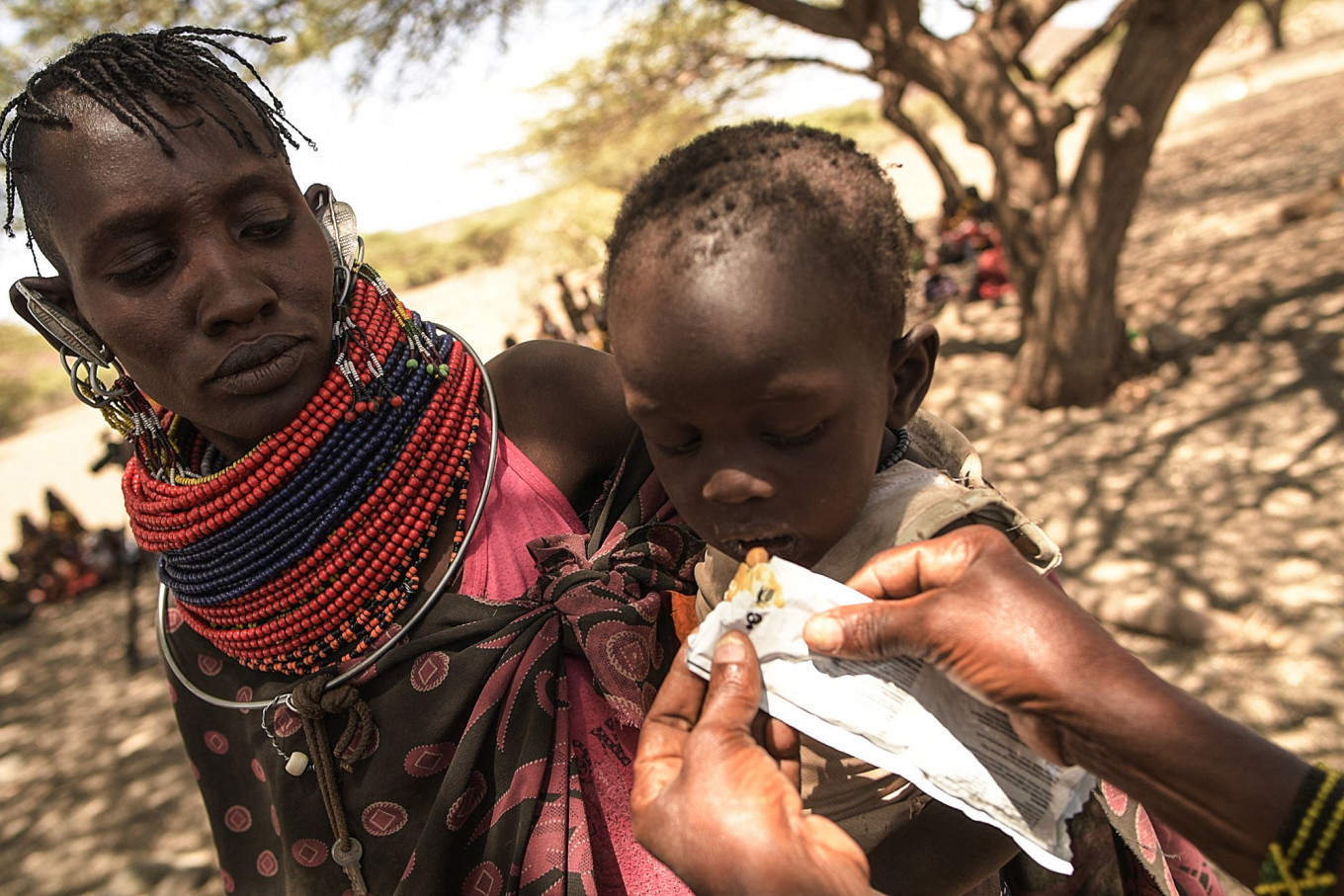
he number of pregnant women and nursing mothers suffering from undernutrition had increased by 25 percent since 2020 in 12 countries at the epicenter of the world food crisis, the United Nations children’s agency warned on Monday, stressing the impact it was having on children’s health.
The UNICEF report, based on data analysis of women in nearly every country in the world, estimates that more than 1 billion women and adolescent girls suffer from undernutrition, which leaves them underweight and of short stature, and from a deficiency in essential micronutrients as well as from anemia.
Most of them are in the world’s poorest regions, with South Asia and sub-Saharan Africa constituting 68 percent of women and adolescent girls who are underweight and 60 percent of those suffering from anemia.
These nutritional deficiencies had an impact not just on the wellbeing of the women but also affected their children, said UNICEF, noting that “poor nutrition is passed down through generations”.
Malnutrition increased the risk of neonatal death, but could also “impair fetal development, with lifelong consequences for children’s nutrition, growth, learning and future earning capacity”.
“Globally, 51 million children under two years are stunted. We estimate that about half of these children become stunted during pregnancy and the first six months of life, when a child is fully dependent on the mother for nutrition,” the UNICEF report said.
It estimated that between 2020 and 2022, the number of pregnant or breastfeeding women suffering from acute malnutrition increased by 25 percent, from 5.5 to 6.9 million, in 12 countries deemed to be in food crisis: Afghanistan, Burkina Faso, Ethiopia, Kenya, Mali, Niger, Nigeria, Somalia, Sudan, South Sudan, Chad and Yemen.
“Without urgent action from the international community, the consequences could last for generations to come,” said UNICEF chief executive Catherine Russell in a statement.
“To prevent undernutrition in children, we must also address malnutrition in adolescent girls and women,” she said.
UNICEF called for priority to be given to women and girls in terms of access to nutritious food, and to implement mandatory measures to “expand large-scale food fortification of routinely consumed foods such as flour, cooking oil and salt to help reduce micronutrient deficiencies and anemia in girls and women”.
Acute child malnutrition
In January, the UN called for urgent funding to help 30 million children suffering from acute malnutrition “before it is too late” in countries being hammered by the food crisis.
UN agencies said conflict, climate shocks, the COVID-19 pandemic and rising living costs were leaving an increasing number of children badly malnourished.
“Currently, more than 30 million children in the 15 worst-affected countries suffer from wasting, or acute malnutrition, and eight million of these children are severely wasted, the deadliest form of undernutrition,” five UN agencies said in a joint statement.
The 15 countries are Afghanistan, Burkina Faso, Chad, Democratic Republic of Congo, Ethiopia, Haiti, Kenya, Madagascar, Mali, Niger, Nigeria, Somalia, South Sudan, Sudan and Yemen.
Soaring food prices were aggravating food shortages and displacing populations, the UN said, as well as hindering access to affordable essential nutrition.
The joint statement called for greater investment to support its efforts to meet the “unprecedented needs of this growing crisis, before it is too late”.
Its plan aims to prevent, detect and treat acute malnutrition among children with interventions in the food, health, water and sanitation, and social protection systems.
“This situation is likely to deteriorate even further in 2023,” said Food and Agriculture Organization chief Qu Dongyu.
“We must ensure availability, affordability and accessibility of healthy diets,” it said.
The joint agency plan will target children aged under 5, pregnant and breastfeeding women, and women and caregivers of children under 5.
“Today’s cascading crises are leaving millions of children wasted and have made it harder for them to access key services,” said UNICEF head Russell.
“Wasting is painful for the child, and in severe cases, can lead to death or permanent damage to children’s growth and development,” she said.
“We can and must turn this nutrition crisis around through proven solutions to prevent, detect and treat child wasting early.”
Children with acute malnutrition have weakened immune systems and are at higher risk of dying from common childhood diseases. Those that survive could face lifelong growth and development challenges.