TheJakartaPost
Please Update your browser
Your browser is out of date, and may not be compatible with our website. A list of the most popular web browsers can be found below.
Just click on the icons to get to the download page.


Popular Reads
Top Results
No results found. Please check your search term and try again
Can't find what you're looking for?
View all search results
Popular Reads
Top Results
No results found. Please check your search term and try again
Can't find what you're looking for?
View all search resultsNetizens up scrutiny on extravagant bureaucrats
Online campaign prompts govt to act on suspiciously rich officials.
Change text size
Gift Premium Articles
to Anyone
Share the best of The Jakarta Post with friends, family, or colleagues. As a subscriber, you can gift 3 to 5 articles each month that anyone can read—no subscription needed!
A
t a time when many people are becoming increasingly sceptical that Internet activism matters and can bring about positive changes, the seemingly organic online mobilization to expose the extravagant lifestyles of public officials has given a glimmer of hope that not all is lost with the democratic potential of social media.
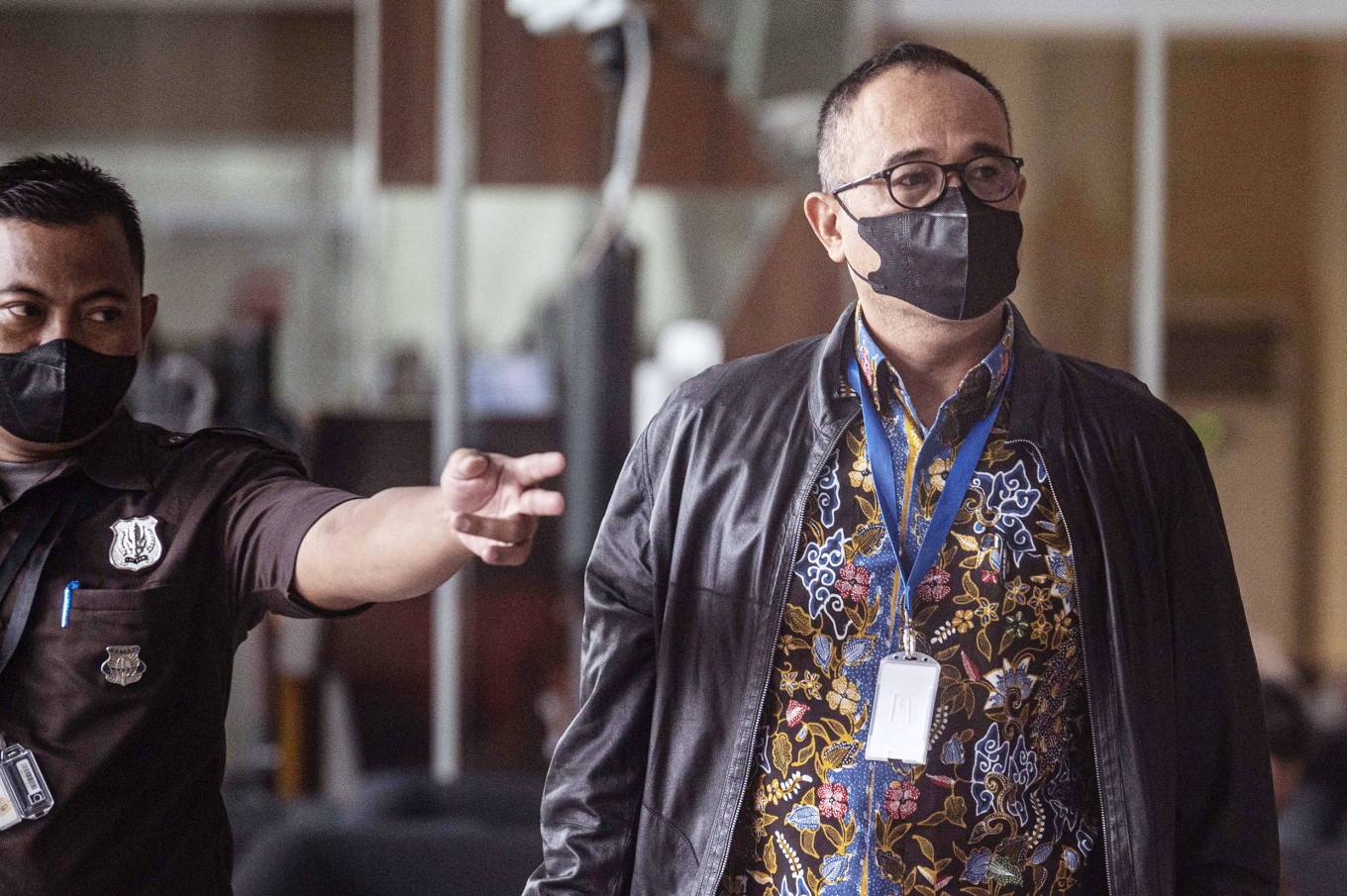
At least three public officials, former tax official Rafael Alun Trisambodo, former Yogyakarta Customs and Excise Office head Eko Darmanto and Makassar Customs and Excise Office head Andhi Pramono, are currently being investigated for suspected corruption and money laundering after being exposed by social media users.
Their cases have increased pressure on the government, particularly the Finance Ministry, to impose meaningful reform on state institutions in charge of collecting and managing state revenues. The government responded to the public pressure, which was initiated online, with a renewed drive to crack down on suspiciously wealthy public officials and their predilection for flaunting their wealth on social media.
Too late, too little
The government’s failure to swiftly address public resentment when the Rafael case first went viral angered the online community, according to Yanuar Nugroho, a visiting senior fellow at Singapore’s ISEAS, Yusof Ishak Institute.
“The government waited for days to address the case after it went viral […] It was too late to say something when the negative sentiment was already shaped,” said Yanuar, who served as former deputy chief of staff to President Joko “Jokowi” Widodo during the latter’s first term in office.
It did not help that the government’s first response had been denial, he said, referring to Finance Minister Sri Mulyani Indrawati’s attempt to protect her ministry. “Acknowledging how problematic the ministry and how prevalent corruption among its staff, as well as taking it as inspiration to bring about reform, would dampen the negative sentiment.”
Yanuar explained Rafael’s case had shown social media was not only used to spread information, but also to create negative sentiment against the government. “You do not only spread the news, but you also spread the sentiment [on social media]. You can easily contain the former with clarification, but the latter took extraordinary efforts [to control]. [The case] has overwhelmed the government,” he said.
Online outrage
Rafael’s son’s aggravated assault of a teenager in late February led to intense public scrutiny of the family’s disproportionate wealth, opening Pandora’s box and unveiling the lavish lifestyles of the Finance Ministry officials.
Via his social media account, Rafael’s 20-year-old son Mario Dandy flaunted his family’s lavish lifestyle, including his possession of a Harley Davidson bike and a Jeep Rubicon car, which turned out to be registered to someone else, a common practice to avoid paying taxes. Rafael’s vast wealth, paraded on social media, prompted an investigation by the Corruption Eradication Commission (KPK). The PPATK later found 40 bank accounts holding a total amount of Rp 500 billion (US$32.5 million) linked to Rafael, leading to his eventual firing.
The scandal forced the finance minister to engage in a PR campaign to keep public trust in her ministry, warning her subordinates against leading lives of luxury and even ordering high-ranking taxmen to disband their ostentatious motorcycle club.
The online outrage over the ministry’s ostentatious display of wealth was far from over, however. After Rafael, the online community exposed Eko as another poster boy of the “filthy rich” civil servants. Screenshots of his Instagram page went viral, showing him riding expensive cruiser motorcycles and flying a Cessna plane. Eko was released from his official duties due to the ongoing investigation for possible ethical violations.
Andhy then made headlines after a video showing his multi-story luxury house in Cibubur area, East Jakarta, and photos of his wealth-flexing daughter wearing a Rp 22 million Balenciaga turtleneck circulated on social media.
Amid the outrage, Coordinating Political, Legal and Security Affairs Minister Mahfud MD revealed the PPATK had flagged various suspicious transactions involving 460 Finance Ministry officials with a whopping value of Rp 300 trillion since 2009.
Bipartisan sentiment
An analysis by big data consulting firm Drone Emprit revealed that case has incited public anger over the misappropriation of public money and the possibility that justice will not be served since the judiciary is now dealing with the rich.
The study, which measures public sentiment from more than 30,000 tweets published around the time the Rafael case went viral between Feb. 21 and 28, found the public was caught by surprise over the unreasonable amount of wealth tax officials had.
“Public opinion and suspicion also developed into [allegations] of ‘illicit’ practices committed by tax officials. This means the Finance Ministry is generally stigmatized as an institution filled with dilapidated employees who cannot be trusted,” Ismail Fahmi, the founder of Drone Emprit, said.
A closer look at Twitter accounts that have stirred up public discussions about filthy rich public servants in the same period also revealed negative sentiment shared by both critics and supporters of the government, he stressed.
“Some have been pro-government. But [now] everyone shares the same opinion: critical of the Finance Ministry," he said.
Online activism?
The shared public concern over the avalanche of wealth-related scandals in the civil service had revitalized existing online activism in Indonesia, according to Wijayanto, director of Center for Media and Democracy at the Institute for Research, Education and Information for Social and Economic Affairs (LP3ES).
“There was already growing negative sentiments [against the government] over economic inequality and widespread corruption, coupled with public disappointment about the weakening of the KPK that led to activist and student protests throughout Indonesia, which was followed by the country’s worsening CPI,” Wijayanto said.
Transparency International’s annual report last month showed Indonesia fell 14 spots to rank 110th on the group’s 2022 Corruption Perception Index (CPI). How far this activism could go to create change depended on whether the government used the momentum of the incidents properly to bring about structural reform, he said. (ahw)