TheJakartaPost
Please Update your browser
Your browser is out of date, and may not be compatible with our website. A list of the most popular web browsers can be found below.
Just click on the icons to get to the download page.


Popular Reads
Top Results
No results found. Please check your search term and try again
Can't find what you're looking for?
View all search results
Popular Reads
Top Results
No results found. Please check your search term and try again
Can't find what you're looking for?
View all search resultsBad plan: Educators agree early high school hours do not work
Change text size
Gift Premium Articles
to Anyone
Share the best of The Jakarta Post with friends, family, or colleagues. As a subscriber, you can gift 3 to 5 articles each month that anyone can read—no subscription needed!
E
ast Nusa Tenggara (NTT) Governor Viktor Laiskodat’s draconian decision to start high school in the predawn hours has received flak from educators and government agencies, since the policy came into effect at the end February.
Viktor seemed to epitomize self-confidence and certainty, as he spoke to an audience of senior high school and vocational school principals in NTT on Feb. 23.
“We have to change things [in Kupang, NTT]. [These include starting] schools at 5 a.m. Do you agree or not headmasters?” the NasDem Party politician exhorted in the speech, which has since gone viral on YouTube. “Agreed!” the principals said at the time.
The toll on students
Education experts have been even more pointed in their criticism of Viktor’s education policy.
“High school students need between eight and 10 hours of sleep. They are likely to sleep after 9 p.m., especially as much of their homework needs to be done through smartphones,” said teacher and child psychologist Sri Purwita ‘Ninong’ Mintarti. “If they sleep at 10 p.m., then ideally school should start at 8 or 9 a.m. The student’s mental capacities are affected by the quality and length of their sleeping hours.”
High school teacher Widya Suharnoko agreed.
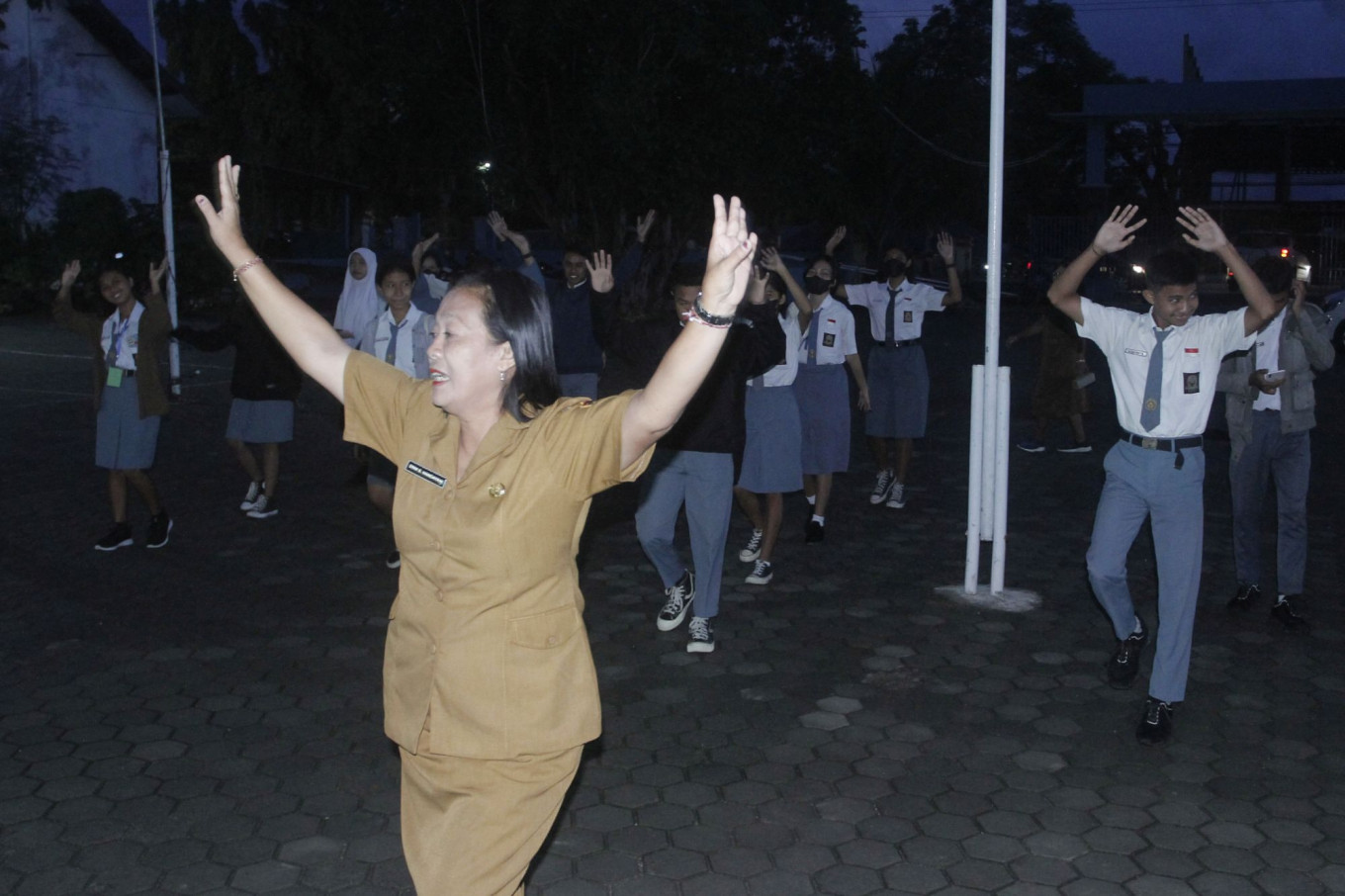
“7:45 to 8 a.m. is an ideal time to start classes. By then, the students will be well rested, have time for early morning prayers and other religious rituals and have breakfast with their families before heading to school,” Widya asserted. “When they get there, the students can then take care of their classroom or do calisthenics, before preparing for classes, then start the learning process. If the schools open very early in the morning, there is no guarantee that they will provide a nutritious breakfast for the students to meet their health needs.”
Ninong warned that “[excessively] early school hours will cause sleep deprivation among students, reducing their energy. In the long run, this can cause emotional and mood swings,” she asserted. “They might lose the enthusiasm to go to school and affect their attention span, memory, creativity and problem-solving capacities, as well as other cognitive skills.”
The United States-based American Academy of Sleep Medicine and Center for Disease Control and Prevention (CDC) backed her assertion. On its website the CDC warns that sleep deprivation in adolescents and early school hours can make them “overweight, suffer from symptoms of depression, and engage in unhealthy risk behaviors such as drinking, smoking tobacco, and using illicit drugs.” Most of all, the two factors can lead students to “perform poorly in schools.”
A storm of criticism
The NTT Education and Culture Agency expressed its receptiveness to Viktor’s policy on grounds that it will “bolster discipline among students”, as reported by detik.com. The institution maintained “that the schools, particularly religious boarding schools, start their day at 5 a.m. with religious services, then calisthenics before they start to teach classes […] geography is also a factor, as the sun [in NTT] is already rising by that time.”
The storm of criticism of the step caused Viktor to slightly move back school hours to 5.30 a.m., along with provincial administration offices. Nonetheless, the Ombudsman office noted that the decision behind the school hours “was not based on proper academic research” but rather on Viktor’s exhortations. House of Representatives Commission X, which oversees education, sports, tourism and the creative economy, chairman Syaiful Huda is just as critical of the policy, particularly on its use of discipline as a pretext.
“There are many ways to improve discipline for schoolchildren. But moving up school hours [to 5 a.m.] is not one of them,” he told kompas.com. But he admitted that provinces have the discretion to make their own policies on education and other social issues, especially as “there is no binding law on school hours.”
The fallout on teachers
Experts like Ninong pointed out that students are not the only ones feeling the heat from excessively early school hours.
“The early school hours are equally problematic for teachers. They have to come in before their students and mentally prepare to face them, and prepare their teaching material,” she said. “The early hours can disrupt how much time they spend on the job as teachers, as well as quality time with their families. The long hours might reduce the teachers’ leisure time, and adversely affect their mental health.”
For Widya, “many parties are involved in the schools’ educational process, all of whom are affected by the early school hours. These include parents who have to wake up in the small hours to help their children to prepare for school and take them there,” she said. “The minimum amount of rest will affect all parties, not least the students’ academic performance.”
The Association for Education and Teachers (P2G) criticized Viktor’s decision on the school schedule, on the grounds that it will not remedy NTT’s social and educational issues. These include a 37.8 percent stunting rate, which is the highest among the country’s 38 provinces. NTT also has the third-lowest Human Development Index in Indonesia.