TheJakartaPost
Please Update your browser
Your browser is out of date, and may not be compatible with our website. A list of the most popular web browsers can be found below.
Just click on the icons to get to the download page.


Popular Reads
Top Results
No results found. Please check your search term and try again
Can't find what you're looking for?
View all search results
Popular Reads
Top Results
No results found. Please check your search term and try again
Can't find what you're looking for?
View all search resultsSecuring supplies ‘key’ as Intifood Sejahtera eyes export market
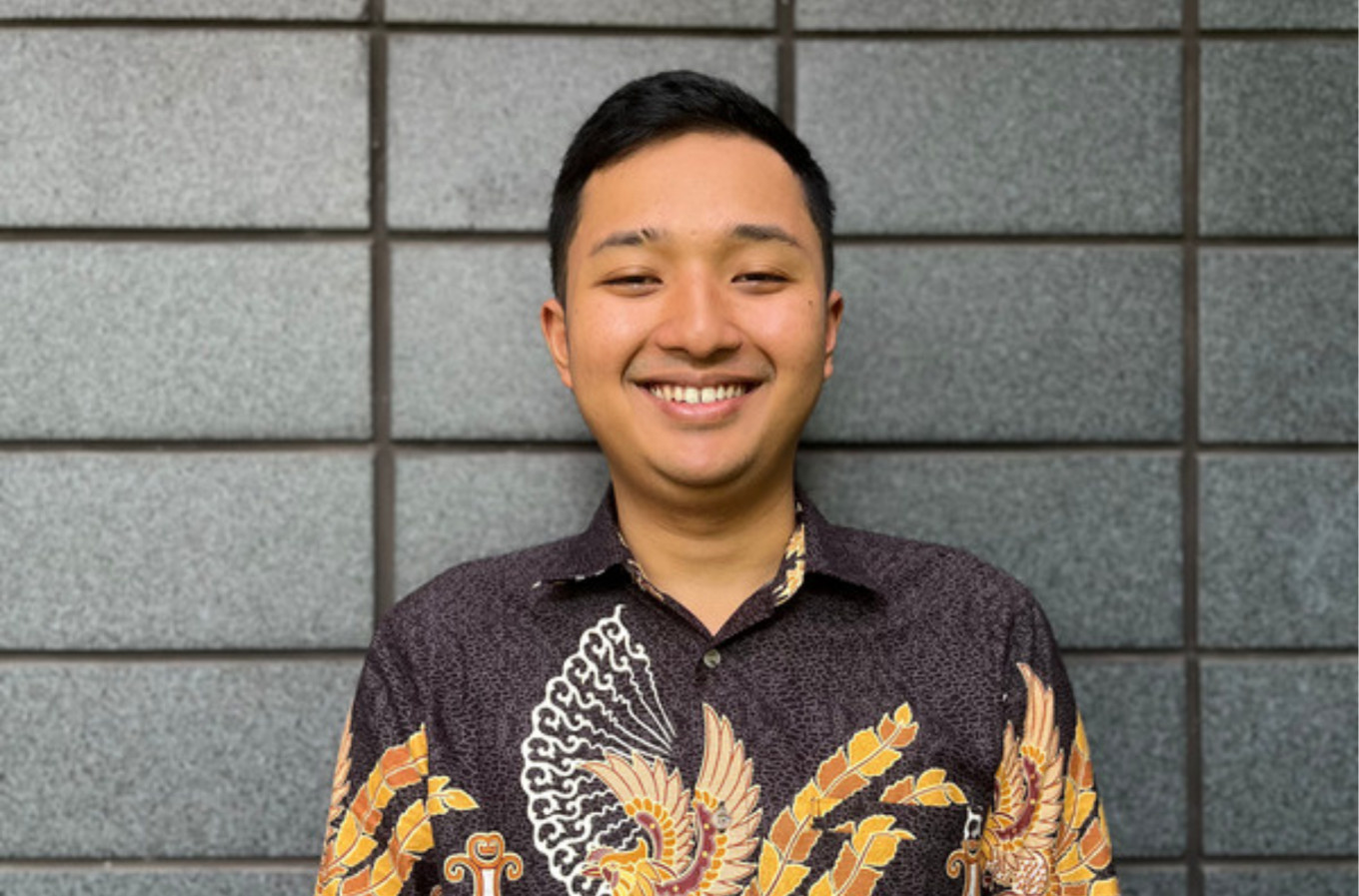
PT Intifood Sejahtera CEO Aditya Rumanda spoke to The Jakarta Post’s Deni Ghifari on Friday about the fast-moving consumer goods (FMCG) business, plans to start exporting and the challenge of getting into modern retail distribution channels.
Change text size
Gift Premium Articles
to Anyone
Share the best of The Jakarta Post with friends, family, or colleagues. As a subscriber, you can gift 3 to 5 articles each month that anyone can read—no subscription needed!
M
icro, small and medium enterprises (MSMEs) are the backbone of Indonesia’s economy, as they contribute more than 60 percent to the country’s GDP and employ well over 90 percent of the workforce.
However, the COVID-19 pandemic was so disruptive that many MSMEs needed to take extreme measures to pull through 2020 and 2021, including spending a notable amount of capital to secure the supplies necessary to cater to renewed demand as the market rebounded in 2022.
PT Intifood Sejahtera CEO Aditya Rumanda spoke to The Jakarta Post’s Deni Ghifari on Friday about the fast-moving consumer goods (FMCG) business, plans to start exporting and the challenge of getting into modern retail distribution channels.
Question: What can you tell me about Intifood?
Answer: Intifood was established back in July 2020, revolving around the idea of providing easily accessible, nutritious food. In most cases, ultra-processed food is not nutritious, but it is the only form of food that can be distributed far from its initial source.
We have divided our line of products into two, one for general trade, more familiarly known as traditional markets, and the other for modern trade, which consists of, for instance, convenience stores and supermarkets.
For modern trade, we have two products, namely Crunchy Oats and Crunchy Ballastra. The former is an oat-based cookie that has functional value, less sugar and low fat, while the latter is the same, but it’s high in fiber.
Both of them have the original [oat] flavor, with an additional option of chocolate for the Oats and ginger for the Ballastra.
For general trade, on the other hand, we have a product called Sneku, which is a banana cracker with five flavor variants: barbeque, matcha, tiramisu, seaweed and cheese.
Up until this point, Sneku is only available in Bogor, with a monthly distribution volume of 5,000 to 6,000 boxes, each containing 60 pieces.
Our monthly revenue right now lies between Rp 500 million [US$33,800] and Rp 700 million, but we are projecting to reach Rp 5 billion soon after we nail [our plans for] exports and expansion.
Our net profit margin is around 15 to 25 percent, which is great, and I’m proud to say that we attained break-even in our first year-and-a-half of running the business. However, we have spent more capital for the expansion, such as to increase the production capacity.
How do you market these products?
So far, we market the crackers to traditional markets, warung [food stalls] and distributor agents. We are planning to expand to Greater Jakarta and all over Java this year by getting into modern trade distribution channels, such as Indomaret and Alfamart.
However, the barrier to entry for those is pretty steep in terms of listing fees. The amount is rather unreal, especially for start-ups like us, as it could reach billions.
How it works is that you pay a listing fee to those distributors for three months for three different products, and throughout those three months, they will see the products’ turnover.
If you reach the target, you can continue to sell without paying again, but if the products fail, they will take them down, and the only way to get back in is through a listing renewal, wherein you have to start the process all over, including paying the listing fee again.
How do you plan to get in then?
In the FMCG business, distribution plays a really important role, so important there’s a saying "product is king, packaging is queen, distribution is god". So, obviously, we are planning to get into the modern trade chains, because in Greater Jakarta alone, they have 185 retail stores.
The way we plan to get in is by exporting the cookies, because that gives us a healthy cash flow, and the margin is good. We will then use the capital we get from exporting to pay the listing fee for the crackers.
We were chosen as one of 30 companies for a Trade Ministry project called Export Coaching Program 2023. It lasts for eight months, and by the end of the program, there will be business-matching events with trade attachés and the Indonesian Trade Promotion Center [ITPC].
Around 60 to 70 percent of last year’s participants ended up doing exports, and I’m not really sure, but I believe the ministry targets 90 percent this year.
I have made contacts with all of the attachés in the program, and I am shortlisted with ITPC [offices] in Jeddah, Santiago and Australia, as well as the trade attaché in Kuala Lumpur.
My projection is that we will export this year and get into modern trade distribution chains by early next year.
Do you not export the banana crackers as well?
We only planned to export the cookies first, but it turned out that many importing parties are interested in Sneku as well. Our foreign counterparts are showing interest in banana crackers; for example, [our partner in] the Netherlands asked for 10 tonnes of them.
However, what they want is in bulk, so the deal does not really fit us, since our value lies in our own brand. China has surprisingly shown interest as well, so we are working that out, too.
Are there any challenges to exporting and expanding?
We had initially targeted exports for early 2023, but we encountered a banana supply shortage last year. It all happened because many farmers stopped farming, because no one was picking up their harvest during COVID, and when demand bounced back to normal, they could not meet it.
Due to that disruption, I decided to by our own land for banana farming in Sukabumi, West Java, 114 hectares. It’s actually too much for us, since the land can produce around 5 tonnes daily, while we are operating at 5 to 7 tonnes a week right now.
But, if my calculation is correct, this supply could cover the need we have when we expand all over Java.
On top of that, we have our own factory in Sentul, West Java, and it is currently not operating at 100 percent capacity, once again because of the material supply problems we experienced last year.
But, all things considered, we can now pick up the ball and run with it, because both the supply and production capacity side have been covered.