TheJakartaPost
Please Update your browser
Your browser is out of date, and may not be compatible with our website. A list of the most popular web browsers can be found below.
Just click on the icons to get to the download page.


Popular Reads
Top Results
No results found. Please check your search term and try again
Can't find what you're looking for?
View all search results
Popular Reads
Top Results
No results found. Please check your search term and try again
Can't find what you're looking for?
View all search resultsWhy concluding Indonesia-EU CEPA talks is imperative
Given the high complementarities between Indonesia and the EU, the completion of IEU-CEPA would further strengthen the economic relations between both economies, creating numerous benefits for them.
Change text size
Gift Premium Articles
to Anyone
Share the best of The Jakarta Post with friends, family, or colleagues. As a subscriber, you can gift 3 to 5 articles each month that anyone can read—no subscription needed!
S
ince July 2016, Indonesia and the European Union have been negotiating a comprehensive economic partnership agreement as part of efforts to strengthen economic ties, boost trade and investment and build sustainable mutual prosperity.
However, the Indonesia-EU Comprehensive Economic Partnership Agreement (IEU-CEPA) has remained elusive, even though the two have gone through 13 rounds of negotiations, both in person and virtually.
Following the latest meeting in Bali in February of this year, both parties are now regrouping for another round of talks from May 8 to May 12 in Brussels. Wrapping up the IEU-CEPA talks is of great importance as the pact is key to promoting trade, investment and other forms of economic cooperation between the two partners.
To expedite the finalization of the IEU-CEPA negotiations, both sides should focus more on the potential benefits of the trade agreement, ignore the noise and make compromises on seemingly insurmountable hurdles, such as the palm oil and nickel issues.
Given the high complementarities between Indonesia and the EU, the completion of IEU-CEPA would further strengthen the economic relations between both economies, creating numerous benefits for them.
The agreement, for one, would grant the EU member countries access to the vast and growing Indonesian market, particularly its diverse services sector. It would also open opportunities for their businesses to tap Indonesia’s young and large population as means of investments and economic activities in the future.
For Indonesia, meanwhile, the benefits would be even more significant. The IEU-CEPA is expected to widen its access to the market, which will promote trade investment and increase productivity and competitiveness of Indonesian products, which the country badly needs to support its economic recovery post-pandemic.
The elimination of preferential tariffs through the CEPA would maintain the competitiveness of Indonesia’s exports in European markets and prevent further erosion of its market share following the termination of the Generalized System of Preference (GSP) and the increasing competition from other countries, such as Vietnam and Singapore, that have already struck an agreement with the EU.
The IEU-CEPA would also provide greater market access to services from the EU providers, allowing Indonesian consumers and industries to gain first-class, high-quality capital goods and services needed for the improvement of the country’s productivity and competitiveness. The services agreements are expected to fill the excess demand in various service sectors, such as telecommunications, transportation, finance, business and administrative support services.
Furthermore, greater trade in goods and services between Indonesia and the EU member states, together with the inclusion of investment in the IEU-CEPA negotiations aiming to reduce discriminatory practices toward foreign investors and increase predictability and transparency of the existing investment regimes, would help boost investment inflows, not only from the EU members but also other countries.
The agreement would also help Indonesia woo investors, especially in the manufacturing industry, who are seeking to build a production base that plugs into Global Value Chains (GVC), amid the restructuring of the Chinese economy and the diversifying activities of multinational companies’ production and investment bases.
In addition to the rise in trade and investment, the IEU-CEPA is also expected to complement the current Indonesian reform agenda, as reflected in the Job Creation Law.
The agreement would help the country improve its economic regulatory framework and business climate through the establishment of a more flexible labor market, the formulation of more secure and non-discriminatory economic policies and the implementation of more open trade and investment policies. These reforms would further augment the other government policies aiming to improve infrastructure and the quality of human capital.
Overall, the IEU-CEPA economic impact analysis conducted by the Centre for Strategic and International Studies (CSIS) in 2021 found that the effects of the trade liberalization agreement would increase the EU exports to Indonesia by 76.17 percent and Indonesia’s exports to the EU by 57.76 percent, with clothing and services registering the highest increase.
Furthermore, the agreement is expected to expand both economies by 0.19 percent for Indonesia and 0.01 percent for the EU, which then boosts their incomes by US$2.8 billion and $2 billion, respectively.
The latest data from Trademap shows that Indonesia-EU trade reached $33.2 billion in 2022, with Indonesia’s export to and import from EU recorded at $21.5 billion and $1.7 billion, respectively.
Last year, Indonesia’s main export commodities to the EU were palm oil and its derivatives, industrial monocarboxylate fatty acids, copper ores and concentrates, sports footwear, bituminous coal and natural rubber, while its main imports from the EU were oil and gas pipelines, paper or paperboard, mixed or unmixed products for therapeutic or prophylactic purposes, part of the machinery for making or finishing paper or paperboard, milk and cream, vaccines and motor vehicles.
According to data from Bank Indonesia (BI), the total foreign direct investment (FDI) from EU member countries stood at $1.7 billion in 2022, up from $1 billion in 2021.
Despite the benefits of the IEU-CEPA, there are many issues and challenges hindering the conclusion of its negotiations. From Indonesia’s side, there are concerns about the EU’s deforestation initiatives, which would ban imports into the EU markets of goods linked to deforestation. Added to this, the European Commission recently approved measures to eliminate the contribution of palm oil-based biofuel by 2030, of which Indonesia is among the largest producers.
Moreover, Indonesia has also persistently questioned the limited access given to its agriculture, fisheries and industrial products. EU countries’ policies, such as Rules of Origin (ROO), Sanitary and Phytosanitary (SPS) and special product licenses, have restricted market access for Indonesian products to the EU.
Likewise, the EU also worries about trade restrictions applied by Indonesia. These include halal label requirements, capture fisheries investments and cattle imports. Moreover, the EU has asked Indonesia to abolish investment restrictions, such as foreign shareholder limitations and local content requirements, that will run counter national laws and regulations, including regulations on Local Content Requirements and the Negative Investment List.
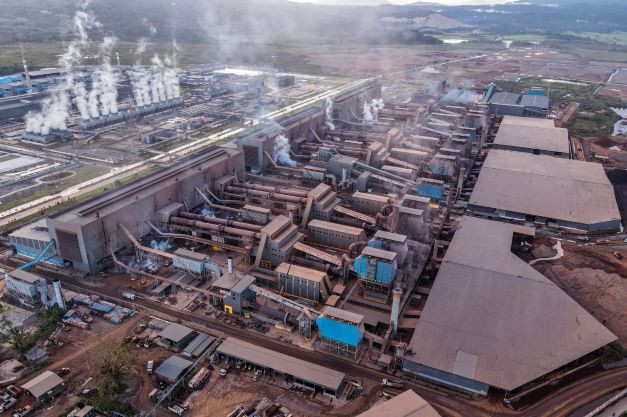
There has been disgruntlement from the EU regarding Indonesia’s export ban on nickel ore, a means to boost domestic processing of nickel products, and its plans to expand the ban on bauxite ore, used to produce aluminum, and on cooper, tin and gold. The EU is challenging the bans at the World Trade Organization, claiming they are a violation of WTO rules.
These sources of contention need to be settled in order to complete the IEU-CEPA agreement. Both parties need to communicate better and compromise so as to find a win-win solution.
***
The writer is a researcher in the Economics Department of the Jakarta-based Centre for Strategic and International Studies (CSIS).