TheJakartaPost
Please Update your browser
Your browser is out of date, and may not be compatible with our website. A list of the most popular web browsers can be found below.
Just click on the icons to get to the download page.


Popular Reads
Top Results
No results found. Please check your search term and try again
Can't find what you're looking for?
View all search results
Popular Reads
Top Results
No results found. Please check your search term and try again
Can't find what you're looking for?
View all search resultsEmirates throttles up as tourists eye Indonesia again
The aviation market is showing signs of improvement as the global travel industry continues its post-pandemic recovery. Some airlines have increased the number of flights to Bali to capture rising demand from tourists.
Change text size
Gift Premium Articles
to Anyone
Share the best of The Jakarta Post with friends, family, or colleagues. As a subscriber, you can gift 3 to 5 articles each month that anyone can read—no subscription needed!

T
he aviation market is showing signs of improvement as the global travel industry continues its post-pandemic recovery. Some airlines have increased the number of flights to Bali to capture rising demand from tourists. The Jakarta Post’s Yohana Belinda spoke to Emirates senior vice president overseeing Far East commercial operations Orhan Abbas about the Dubai-based carrier’s strategy to capitalize on market prospects.
Question: Despite increased demand for air travel, many Indonesian airlines are struggling to recover their fleets. What is Emirates’ take on this phenomenon?
Answer: We are optimistic that seat loads and demand for international travel will hold strong for the rest of this year and into 2024. There is still pent-up travel demand, and capacity isn’t back to pre-pandemic levels yet. Corporate and business travel is strong, especially to business centers across the United Arab Emirates (UAE) region and across cities in Europe and in the United States.
We can only share what we are seeing at Emirates. We’re keeping a close eye on costs and ensuring that we continue to attract and retain customers by offering value for money and great travel experiences. We believe our fares have always been competitive and our money-for-value proposition is strong, coupled with other generous customer propositions that come with the Emirates experience.
In Indonesia, we have been operating for 30 years […]. Emirates is pleased to continue developing its routes in Indonesia by carrying out numerous commitments and initiatives in collaboration with key stakeholders.
What is Emirates’ projection for the recovery of air travel demand in Indonesia?
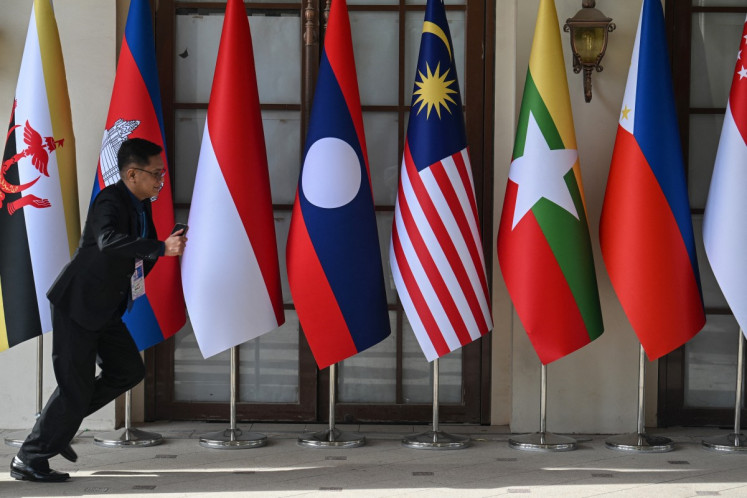
Key trend: Domestic travel is on the rise. With renewed travel demand in the pandemic recovery, there are high expectations for a rapid recovery of inbound and outbound travel. Especially [with the] ASEAN Summit this year, there is greater focus from the Indonesian government on prioritizing domestic travel and attracting more foreign travelers.
Worldwide travel is currently looking up, with most countries loosening their travel restrictions and the demand for travel returning with a vengeance. Though it cannot be [known] when the industry will return to pre-pandemic levels, the airline and tourism industry are moving steadfastly on the path of pandemic recovery.
Emirates aims to continue supporting these recovery efforts; the airline has seen strong recovery from the pandemic and has slowly but surely reestablished up to 90 percent of [its] pre-pandemic network. Now, Emirates has routes connecting Indonesia to over 150 global destinations, with safe and convenient connections via our Dubai hub for customers traveling between the Americas, Europe, Africa, Middle East and Asia Pacific.
Inbound to Indonesia, Emirates continues to enhance its product offerings for Indonesian travelers by working closely with local partners. We have great partnerships in place with the airports we operate to and look forward to strengthening those partnerships to ultimately serve Indonesian travelers with the best connections and world-class products and services.
Outbound, we ensure our travelers continue to have a greater level of choice by operating via our Dubai hub. We would like to continue enhancing Indonesia’s trade links with the rest of the world through expanding our global route network where it is commercially feasible, connecting Indonesian business and leisure passengers with a wide array of destinations and travel-trade opportunities.
How does Emirates position itself amid competition with Indonesian and regional airlines?
Our inaugural A380 flight and service from Dubai to Bali, which is both our and the country’s first scheduled service to Indonesia, demonstrates our commitment to helping our passengers fly better, supporting tourism in the country and elevating the customer experience through world-class offerings.
Our efforts are also reflected through our financial year results from 2022 to 2023. We recorded our most profitable year ever, earning 10.6 billion Emirati dirham (US$2.9 billion) compared with a loss of 3.9 billion Emirati dirham in the previous year. This indicates Emirates’ position as an airline that customers continue to put their confidence in.
To retain and strengthen this position, we are working on new partnerships and expanding our codeshare agreements, with the newest addition of Garuda Indonesia and Batik Air to Dubai.
Another way we strongly position ourselves is through the constant improvement of our customer experience. We’ve picked up the pace of upgrading our fleet of A380s to ensure our customers can enjoy the best possible Emirates experience.
How is Emirates planning to boost tourism and improve connectivity between Indonesia and the rest of the world?
Emirates is currently partnered with Garuda Indonesia and Batik Air, connecting Indonesia via Dubai for easy access to global destinations beyond our direct services. These partnerships are very important for Emirates, as they allow us to provide increased air connectivity, thus contributing to more inbound and outbound traffic. Both codeshare agreements were activated in 2022, we look forward to seeing what impact they will have in the near future.
In November 2022, Emirates also signed a memorandum of understanding with Traveloka, Southeast Asia’s leading travel and lifestyle platform, to make our products more accessible for travelers in the region and enhance the brands’ cooperation. Under this MoU, both parties will also collaborate on joint activities and marketing campaigns. This year, Emirates will continue exploring this avenue.
Most recently, we signed an MoU with Indonesia’s Tourism and Creative Economy Ministry at the Arabian Travel Market in Dubai, renewing our pledge to support Indonesia’s travel and tourism sector. Under the agreement, both parties will continue their ongoing efforts to promote Indonesia as a varied and exciting travel destination by launching joint marketing campaigns and initiatives, and Emirates will further support tourism flows from key markets in its global network to Indonesia.
Is there any change in tourists’ preference for Indonesia compared with before the pandemic?
Some Indonesian travelers prefer traveling in smaller groups with families or friends, compared with the previous 40 passengers per group, possibly due to health and safety reasons.
Understanding this and also seeing how domestic travel is strongly encouraged following the pandemic, we are in full support of recovery and connectivity efforts and are committed to ensuring safe, smooth and best-in-class travel for our customers.