TheJakartaPost
Please Update your browser
Your browser is out of date, and may not be compatible with our website. A list of the most popular web browsers can be found below.
Just click on the icons to get to the download page.


Popular Reads
Top Results
No results found. Please check your search term and try again
Can't find what you're looking for?
View all search results
Popular Reads
Top Results
No results found. Please check your search term and try again
Can't find what you're looking for?
View all search resultsA decade of Jokowi's budgetary and economic policy
The pandemic crisis has underscored the importance of continued structural reforms to accelerate economic transformation.
Change text size
Gift Premium Articles
to Anyone
Share the best of The Jakarta Post with friends, family, or colleagues. As a subscriber, you can gift 3 to 5 articles each month that anyone can read—no subscription needed!
O
n the eve of Indonesia’s 78th Independence Day, President Joko “Jokowi” Widodo submitted the draft budget for 2024 to the House of Representatives. The event marked nearly a decade of his tenure as president. Therefore, it is crucial to reflect on the country's budgetary and economic journey under his stewardship.
Several significant events are worth noting here, from grappling with energy subsidies, steering through an unprecedented pandemic crisis, to embarking on transformative economic strategies, notably downstreaming policies, all of which have sparked a heated debate on budget effectiveness.
One of Jokowi's most notable economic policies was energy-subsidy reform. This was no small feat, considering its social and political implications. The oil prices in 2011-2014 were stubbornly high at around US$100/barrel.
The administration of Jokowi’s predecessor Susilo Bambang Yudhoyono spent around Rp 1.3 quadrillion (US$85 billion based on current exchange rates) on energy subsidies during the period of 2010-2014, higher than the expenditure on infrastructure and social protection combined, which amounted to Rp 1.2 quadrillion.
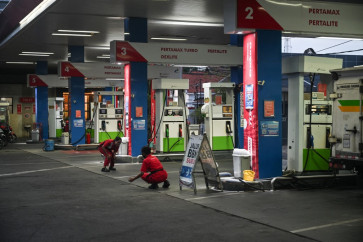
Jokowi took a bold step to reform the fuel subsidies and redirect resources toward more targeted social programs and growth-enhancing expenditure. The price of subsidized Premium gasoline (RON 88) and diesel fuel were increased by more than 30 percent each in November 2014.
The freed-up resources resulting from the reform were channeled into infrastructure development and human capital enhancement, fostering long-term economic growth. Energy subsidy expenditure was slashed by more than half from Rp 341.8 trillion in 2014 to Rp 119.1 trillion, while infrastructure spending almost doubled from Rp 157.4 trillion to Rp 256.1 trillion.
Progress in infrastructure development has been impressive. As of 2022, the network of toll roads has reached 2,687 kilometers, more than triple the 2014 mark (802 km). In addition to 237 airports that have been upgraded, 50 new airports were built. Electricity capacity jumped from 52 gigawatts in 2014 to 81.2 GW as of 2022. Public investment in basic facilities, such as hospitals and health service centers, has also increased significantly.
The Jokowi administration was also tested by the unprecedented COVID-19 pandemic. The government’s responses showcased agility in safeguarding both lives and livelihoods. The ability to rapidly adjust policies to address dynamic and dramatic conditions highlighted the importance of adaptable budgetary and economic policies.
Indonesia won international praise for its very effective policies in navigating the health crisis. The economy has recovered quickly and strongly. After contracting by 2.1 percent in 2020, the economy expanded by 3.7 percent in 2021, or 1.6 percent higher than the pre-pandemic (2019) level, in terms of gross domestic product (GDP), while many countries have not yet returned to their pre-pandemic level.
Indonesia’s economy continued to strengthen in 2022, growing markedly at 5.3 percent despite the weakening trend of the global economy.
Indonesia’s effective macroeconomic policy mix has been recognized by many international organizations and market analysts. The ballooning deficit financing needs which had been supported by Bank Indonesia through its purchase of government bonds in the primary markets through a burden-sharing scheme between the monetary and fiscal authorities has not led to soaring inflation.
Unlike other emerging peers in the Group of 20, notably Turkey, Argentina, Brazil and South Africa, inflation in Indonesia has been relatively modest. Stronger economic activities combined with modest inflation have led to continued reductions in unemployment and poverty. The unemployment rate continued to decline to 5.45 percent in 2023, while poverty returned to single digits at 9.36 percent.
The pandemic crisis also underscored the importance of continued structural reforms to accelerate the economic transformation.
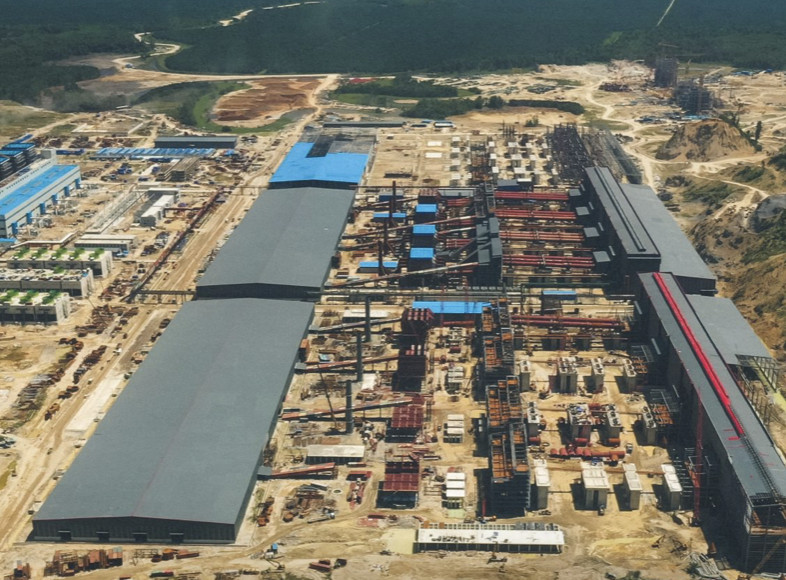
Over the past decade, Jokowi's government has set the stage for Indonesia's economic transformation. Downstreaming is seen to be a breakthrough for producing added value domestically on natural resources.
President Jokowi reiterated the importance of the downstreaming strategy in his State of the Nation address on Aug. 16. His administration has reimposed the export ban for nickel ore in 2020 after allowing a three-year grace period for miners to build smelters since 2017.
Despite challenges both from international organizations and analysts at home, we have seen significant outcomes from this strategy. Exports recorded a historic high of $292 billion in 2022, compared with $176 billion in 2014. Our counterfactual estimate shows that without downstreaming, exports of nickel-related products would have been much lower at $7.6 billion as against $34.3 billion.
The current account balance, a key vulnerability indicator, showed a surplus of 1 percent of GDP in 2022 compared with a deficit of 3 percent of GDP in 2013. We have witnessed more vibrant economic growth in the regions where the nickel industries are located.
As we look back on the nearly 10 years of Jokowi's budget policy and economy, despite several external headwinds, we see a chapter of agile economic policies, resilience and a solid economic footing, resulting from very effective macroeconomic policy management.
The next chapter of Indonesia's economic journey awaits, and it is up to all of us to write it together, especially to ushering Indonesia into the ranks of high-income countries by 2045.
***
The writer is director of the Center for Macroeconomic Policy at the Finance Ministry’s Fiscal Policy Agency. The views expressed are his own.