TheJakartaPost
Please Update your browser
Your browser is out of date, and may not be compatible with our website. A list of the most popular web browsers can be found below.
Just click on the icons to get to the download page.


Popular Reads
No popular reads data found
Top Results
No results found. Please check your search term and try again
Can't find what you're looking for?
View all search results
Popular Reads
No popular reads data found
Top Results
No results found. Please check your search term and try again
Can't find what you're looking for?
View all search resultsBPJS-Kesehatan
Society 1 year ago
PREMIUM
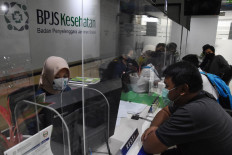
Govt urged to cautiously consider JKN premium hike proposal
Raising National Health Insurance (JKN) premiums may be necessary to ensure the sustainability of the program, but the government should refrain from making a dramatic increase like it did in 2020, an observer has warned.
Front Row 1 year ago
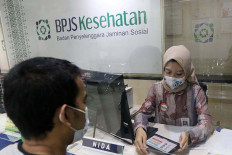
BPJS Kesehatan predicts positive net assets for DJS Kesehatan in 2024
The Social Security Administrative Body for Health (BPJS Kesehatan) forecasts that the net assets of the Social Security Health Fund (DJS Kesehatan) will remain positive through the end of 2024, despite projections in the budget work plan (RKA) that health service costs may surpass premium revenue. BPJS Kesehatan head of public relations Rizzky Anugerah shared this outlook on Friday.


Front Row 1 year ago
BPJS Kesehatan and Bappenas sign MoU, launch ‘Morbidity Tables’ book to support SDGs
In a bid to enhance collaboration in implementing the National Health Insurance (JKN) program and advance the Sustainable Development Goals (SDGs), the Ministry of National Development Planning/National Development Planning Agency (Bappenas) and the Healthcare and Social Security Agency (BPJS Kesehatan) signed a memorandum of understanding (MoU) on Nov. 11 in Jakarta.
Academia 1 year ago
PREMIUM
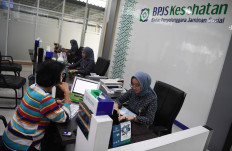
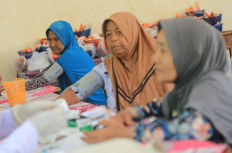
Screening for a healthier Indonesia under Prabowo
While the country has made strides in addressing challenges like maternal mortality, stunting and infectious diseases, data shows that NCDs such as IHD, stroke and diabetes have become the leading causes of death and disability.

Society 1 year ago
BPJS Kesehatan to use facial recognition in prevention of frauds
The state-owned Health Care and Social Security Agency (BPJS Kesehatan) is planning to use a facial recognition technology to identify millions of its policyholders and to prevent fraud in the National Health Insurance (JKN) system.

Front Row 1 year ago
BPJS Kesehatan wins two awards at Asian Technology Excellence Awards 2024
BPJS Kesehatan has once again achieved notable success, securing two prestigious awards at the Asian Technology Excellence Awards 2024 held on Sept. 5. This accomplishment underscores BPJS Kesehatan's continued efforts to leverage technology to enhance healthcare services for all Indonesians.

Front Row 1 year ago
Japan studies Indonesia's health insurance management during BPJS Kesehatan visit
The international community continues to show interest in Indonesia's National Health Insurance (JKN) system. On Sept. 4, BPJS Kesehatan welcomed a delegation from Japan, comprising representatives from the Japanese health insurance body Kyukai Kenpo and the Japan International Cooperation Agency (JICA). BPJS Kesehatan's Director of Compliance and Inter-Institutional Relations, Mundiharno, expressed enthusiasm about sharing the experiences of managing the JKN Program.