TheJakartaPost
Please Update your browser
Your browser is out of date, and may not be compatible with our website. A list of the most popular web browsers can be found below.
Just click on the icons to get to the download page.


Popular Reads
No popular reads data found
Top Results
No results found. Please check your search term and try again
Can't find what you're looking for?
View all search results
Popular Reads
No popular reads data found
Top Results
No results found. Please check your search term and try again
Can't find what you're looking for?
View all search resultsKUHP
Politics 2 months ago
PREMIUM
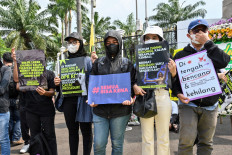
Authoritarian fears loom as new criminal code takes effect
Several articles of the new Criminal Code (KUHP) and Criminal Law Procedures Code (KUHAP) may erode civil liberties and freedom of expression, especially rights to criticize government policies, according to pro-democracy activists and scholars.

Academia 3 months ago
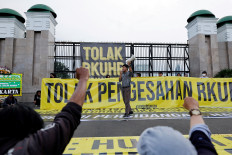
Indonesia's modernized penal code ratification represents positive transformation
Indonesia is set to implement the New Indonesian Penal Code (Kitab Undang-Undang Hukum Pidana Baru or KUHP Baru), scheduled to come into effect on Jan. 2, 2026, enacted through Law No. 1 of 2023. The change demonstrates the country’s move away from a colonial-era criminal justice framework and reflects a modernized legal system rooted in national values and aligned with contemporary international norms.

Opinion 3 months ago
PREMIUM
Analysis: The wiretapping loophole: A hasty future for Indonesian law
After last month's controversial passage of the revised Criminal Law Procedures Code (KUHAP) bill, concerns have emerged regarding a significant legal loophole: wiretaps. Activists say that if left unchecked, law enforcement agencies like the National Police will have leeway to wiretap anyone at any time without formal mechanisms and restrictions once the KUHAP comes into force on Jan. 2.
Politics 4 months ago
PREMIUM
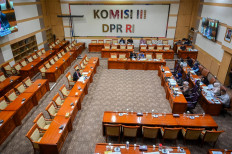
Asset bill pushed to 2026 as House focus on other bills
The asset forfeiture bill is one of the draft regulations included in the 2026 National Legislation Program (Prolegnas), although its deliberation depends on when the legislature completes the derivative regulations of the new KUHAP.