The Jakarta Post
Please Update your browser
Your browser is out of date, and may not be compatible with our website. A list of the most popular web browsers can be found below.
Just click on the icons to get to the download page.


Popular Reads
Top Results
No results found. Please check your search term and try again
Can't find what you're looking for?
View all search results
Popular Reads
Top Results
No results found. Please check your search term and try again
Can't find what you're looking for?
View all search resultskontras
Politics 3 months ago
PREMIUM
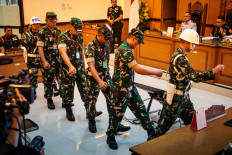
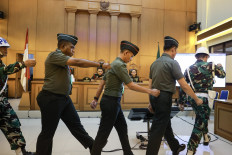
Light sentences still mar military justice system: Kontras
Indonesia’s military justice system still reflects a broader pattern of impunity for handing down mild sentences, especially in cases of violence committed by personnel against civilians, according to rights group the Commission for Missing Persons and Victims of Violence (Kontras).

Politics 3 months ago
PREMIUM
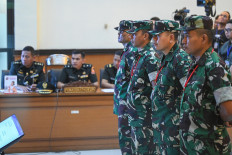
Court revives police probe into activist acid attack as military trial continues
The South Jakarta court has ordered police to reopen their investigation into the acid attack on rights activist Andrie Yunus, potentially broadening efforts to identify the mastermind behind the assault, as military prosecutors seek prison terms for four soldiers that civil groups have criticized as too lenient.
Politics 5 months ago
PREMIUM
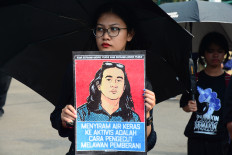
Activist acid attack heads to military court despite pushback
The acid attack against rights activist Andrie Yunus will proceed to a military court after Indonesian Military (TNI) prosecutors handed over the case dossier to the Jakarta Military Court, despite continued pushback from civil society groups calling for a civilian trial to ensure transparency.

Politics 5 months ago
PREMIUM
TNI hands over acid attack case to military prosecutors
If it meets certain requirements, the case against four Indonesian Military (TNI) Strategic Intelligence Agency (BAIS) members in the acid attack on human rights defender Andrie Yunus will be tried by a military court.
Politics 5 months ago
PREMIUM
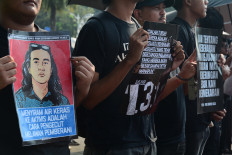
Acid attack ‘threat’ to young generation’s freedom
The assault on Andrie Yunus of the Commission for Missing Persons and Victims of Violence (Kontras) was not a personal attack, but instead an attack on "young people who continue to fight for a just and humane Indonesia", activists said.
Politics 5 months ago
PREMIUM
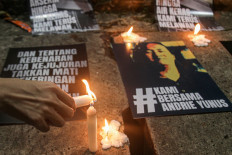
Witnesses, activists in Andrie case subject to threats
At least 12 people have made reports to the National Commission on Human Rights (Komnas HAM) about the online abuse they received on social media and other online communication platforms and requested the commission’s protection.
Academia 5 months ago
PREMIUM
Human rights commitment at risk: What survives after the acid attack
The brutal acid attack on activist Andrie Yunus is more than a personal tragedy; it is a calculated message intended to silence Indonesian dissent. When justice stops at the surface, it doesn't end the violence—it merely masks a deepening era of state-sponsored terror.
Politics 5 months ago
PREMIUM
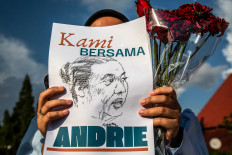
Independent probe finds intelligence operation behind Andrie's attack
An independent probe from a civil society coalition found that at least 16 people were involved in the acid attack on human rights activist Andrie Yunus, while suggesting the existence of "intellectual actors" from "a certain big institution" were behind the assault.
Editor's Picks
Popular
- Much ado about asset forfeiture
- Not the Ministry of Magic
- Mass poisonings cast doubt on free meals reforms
- Children are no longer the priority, were they ever?
- Suahasil seen to prioritize fiscal discipline, continuity
- Purbaya ousted after clash with Prabowo's ex-army colleague, sources say
- Whoosh takeover in limbo after Purbaya ousted as finance minister
- Artists exit Sheeran tour in solidarity with Macklemore pro-Palestinian comments
- Malaysia talks to rival airlines as it monitors AirAsia's financial health
- Prabowo opens new LRT link, backs Jakarta’s expansion push


