TheJakartaPost
Please Update your browser
Your browser is out of date, and may not be compatible with our website. A list of the most popular web browsers can be found below.
Just click on the icons to get to the download page.


Popular Reads
No popular reads data found
Top Results
No results found. Please check your search term and try again
Can't find what you're looking for?
View all search results
Popular Reads
No popular reads data found
Top Results
No results found. Please check your search term and try again
Can't find what you're looking for?
View all search resultsNatuna-sea
Opinion 9 years ago
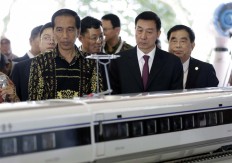
INSIGHT: China: A hegemon or strategic partner?
An opinion article entitled “How do we engage a hegemonic China?” by CSIS researcher Evan Laksmana in The Jakarta Post on Oct. 12, has prompted me to offer a different perspective that may help readers look at Indonesia-China relations in a more balanced and less tendentious way.


National 9 years ago
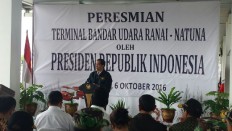
Jokowi scheduled to visit Natuna on Thursday
President Joko “Jokowi” Widodo is scheduled to visit Natuna, Riau Islands, on Thursday. This will be his second visit to Natuna in the last five months after he visited the area to inspect naval patrols on the border of the South China Sea on June 23.

SE Asia 9 years ago
Indonesia reinforces its command over Natuna waters through military bases
The government is set to build military bases in Natuna, one of Indonesia's outermost regions located in the Riau Islands, to send stern messages that it is an absolute part of the Unitary State of the Republic of Indonesia (NKRI), Indonesian Military (TNI) commander Gen. Gatot Nurmantyo said on Monday.

SE Asia 9 years ago
Fishing in Natuna only for Indonesians: Susi
Maritime Affairs and Fisheries Minister Susi Pudjiastuti voiced on Thursday a contrasting opinion to that of former coordinating political, legal, and security affairs minister Luhut Pandjaitan, who said that foreign fishermen should be able to exploit the Natuna Sea as long as they formed a cooperation with local companies.

Opinion 9 years ago
SCS: Political-economic vs geopolitical interests
Downplaying the significance of the nine-dash line can no longer serve as Indonesia’s main approach toward China, nor can its self-proclaimed role as an “honest broker”. After the Natuna incident and “the power of maps” of the Natuna waters, as well as the unannounced Chinese People’s Liberation Army’s naval fleet key maneuvers through Indonesian territorial waters, it is questionable whether China really respects Indonesia’s sovereignty.

Politics 9 years ago
Indonesia eyes foreign investors to develop Natuna fisheries
Indonesia is seeking foreign investors to set up joint ventures to develop fisheries in the Natuna and Riau islands, a move that could eventually help establish peace in the South China Sea, a senior minister has said.