TheJakartaPost
Please Update your browser
Your browser is out of date, and may not be compatible with our website. A list of the most popular web browsers can be found below.
Just click on the icons to get to the download page.


Popular Reads
No popular reads data found
Top Results
No results found. Please check your search term and try again
Can't find what you're looking for?
View all search results
Popular Reads
No popular reads data found
Top Results
No results found. Please check your search term and try again
Can't find what you're looking for?
View all search resultsPramoedya-Ananta-Toer



Interview 1 year ago
PREMIUM
'Indonesia, the world should appreciate Pramoedya more'
I think he can be influential at various levels. In his more didactic and non-fictional writings, his message about facing the national past in a truthful way is very important, as history is often being misused to serve political needs. His call for fighting what he calls the kampung culture of Indonesia, the deep-rooted patriarchism, hierarchical attitudes and lethal violence against brothers, is a message that remains relevant.
Art & Culture 1 year ago
PREMIUM
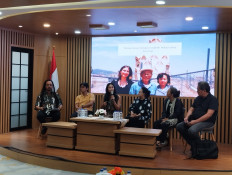
Blora takes up Pramoedya's torch to fight injustice
A literary and arts event from Feb. 6 to 8 in Blora kicked off a yearlong centenary celebration of Pramoedya, but a misinformed protest shows that while this is a solid first step, a broader wave might be needed to restore the reputation of Indonesia's most renowned writer, almost 30 years after the downfall of the New Order.
People 1 year ago
PREMIUM
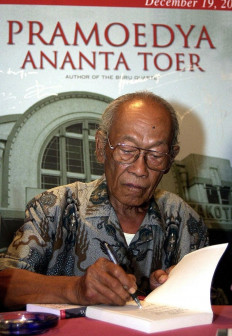
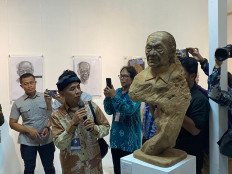
Pramoedya Ananta Toer: A walking contradiction
One the one hand, he had a penchant for writing broad, sweeping historical novels like Arus Balik (Turning of the Tide) or the four novels under the Buru Quartet, but on the other, the rebel writer also penned personal and introspective works like Gadis Pantai (Girl from the Beach) and his magnum opus Nyanyi Sunyi Seorang Bisu (A Mute's Soliloquy), which he wrote when he was exiled in the Buru penal colony.
Books 1 year ago
PREMIUM
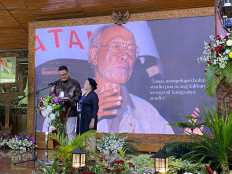
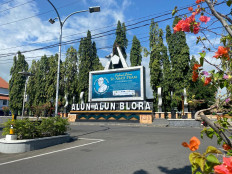
Pramoedya's hometown Blora celebrates the writer’s life and work
People in Blora, Central Java, gathered to celebrate the centennial of the birth of local legend Pramoedya Ananta Toer last week, as they reflected on the significance of the author’s work in the literary world, much of which still remains overlooked by many in the regency.