The Jakarta Post
Please Update your browser
Your browser is out of date, and may not be compatible with our website. A list of the most popular web browsers can be found below.
Just click on the icons to get to the download page.


Popular Reads
Top Results
No results found. Please check your search term and try again
Can't find what you're looking for?
View all search results
Popular Reads
Top Results
No results found. Please check your search term and try again
Can't find what you're looking for?
View all search resultsair-quality-monitor
Jakarta 6 months ago
PREMIUM
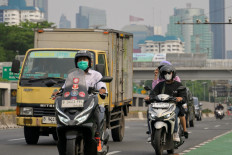
Policy disparities hamper Greater Jakarta’s fight for clean air
Greater Jakarta, recently dubbed the world’s most populous urban area by the United Nations, has long been afflicted by smog coming from, among other sources, internal combustion engine vehicles and coal-powered power plants and industrial areas.
Jakarta 2 years ago
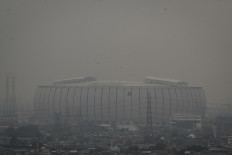
Jakarta to install more air quality stations to manage pollution
Aside from expanding the number of air quality monitoring stations, the city's environment agency has urged Jakartans to do their bit by using public transportation, avoiding open waste burning and making other environmentally conscious efforts to reduce the air pollution that has been choking Jakarta for months.

City 6 years ago
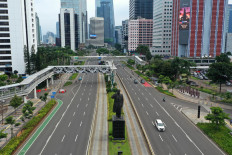
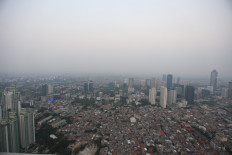
Jakarta air quality improves as people commute less, rainfall intensifies
The decline in PM2.5 is in line with the trend of people working from home after the Jakarta administration declared last week an emergency situation, prompting some companies to implement a social distancing measure to prevent COVID-19 from spreading further.
City 7 years ago
PREMIUM
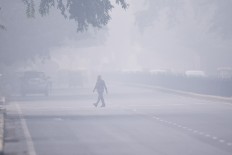
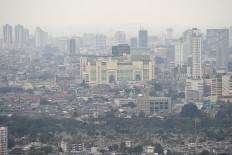
Toxic air could cut Jakartans' lives by 2.3 years, says EPIC study
A March 2019 report from the Energy Policy Institute at the University of Chicago (EPIC) says that Indonesians could expect to lose 1.2 years of life expectancy, while Jakartans could lose nearly double that at 2.3 years of life expectancy.
City 7 years ago
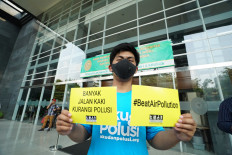
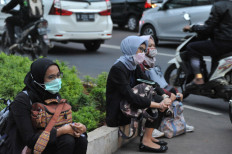
Airvisual: Jakarta declared world's most polluted city on Thursday afternoon
The poor air quality of Indonesia's capital city is back in the spotlight as air quality monitor Airvisual determined that Jakarta ranks as the city with worst air pollution in the world on Thursday afternoon.
Editor's Picks
Popular
- Batam residents protest data centers amid water crisis
- Recentralization concerns in fiscal, education heighten
- Popular discontent is justified. Authoritarianism is not the answer
- Safeguarding Indonesia's AI future
- Govt under pressure as 3 million home drive hits cracks
- Prabowo’s universal free education plan raises feasibility questions
- Free meals marketplace raises supply chain concerns
- Inside the education system moulding Afghanistan's next generation
- Rocking the boat in a storm
- Rethinking empire, extraction and identity in the Pacific: A New History


