The Jakarta Post
Please Update your browser
Your browser is out of date, and may not be compatible with our website. A list of the most popular web browsers can be found below.
Just click on the icons to get to the download page.


Popular Reads
Top Results
No results found. Please check your search term and try again
Can't find what you're looking for?
View all search results
Popular Reads
Top Results
No results found. Please check your search term and try again
Can't find what you're looking for?
View all search resultsPolicy disparities hamper Greater Jakarta’s fight for clean air
Greater Jakarta, recently dubbed the world’s most populous urban area by the United Nations, has long been afflicted by smog coming from, among other sources, internal combustion engine vehicles and coal-powered power plants and industrial areas.
Change text size
Gift Premium Articles
to Anyone
Share the best of The Jakarta Post with friends, family, or colleagues. As a subscriber, you can gift 3 to 5 articles each month that anyone can read—no subscription needed!
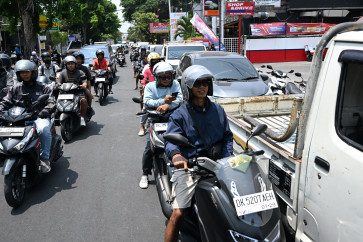
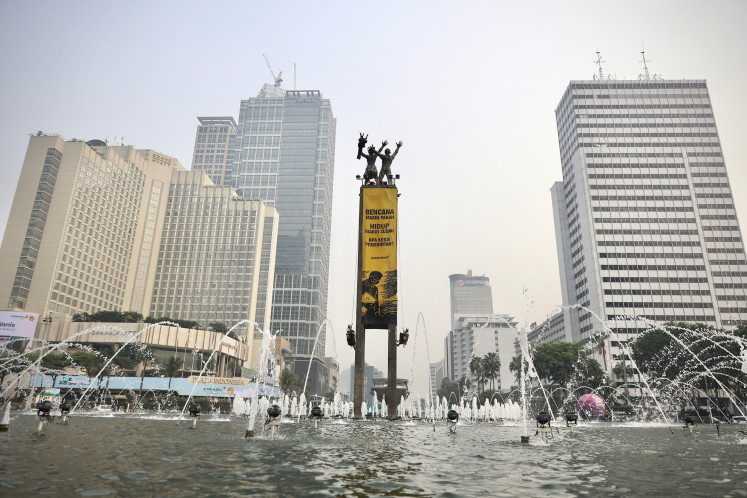
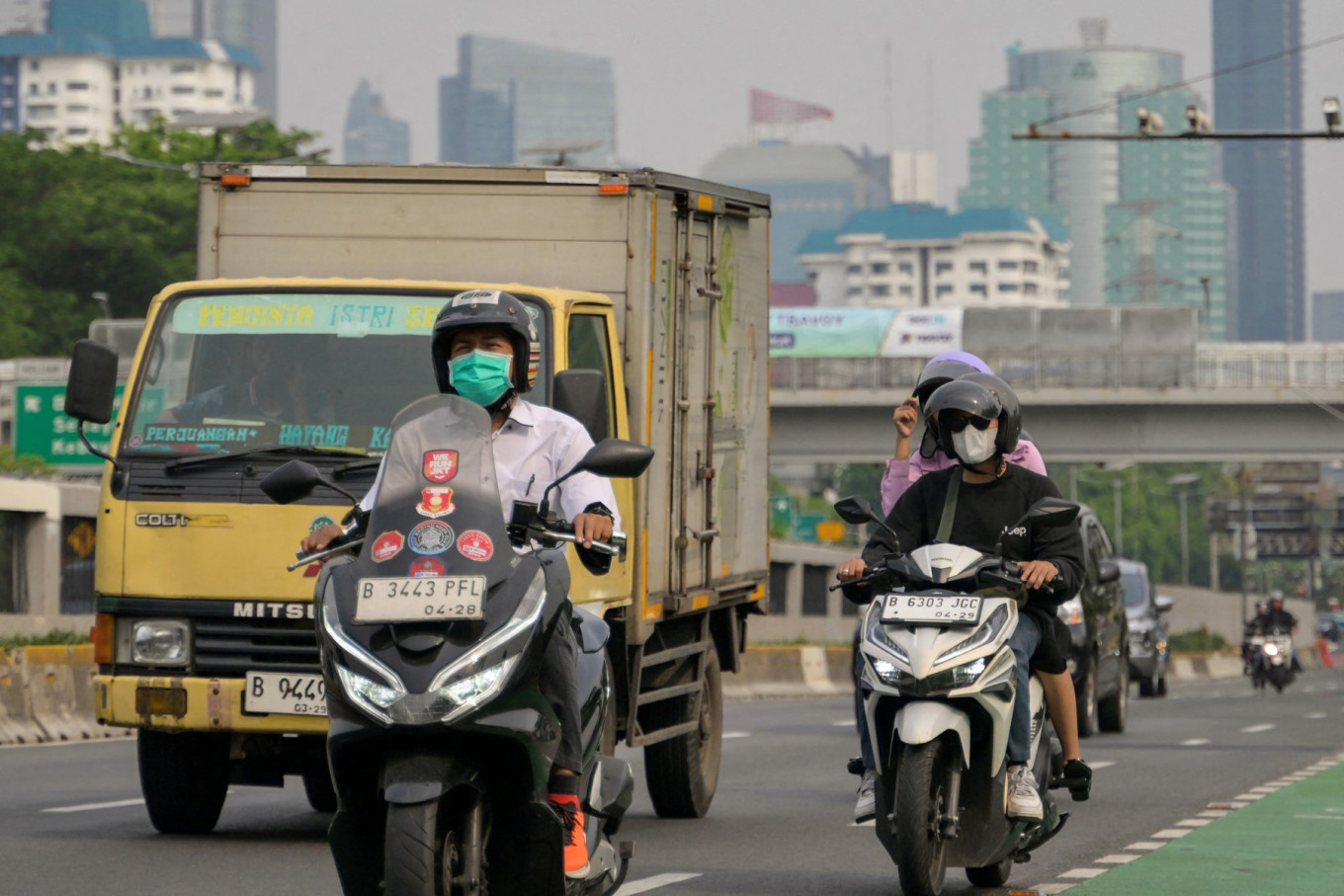 Motorists drive along a road while in the background buildings are shrouded by polluted air in Jakarta on Oct. 8, 2024. (AFP/Bay Ismoyo)
T
he lack of a unified framework between authorities persists as one of the issues that exacerbate the poor air quality in Greater Jakarta, according to environmental groups, with the region becoming increasingly unlivable for its more than 42 million residents.
Greater Jakarta, recently dubbed the world’s most populous urban area by the United Nations, has long been afflicted by smog coming from, among other sources, internal combustion engine vehicles and coal-powered power plants and industrial areas.
Over the years, Jakarta has launched several initiatives to address the problem, from expanding public transit to testing emissions on vehicles running on its streets. However, administrations of neighboring areas could not keep up due to limited budgets and the absence of stringent regulations, said Erni Pelita Fitratunnisa, an official with the Jakarta Environment Agency.
“It will be extremely hard to tackle air pollution if only Jakarta takes action without the support from neighboring administrations in the region,” she said during a discussion hosted by NGO Clean Air Asia in Jakarta on Wednesday.
Read also: Air pollution blamed for nearly 2 million respiratory infections in Jakarta
A report published in 2025 by the Office of the Coordinating Infrastructure and Regional Development Minister suggested Greater Jakarta had “moderate air quality” for most of 2024, with people living in South Tangerang, Banten, and Bekasi, West Java, spending over one-third of the year breathing polluted air.

In Jakarta, the annual concentration of PM2.5 fine particulate matter reached 28.3 micrograms per cubic meter of air (µg/m3) throughout 2025, nearly six times higher than the safety limit set by the World Health Organization (WHO).