The Jakarta Post
Please Update your browser
Your browser is out of date, and may not be compatible with our website. A list of the most popular web browsers can be found below.
Just click on the icons to get to the download page.


Popular Reads
Top Results
No results found. Please check your search term and try again
Can't find what you're looking for?
View all search results
Popular Reads
Top Results
No results found. Please check your search term and try again
Can't find what you're looking for?
View all search resultsanalysis
Opinion 1 month ago
PREMIUM
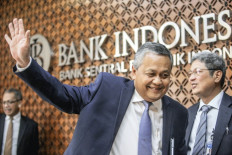
Analysis: Perry’s resignation revives questions over BI independence
Bank Indonesia (BI) Governor Perry Warjiyo has resigned, becoming the latest senior fiscal and monetary policymaker to leave office over the past year. After more than four decades helming the central bank, his decision to step down in the middle of his second term comes at a time of heightened global economic uncertainty, mounting domestic fiscal pressures and weakening market confidence. Perry’s departure has reignited debate over the central bank’s independence amid growing state policy priorities.
Opinion 1 month ago
PREMIUM
Analysis: URI: Good intentions do not justify impulsive policymaking
President Prabowo Subianto has once again taken what many observers describe as an impulsive policy step, raising eyebrows among academics and policy experts. This time, the controversy surrounds the establishment of the University of the Republic of Indonesia (URI), a project announced without any publicly available policy study or broad institutional consultation.
Opinion 1 month ago
PREMIUM
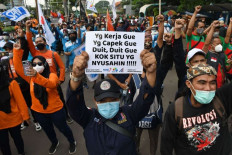
Analysis: JHT is social protection, not tax revenue
Retirement savings are meant to provide financial security in old age. Yet Indonesia's renewed debate over the Old-Age Savings (JHT) program has focused largely on tax rates and thresholds, overlooking a more fundamental question: Should the state tax retirement savings at all? In a country where fewer than half of workers participate in the formal social security system, the issue goes beyond taxation to retirement security itself.
Opinion 1 month ago
PREMIUM
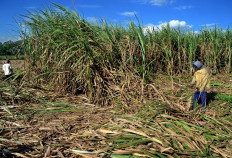
Analysis: Seeking the missing sugar feedstock for E20 initiative
Indonesia is preparing to introduce E20, a gasoline blend containing 20 percent fuel ethanol, even as it continues to import sugar to meet domestic food demand. The initiative seeks to replicate the success of the country's biodiesel mandate by reducing reliance on imported gasoline while creating new demand for domestic agricultural commodities.


Opinion 1 month ago
PREMIUM
Analysis: Russian oil imports put Indonesia in sanctions crosshairs
Indonesia's import of Russian crude oil, marked by the arrival of Eastern Siberia–Pacific Ocean (ESPO) crude at Lawe-Lawe Port in East Kalimantan on June 28, signals a significant shift in the country's energy sourcing strategy. But the move also raises questions over whether state-owned oil and gas company Pertamina could be perceived as circumventing Western sanctions on Russia, a risk the government appears largely unfazed by.
Opinion 1 month ago
PREMIUM
Analysis: Investment inflows hide deeper vulnerabilities
Indonesia's investment figures are improving, with investment realization exceeding Rp 1,000 trillion (US$57 billion) and portfolio inflows rebounding strongly in the first half of 2026. But the recovery has yet to dispel investor concerns. Policy uncertainty, governance issues and continued pressure on the rupiah suggest that confidence in Indonesia's long-term investment climate remains fragile.
Opinion 1 month ago
PREMIUM
Analysis: Keeping elites out of high-stakes corruption case
Public concern continues to mount over the handling of the high-profile graft case involving Febrie Adriansyah, the former assistant attorney general for special crimes (Jampidsus). The National Police's Corruption Eradication Corps (Kortastipidkor) has declared Febrie a suspect and subsequently handed over the case files to the Attorney General's Office (AGO), but he has not been detained. The prosecution’s foot-dragging has fueled suspicion about horse trading among the elite rather than a steadfast commitment to eliminating corruption.

Opinion 1 month ago
PREMIUM
Analysis: Consumer confidence slips as livelihoods come under pressure
The Consumer Confidence Index (CCI) fell 3.1 points from 120.9 in May to 117.8 in June, the lowest reading since the index stood at 115 in September 2025, driven by weaker assessments of both current economic conditions and future expectations.

Opinion 1 month ago
PREMIUM
Analysis: Domestic bottlenecks in RI’s electricity export strategy
State asset fund Danantara recently signed two memorandums of understanding (MoUs) with Singapore's Keppel Electric, Sembcorp Industries and Singapore Energy Interconnections for a cross-border renewable electricity project, marking another milestone in the long-running effort to export Indonesia’s renewable power to the island state. Despite the progress, Energy and Mineral Resources (ESDM) Minister Bahlil Lahadalia said the two countries had yet to reach an agreement on the electricity pricing framework.
Editor's Picks
Popular
- PISA gains belie Indonesia’s persistent education crisis
- Not the Ministry of Magic
- Suahasil seen to prioritize fiscal discipline, continuity
- The benefit of the doubt has expired
- Ed Sheeran struggles against Gaza tide
- Osama the gamer: A list of Bin Laden’s video games from his hard drive
- Another company flees Batam, abandons 1,025 workers
- Indonesian Navy welcomes former Italian warship as its first aircraft carrier
- Is Indonesia returning to fiscal orthodoxy?
- How obscure yttrium became a global flashpoint


