The Jakarta Post
Please Update your browser
Your browser is out of date, and may not be compatible with our website. A list of the most popular web browsers can be found below.
Just click on the icons to get to the download page.


Popular Reads
Top Results
No results found. Please check your search term and try again
Can't find what you're looking for?
View all search results
Popular Reads
Top Results
No results found. Please check your search term and try again
Can't find what you're looking for?
View all search resultsanalysis
Opinion 1 month ago
PREMIUM
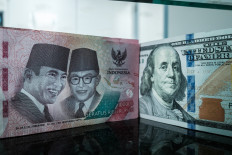
Analysis: Foreign debt climbs to Rp 8 quadrillion amid weak loan usage
Indonesia’s external debt has continued to rise and reached a new high of Rp 8 quadrillion ($444 billion) in May 2026. The increase was primarily driven by government and central bank debt, which accounted for 55.9 percent of total external debt, or US$248.5 billion, after growing 3.89 percent year-on-year (yoy).

Opinion 1 month ago
PREMIUM
Analysis: Whoosh's mounting financial burden is now govt’s problem
The government's decision to take over the debt restructuring of the Whoosh Jakarta-Bandung high-speed railway marks the end of one of Indonesia's largest business-to-business (B2B) infrastructure experiments. A decade after promising the project would not rely on the state budget, the government has been forced to step in. The rescue raises a broader question: If the existing line has yet to prove financially sustainable, why extend it to Surabaya?
Opinion 1 month ago
PREMIUM
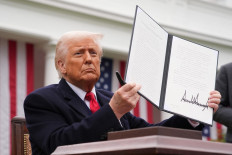
Analysis: Trump's forced labor tariffs: Flawed but revealing
United States President Donald Trump has revived his tariff agenda under a new legal justification. After the Supreme Court struck down his "Liberation Day" tariffs in February, his administration turned to Section 301 of the Trade Act of 1974, accusing trading partners of failing to prevent forced labor in their supply chains. Indonesia is among the affected countries, which has raised questions about how effectively it is tackling forced labor at home.
Opinion 1 month ago
PREMIUM
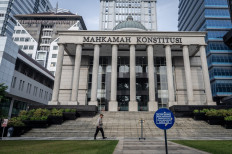
Analysis: Court hands education budget a win over school free meals
The Constitutional Court just handed down a much-needed reality check on the country's public finances. By striking the free nutritious meal program out of the national education budget, the court drew a clear line in the sand: money set aside for education needs to go toward education. Now, the government has to figure out a transparent, long-term way to fund its flagship free meals program without taking a bite out of other vital national priorities.
Opinion 1 month ago
PREMIUM
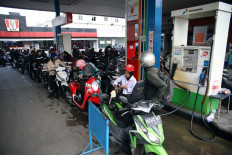
Analysis: Fraud exposes vulnerabilities in Sumatra's fuel distribution
The arrest of 142 suspects by South Sumatra Police has brought renewed attention to what authorities describe as one of the largest fuel embezzlement cases in the country’s recent history. Between January and July 2026, police uncovered 96 cases involving the diversion and illegal trade of subsidized fuel, with an estimated 1.4 million liters of fuel allegedly siphoned from the official distribution system.
Opinion 1 month ago
PREMIUM
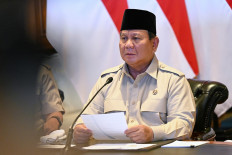
Analysis: Prabowo’s approval rating 51 percent and falling
For most of his first two years in office, President Prabowo Subianto enjoyed a honeymoon that simply refused to end. Survey after survey showed him with approval numbers most world leaders can only dream of. That period has now ended. It was a long and genuinely good run, but the latest data from Saiful Mujani Research and Consulting (SMRC) confirm that political reality has caught up with him.
Opinion 1 month ago
PREMIUM
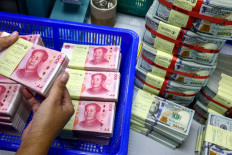
Analysis: Panda Bond success tests its geopolitical balancing act
Indonesia's latest return to China's capital market has been met with overwhelming demand as the government successfully issued two tranches of yuan-denominated Panda Bonds totaling 7 billion yuan (Rp 18.6 trillion or US$1.1 billion) to help finance the 2026 state budget. The offering was oversubscribed by 2.4 times, underscoring continued confidence in Indonesia's fiscal outlook. However, the timing of the issuance has also attracted attention, as it comes amid heightened scrutiny over Indonesia's economic relations with major global powers.

Opinion 1 month ago
PREMIUM
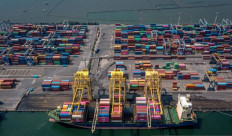
Analysis: Prabowo's KSSK Plus: Coordination or quiet control?
President Prabowo Subianto is once again reshaping Indonesia's economic institutions. This time, he has instructed the Financial System Stability Committee (KSSK) to involve the Danantara sovereign wealth fund in its deliberations, creating what Danantara CEO Rosan Roeslani calls "KSSK Plus." But when a state investor joins discussions where its own risks may be assessed, the question is whether the arrangement strengthens policy coordination or weakens institutional independence.
Opinion 1 month ago
PREMIUM
Analysis: Indonesia's DHE exemptions create a two-tier export regime
Indonesia has introduced a new exception to its natural resources export proceeds (DHE-SDA) policy, allowing exporters from the United States, China, Australia and Canada greater flexibility in managing their export proceeds. The announcement marks the first significant relaxation of a policy that, only months earlier, was expanded to require most natural resource exporters to retain 100 percent of their export earnings in Indonesia's state-owned banks (Himbara) for 12 months.

Opinion 1 month ago
PREMIUM
Analysis: Corruption in the kitchen: Governance crisis in BGN
The National Nutrition Agency (BGN) is reaching a critical junction, burdened by systemic corruption, opaque procurement and severe leadership instability. Tasked with executing President Prabowo Subianto’s flagship Free Nutritious Meal (MBG) program for nearly 90 million children, the agency has cycled through three different heads in less than two months. This rapid turnover is a warning sign: An institution attempting to scale overnight for a massive multibillion-dollar policy must establish airtight safeguards against graft and political patronage if it hopes to deliver on its promise.
Editor's Picks
Popular
- PISA gains belie Indonesia’s persistent education crisis
- Not the Ministry of Magic
- Suahasil seen to prioritize fiscal discipline, continuity
- The benefit of the doubt has expired
- Ed Sheeran struggles against Gaza tide
- Osama the gamer: A list of Bin Laden’s video games from his hard drive
- Another company flees Batam, abandons 1,025 workers
- Indonesian Navy welcomes former Italian warship as its first aircraft carrier
- Is Indonesia returning to fiscal orthodoxy?
- How obscure yttrium became a global flashpoint


