The Jakarta Post
Please Update your browser
Your browser is out of date, and may not be compatible with our website. A list of the most popular web browsers can be found below.
Just click on the icons to get to the download page.


Popular Reads
Top Results
No results found. Please check your search term and try again
Can't find what you're looking for?
View all search results
Popular Reads
Top Results
No results found. Please check your search term and try again
Can't find what you're looking for?
View all search resultsanalysis

Opinion 3 weeks ago
PREMIUM
Analysis: When Independence Day meets a nation’s discontent
Indonesia’s 81st Independence Day arrived with all the familiar trappings of patriotism, from polished state ceremonies to spirited neighborhood fun games. Yet beneath the celebratory veneer lay an uneasy reality. Punctuated by sharp political satire, street protests, a devastating earthquake in Flores, and ongoing violence in Papua, the occasion prompted a nagging question: Who is actually experiencing the promise of independence?

Opinion 3 weeks ago
PREMIUM
Analysis: Pursuing energy security with self-sufficiency, demand controls
The government is pursuing a two-pronged strategy to strengthen energy security: reducing dependence on fuel imports through the mandatory B50 biodiesel policy while reforming fuel subsidies to make them more targeted toward lower-income households. Both policies, however, come with challenges. The B50 program, which combines 50 percent palm oil-based biofuel with 50 percent fossil-fuel diesel, could increase domestic demand for crude palm oil (CPO), potentially affecting exports and cooking oil prices. Meanwhile, the government’s planned restrictions on subsidized fuel purchases have raised questions about the accuracy of household welfare assessments used to determine eligibility.

Opinion 3 weeks ago
PREMIUM
Analysis: Rosy labor figures conceal deeper cracks
Indonesia’s labor market resembles a polished façade concealing deeper cracks. Official figures show headline unemployment falling, yet the recovery has not created enough quality jobs for the country’s growing educated workforce. Education has long been seen as the first step up the social ladder, opening the way to secure employment and a better life. Today, however, more than 1 million university graduates are unemployed, exposing a troubling reality: A degree no longer reliably opens the doors it once promised.
Opinion 3 weeks ago
PREMIUM
Analysis: Odd price movements and Haji Isam’s rumored Bayan acquisition
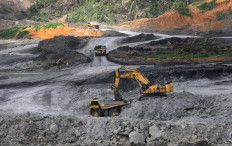
On Aug. 15 three prominent businessmen toured a site in Kutai Kartanegara, East Kalimantan, reportedly to scout potential mining sites. They were tycoon Haji Isam, PT Bayan Resources owner Dato’ Low Tuck Kwong and defense entrepreneur Norman Joesoef. The meeting quickly sparked speculation that Haji Isam was interested in acquiring a 62 percent majority stake in Bayan Resources.
Opinion 4 weeks ago
PREMIUM
Analysis: Drought, rising prices expose vulnerabilities in rice supply
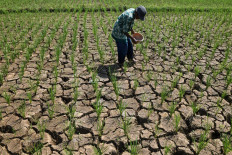
Rice prices have trended upward for the past seven months despite the Prabowo Subianto administration’s claim that Indonesia has achieved rice self-sufficiency. The price increase has occurred even as rice stocks held by the State Logistics Agency (Bulog) remain high. The trend could intensify as an El Niño-induced dry season brings worsening drought conditions, potentially disrupting harvests and putting further upward pressure on rice prices.
Opinion 4 weeks ago
PREMIUM
Analysis: Purbaya’s liquidity push: Lending catalyst or the wrong cure?
Finance Minister Purbaya Yudhi Sadewa has once again injected liquidity into Indonesia’s banking system, placing an additional Rp 70 trillion (US$4.3 billion) in state budget surplus funds with state-owned banks. The measure is intended to spur lending to the real sector and, ultimately, accelerate economic growth. Yet its effectiveness remains uncertain, raising a fundamental question: Can another liquidity injection genuinely revive credit growth, or is Purbaya mistaking the symptom for the cause in a classic chicken-and-egg problem?
Opinion 4 weeks ago
PREMIUM
Analysis: Shooting from the hip: Prabowo's unscripted presidency
President Prabowo Subianto's tenure has been marked by a recurring pattern of rhetorical detours. His supporters see his direct, unscripted style as refreshingly authentic; critics see a habit that regularly produces high-profile verbal slips with real domestic and international consequences.

Opinion 1 month ago
PREMIUM
Analysis: Danantara’s hedge fund gamble
Danantara’s plan to appoint hedge fund managers marks a potentially significant shift toward a more complex and higher-risk investment strategy. The move comes even as the state asset fund has yet to publish financial reports substantiating President Prabowo Subianto’s claims of stellar performance. It raises a fundamental question: Is Danantara’s investment strategy aligned with its long-term national mandate, or is the fund experimenting with increasingly aggressive approaches to managing state assets?
Opinion 1 month ago
PREMIUM
Analysis: Ex-top prosecutor's exit strategy feels like political theatre
The legal saga surrounding former assistant attorney general for special crimes (Jampidsus) Febrie Adriansyah has entered yet another chapter. What began as one of Indonesia's highest-profile money laundering investigations has increasingly evolved into a politically charged legal battle, with the former senior prosecutor now appearing to pursue an exit strategy through the courts.
Opinion 1 month ago
PREMIUM
Analysis: RI’s 5.29 percent growth tests sustainability of fiscal expansion
Statistics Indonesia (BPS) announced that Indonesia’s economy expanded 5.29 percent year-on-year (yoy) in the second quarter of 2026, marking notable growth above the 5 percent threshold amid continued global uncertainty and geopolitical tensions. The figure also improved from 5.12 percent in the same quarter last year, suggesting that President Prabowo Subianto’s increasingly expansionary fiscal policies have helped sustain domestic economic activity even as global trade growth weakens. However, the stronger growth also comes as the government ramps up spending on its flagship programs, raising questions about the fiscal cost of sustaining this momentum.
Editor's Picks
Popular
- PISA gains belie Indonesia’s persistent education crisis
- Not the Ministry of Magic
- Suahasil seen to prioritize fiscal discipline, continuity
- The benefit of the doubt has expired
- Ed Sheeran struggles against Gaza tide
- Osama the gamer: A list of Bin Laden’s video games from his hard drive
- Another company flees Batam, abandons 1,025 workers
- Indonesian Navy welcomes former Italian warship as its first aircraft carrier
- Is Indonesia returning to fiscal orthodoxy?
- How obscure yttrium became a global flashpoint


