The Jakarta Post
Please Update your browser
Your browser is out of date, and may not be compatible with our website. A list of the most popular web browsers can be found below.
Just click on the icons to get to the download page.


Popular Reads
Top Results
No results found. Please check your search term and try again
Can't find what you're looking for?
View all search results
Popular Reads
Top Results
No results found. Please check your search term and try again
Can't find what you're looking for?
View all search resultsanalysis
Opinion 1 week ago
PREMIUM
Analysis: The power to seize, the need for safeguards
Street protests have reignited the drive to pass the long-stalled asset forfeiture bill. Under renewed public pressure, the House of Representatives has committed to wrapping up deliberation by year-end, nearly two decades after the reform was first tabled. The real test now is whether this self-imposed deadline will finally overcome years of legislative foot-dragging, and whether lawmakers can be held accountable if it slips again.
Opinion 1 week ago
PREMIUM
Analysis: Oil and gas reform accelerates, but will it boost production?
The revision to the Oil and Gas (Migas) Law is now being pushed through the House of Representatives at unusual speed, with lawmakers targeting completion by mid-October 2026 and hoping to conclude deliberations before the current sitting period ends. The pace is notable because the Migas Law revision was not originally included in this year’s national legislation program (Prolegnas), despite years of delays.
Opinion 2 weeks ago
PREMIUM
Analysis: External debt rises, current account deficit widens
Several of the country’s external sustainability indicators have weakened, as reflected in a widening current account deficit and rising external debt and external debt-to-gross domestic product ratio. The development is not entirely unexpected, as the government has signaled a greater willingness to rely on debt financing to support its growth agenda.

Opinion 2 weeks ago
PREMIUM
Analysis: Indonesia’s solar energy bet: Cautious optimism
President Prabowo Subianto recently launched the country’s massive solar power program at a ceremony in Bali, marking the construction of 14 solar power plants across the country. The projects form part of Indonesia’s push to develop 100 gigawatt-peak (GWp) of solar power capacity, aimed at providing reliable electricity to isolated villages, accelerating the transition to clean and renewable energy and strengthening energy independence.
Opinion 2 weeks ago
PREMIUM
Analysis: Can Icomex make Indonesia a commodity price maker?
The country is seeking to move from being a major commodity producer and global price taker to becoming a price maker through the planned Indonesian Commodity Exchange (Icomex). Yet a similar platform, the Indonesia Commodity & Derivatives Exchange (ICDX), has operated for nearly two decades without gaining significant influence over global markets.
Opinion 2 weeks ago
PREMIUM
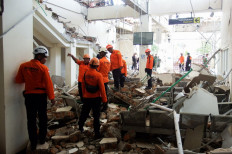
Analysis: When a disaster-prone nation cuts its safety net budget
A major earthquake in East Nusa Tenggara (NTT) has once again put Indonesia’s disaster preparedness under scrutiny, raising tough questions about political will and shrinking mitigation budgets. Sitting squarely on the Pacific Ring of Fire, Indonesia faces inherent geological risks. Yet policymakers too often treat this geography as an excuse for poor outcomes rather than an urgent mandate for better preparation.

Opinion 2 weeks ago
PREMIUM
Analysis: KKI expands credit access amid rising household risks
Bank Indonesia (BI) and the Indonesian Payment System Association (ASPI) launched Kartu Kredit Indonesia (KKI) on Aug. 17, enabling deferred QRIS payments to be processed domestically. While easier access to credit could support consumption and strengthen Indonesia’s payment ecosystem, it also carries risks. Without prudent lending standards, greater convenience could lead to higher household debt and deteriorating credit quality.

Opinion 2 weeks ago
PREMIUM
Analysis: Pay it back, walk free Prabowo's corruption dilemma
Imagine a corrupt official who has stolen billions of rupiah from state coffers. Under a proposal floated by President Prabowo Subianto, that official could walk free, no conviction, no prison, simply by handing the money back. It sounds like restitution; critics say it looks a lot like a pardon with a price tag. The proposal, outlined in Prabowo's Aug. 14 State of the Nation Address, would offer amnesty to corruptors who return stolen state funds. It has reignited a debate that cuts to the heart of his presidency: Is Indonesia's war on corruption for real, or is it starting to look negotiable?
Opinion 3 weeks ago
PREMIUM
Analysis: PPHN Prabowo's green light for Soeharto's ghost
It is almost a done deal. After a decade of false starts under President Joko "Jokowi" Widodo, the push to revive a binding state roadmap, the Pokok-Pokok Haluan Negara (Principles of State Policy, or PPHN), finally has what it lacked: political consensus and a president willing to back it.
Opinion 3 weeks ago
PREMIUM
Analysis: 2027 budget sticks to growth agenda despite headwinds
President Prabowo Subianto has unveiled the government’s proposed state budget for the 2027 fiscal year, outlining another substantial expansion in government spending ahead of Indonesia’s 81st Independence Day. Government expenditure is set to rise to Rp 4,097.2 trillion (US$230.4 billion), from Rp 3,842.7 trillion in this year’s state budget, while state revenue is targeted at Rp 3,426 trillion, compared with Rp 3,153.6 trillion this year. The government is also targeting 6 percent economic growth in 2027, reinforcing Prabowo’s longstanding commitment to using government-led initiatives to accelerate growth.
Editor's Picks
Popular
- PISA gains belie Indonesia’s persistent education crisis
- Not the Ministry of Magic
- Suahasil seen to prioritize fiscal discipline, continuity
- The benefit of the doubt has expired
- Ed Sheeran struggles against Gaza tide
- Osama the gamer: A list of Bin Laden’s video games from his hard drive
- Another company flees Batam, abandons 1,025 workers
- Indonesian Navy welcomes former Italian warship as its first aircraft carrier
- Is Indonesia returning to fiscal orthodoxy?
- How obscure yttrium became a global flashpoint


