TheJakartaPost
Please Update your browser
Your browser is out of date, and may not be compatible with our website. A list of the most popular web browsers can be found below.
Just click on the icons to get to the download page.


Popular Reads
No popular reads data found
Top Results
No results found. Please check your search term and try again
Can't find what you're looking for?
View all search results
Popular Reads
No popular reads data found
Top Results
No results found. Please check your search term and try again
Can't find what you're looking for?
View all search resultsbank-indonesia






Regulations 5 months ago
PREMIUM
Bank Indonesia to add incentives amid slow lending
Bank Indonesia (BI) plans to roll out additional macroprudential liquidity incentives (KLM) on Dec. 1 through new disbursement schemes to boost sluggish credit growth and expedite the pass-through of central bank rate cuts to commercial banking rates.

Markets 5 months ago
PREMIUM
BI pauses after three consecutive rate cuts, but open to more
Bank Indonesia has kept its benchmark interest rate in place after decreasing it by 25 basis points (bps) in each of the past three months, but the central bank is open for further cuts to encourage lending and push economic growth to its true potential.

Regulations 6 months ago
PREMIUM
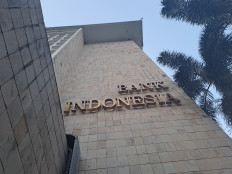
Expanded mandate may leave BI with ‘conflicting targets’
The House of Representatives is seeking to expand Bank Indonesia’s (BI) mandate to include economic growth and job creation, which analysts warn could conflict with monetary policy goals and motivate political interference.